Smoked Pulled Pork
Learn how to make smoked pulled pork with this easy recipe. A crowd-pleasing main course for any BBQ, party, or just a hearty meal at home.
Servings 8
Calories 509kcal
Useful Equipment:
- Charcoal grill
- Hickory Wood Chunks
- Charcoal
- Heavy-Duty Aluminum Foil
- Pink butcher paper
Ingredients
- 6-10 pound Boston Butt pork butt
- ½ cup All-Purpose Dry Rub any pork dry rub of choice
Spicy Dry Rub
- ¼ cup brown sugar
- ¼ cup paprika
- 4 teaspoons black pepper
- 4 teaspoons sea salt
- 4 teaspoons garlic powder
- 4 teaspoons onion powder
- 2 teaspoons cayenne pepper
- 2 tablespoons oregano
- 1 tablespoon cumin
- 2 tablespoons red pepper flakes
Instructions
Prepare the pork butt or shoulder
- Score the skin side using a sharp knife to make diagonal cuts approximately 1-2 inches apart across the skin of the shoulder. The knife should penetrate the skin and fat without slicing into the meat below.
- Turn the meat 90 degrees and make a crosshatch score across the skin in the opposite direction.
- Season the meat on all sides, top and bottom, with the homemade spicy dry rub. (use mustard to coat the meat if the dry rub does not adhere)
Prepare the Charcoal Grill or Smoker
- To cook using the snake method, lay a chain of charcoal in a half-circle along the outer edge of the grill. There should be three layers, with two charcoals on the bottom and one on top. Place a chunk of hickory wood every few inches along the top of the “snake.”
- Turn the charcoal chimney upside down and light only a small handful of charcoal. When the charcoals are hot, you just drop the lit coals onto one end of the “snake” to start the cook.
Smoking The Pork Butt or Shoulder
- When the coals are ready to cook, place the seasoned pork roast, fat (scored) side up, in the middle of the hot grate, away from the direct heat of the coals. Close the lid and bring the temperature back up to 225 degrees F, using the vents to regulate the temperature.
- Smoke the pork until the meat forms a bark (outside crust) and has a mahogany color and not black (around 160-170 degrees / 6-7 hours). Remove the meat from the grill and wrap it in heavy-duty aluminum foil or pink butcher paper.
Crank up the Heat
- Light some more coals and turn out on one side, leaving the other side cool. Return the wrapped pork butt back to the grill. Continue cooking the pork butt at 300 degrees F until the internal temperature of the meat is 195-200 degrees F. This can take anywhere from 6-12+ hours, depending on the size of the pork butt and how consistent the heat of your grill or smoker is.
Rest The Pork Butt
- Remove the meat from the offset smoker. Leave the pork wrapped tightly in the foil or butcher paper, wrap it in a clean towel, and place it inside a cooler to rest for at least 1 hour.
Shred and Serve
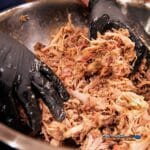
- Pull apart the pork butt, discarding the bone and any chunks of skin, fat, and gristle. Sprinkle with more barbecue rub or your favorite barbecue sauce, and enjoy!
Notes
- If the rub doesn’t stick to the meat, use a binder, such as yellow mustard, to rub evenly over the meat so that the dry rub sticks.
- Wrapping the pork butt speeds up the cooking time, prevents it from taking on any more smoke flavor, and helps with tenderness. It’s a really good way to get past the “stall” when the meat doesn’t rise past 145-165 degrees F for a long period of time.
- Smoke the pork fat side up so that the fat slowly melts and bastes the meat naturally. If you are concerned about too much heat from the bottom of your grill or smoker, perhaps you should consider smoking your pork fat cap down so the meat is protected with a fatty barrier.
- Place the pork inside a freezer bag or use a vacuum sealer. Freeze for up to 6 months.
- Allow the pork to cool completely before freezing. We recommend waiting for the pork to cool in the fridge overnight to prevent freezer burn. Warm meat will steam, causing moisture to be inside the bag. Ice crystals form on the meat, which can cause freezer burn and ruin the flavor of the pork you worked so hard for.
- Use freezer-safe bags or freezer-rated vacuum sealer material.
- We use pint-size freezer bags. They hold about a pound, and the pork can be smashed flat, which makes defrosting a breeze!
- Press the pork out flat inside the bag, pressing out as much air as possible.
- There should be enough moisture to cause the pork to steam within the skillet, heating the pulled pork up and keeping it tender and juicy without drying it out. If it seems too dry, you can add a tablespoon of water to help generate more steam.
Nutrition
Serving: 0.5pound | Calories: 509kcal | Carbohydrates: 14g | Protein: 65g | Fat: 21g | Saturated Fat: 7g | Polyunsaturated Fat: 3g | Monounsaturated Fat: 9g | Trans Fat: 0.1g | Cholesterol: 204mg | Sodium: 1424mg | Potassium: 1359mg | Fiber: 3g | Sugar: 7g | Vitamin A: 2500IU | Vitamin C: 1mg | Calcium: 106mg | Iron: 6mg
Did you try this recipe? We’d love to hear your thoughts! Give it a star rating and leave a comment below to let us know how it turned out for you. If you’d like, share a photo of your dish on Instagram, don’t forget to mention @TheMountainKitchen or use #TheMountainKitchen!