
This egg wash recipe is one of those simple little secrets that takes your baked goods from “homemade” to “wow, did you make that?” It’s just a beaten egg mixed with a little liquid (water, milk, or cream) brushed onto your dough before it goes in the oven. That’s it! Two ingredients, two minutes, and suddenly your pie crust, bread, or puff pastry comes out golden, glossy, and gorgeous.

I never really knew how important an egg wash could be when making anything with pastry dough until after I used it for the first time. Honestly, I had to stop in the middle of a recipe to search for it and then find a recipe to make one.
Let me teach you the beautiful things egg wash can do to your bread, pastries, and baked goods.
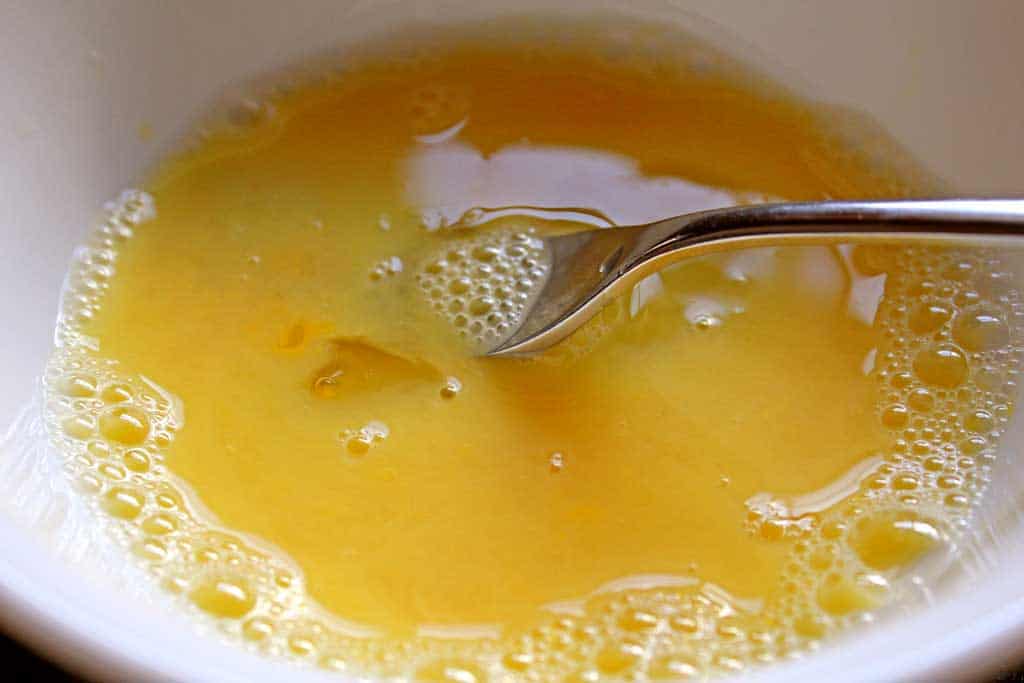
Here’s what I’ll show you:
- What egg wash actually is and why it works like magic
- The simple 1:1 ratio (one egg, one tablespoon of liquid, that’s all!)
- The 4 types of egg wash and exactly when to use each one
- How to brush it on without streaks or soggy spots
- What to do with the leftovers so nothing goes to waste
What’s An Egg Wash?
Here’s the simple version: egg wash is beaten egg mixed with a little liquid, brushed onto dough before baking. It’s what gives your pie crust, bread, or pastry that golden, glossy bakery-style finish instead of coming out pale and a little sad.
It also pulls double duty in the kitchen. Egg wash can act as a moisture barrier on the bottom of a pie crust to prevent a soggy bottom, and it works as a glue to seal two pastry edges together (like when you’re crimping a hand pie or folding a galette).
Why Use Egg Wash?
There are three main reasons this egg wash recipe works so well: appearance, texture, and structure.
Appearance
How does it add color to the pastry? It’s simple. The proteins and fat in the egg yolk and egg white promote browning and sheen. When you brush it onto the pastry, it magically browns in the oven. Pastry without the wash appears pale and dry-looking.
Texture and Structure
This egg mixture sometimes acts as a barrier between the bottom of a pie crust and the filling, helping prevent the crust from becoming soggy. It can act as a glue to seal two pastry edges together.

What is the Ratio for an Egg Wash Mixture?
Typically, a basic egg wash recipe is a 1:1 ratio, meaning only one egg per tablespoon of cold liquid. Water is the most common liquid, but milk or heavy cream can also be used in the mixture.
Different Types of Egg Wash
Variations in the mixture will affect your baked goods differently. The chart below illustrates how different mixtures affect your baked goods and when to use each combination.
| Egg Wash | Browning | Sheen | What To Use It On |
|---|---|---|---|
| Whole Egg & Milk | Medium browning | Medium | Pies and pastries |
| Whole Egg & Water | Light browning | Light | Puff pastry and bread |
| Egg White Only | Very Light Browning | High Shine | Sealing pastry edges |
| Egg White & Milk | Light browning | Light shine | Sprinkle sugar on a pie dough for sparkle |
How to Make and Use Egg Wash
This egg wash recipe couldn’t be simpler to make. All you do is whisk or fork the egg and water together.
The best way to apply an egg wash to your pastry is with a pastry brush. A brush lets you spread the wash thinly over the pastry dough.
You can find a pastry brush just about anywhere that sells kitchen utensils. I have even seen these brushes on the grocery store aisles. I prefer natural bristles over silicone pastry brushes. Just remember to keep your brush clean! Wash the brush in hot, soapy water immediately after each use to prevent Salmonella.
Recipe Tips
- Whisk the egg and liquid together well to ensure it is distributed evenly.
- Brush on the egg wash evenly so that it isn’t streaky or too thick. Don’t miss areas, or it will show up after baking.
- Apply egg wash right before your baked goods go into the oven. If it sits on them too long, the dough can become soggy.
- Store leftover egg wash sealed tightly in an airtight container in the fridge for up to 3 days.
Disadvantages
- Use caution when using puff pastry. Drips of egg wash in unwanted areas can glue the layers together and prevent the pastry from puffing when it bakes.
- It can seal up slits. If you need to score or cut slits in the top of a pie or bread, apply the egg wash before cutting, or it may seal the slits closed.
Recipes That Use Egg Wash
- Classic Chicken Pot Pie – used to give the pie crust a nice golden brown color.
- Broccoli-Cauliflower Galette – applied to puff pastry to help it brown.
- Easy Mini Cherry Pies – acts as a glue and helps to brown the pastry dough.
- Mushroom Wellingtons – applied to puff pastry to help turn it golden brown.
Recipe FAQs
If you don’t have any baked goods to brush it on within the next three days, store it in the fridge; you can add the mixture to your scrambled eggs.
If you’re baking for someone who can’t do eggs, you’ve got options! Brush with oat milk or soy milk for a light golden color, or use aquafaba (the liquid from a can of chickpeas) for a bit of shine. Fair warning: neither one gives you that deep, rich browning you get from a real egg, but they’ll get the job done.
Yes, for added flavor, you may add salt to the mixture.
No. In fact, the mixture could speed up browning, causing it to burn.
Great question! I use a whole egg for that deep golden-brown color on pies and bread. For high shine with very little browning, like sealing pastry edges or sprinkling sugar on a pie crust, I reach for just the egg white. The chart above is your cheat sheet!
Been there! Your baked goods will taste exactly the same, but they’ll come out pale, matte, and a little crusty. For everyday bread, no big deal. But if you’re making something for the company, that extra two minutes of brushing is absolutely worth it. Remember, you eat with your eyes first!
Skip it for sourdough! Traditional sourdough is baked in a Dutch oven with steam, which is what develops that signature crackly crust. Egg wash is your friend with dinner rolls, brioche, soft sandwich loaves, and anything with a buttery, tender crumb.
I hope this egg wash recipe helps your pastries come out golden, glossy, and irresistible!
Egg Wash Recipe
Useful Equipment:
Ingredients
- 1 egg
- 1 tablespoon water
Instructions
- In a small bowl, add the water and egg; whisk until well incorporated.
- Use a pastry brush to brush the egg mixture onto pastry dough.





Andy says
I see my fatal flaw! I have never added any liquid to it, duh! I have wondered why I could never get it to work right. Thought it was just me, lol. Well, I guess it really was me 🙂
The Mountain Kitchen says
Glad I taught you something, Andy! Next time, you will have it just right! 🙂
Anna Buckley says
Your chicken pot pies look delicious!
The Mountain Kitchen says
Thank you, my dear! xx
Julie is Hostess At Heart says
Great tip Debbie!
The Mountain Kitchen says
Thank you! 🙂
Dawn Jibilian says
Why is it used on a rolled out dough before adding ingredient layers and rolling the dough up? Just wondering , I have a pepperoni roll recipe that calls for brushing an egg wash on the dough before adding the cheese and pepperoni and rolling it up. What would happen if I skipped that step? How important is it? Thanks!
The Mountain Kitchen says
Hi Dawn! I’m not sure why a recipe would say to brush the inside of the dough before rolling it up. If it acts as a “glue” it would only be applied to wear the dough meets and overlaps. I do not believe there is any other purpose for egg wash other than adding color to the dough or to serve as a glue to hold dough together. Personally, I would skip that step. Good luck!
Mark.s.vickery@gmail.com says
I have an egg wash question. I’m making some chicken pot pie and taking them to a sick friend an hour away. I plan to take them unbaked. Can I apply the egg wash as much as 2-3 hours before they go in the oven?
The Mountain Kitchen says
Hi Mark! Although eggwash will keep, it’s better to apply it right before baking. It needs to stay on the top of the crust in order for it to brown. Thanks for the great question. Hope your friend is feeling better!