
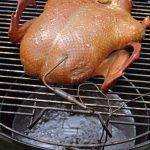
Perfectly smoked duck meat is tender, incredibly juicy, and packs serious flavor! Learn how easy it is to smoke duck using this How-To-Guide!
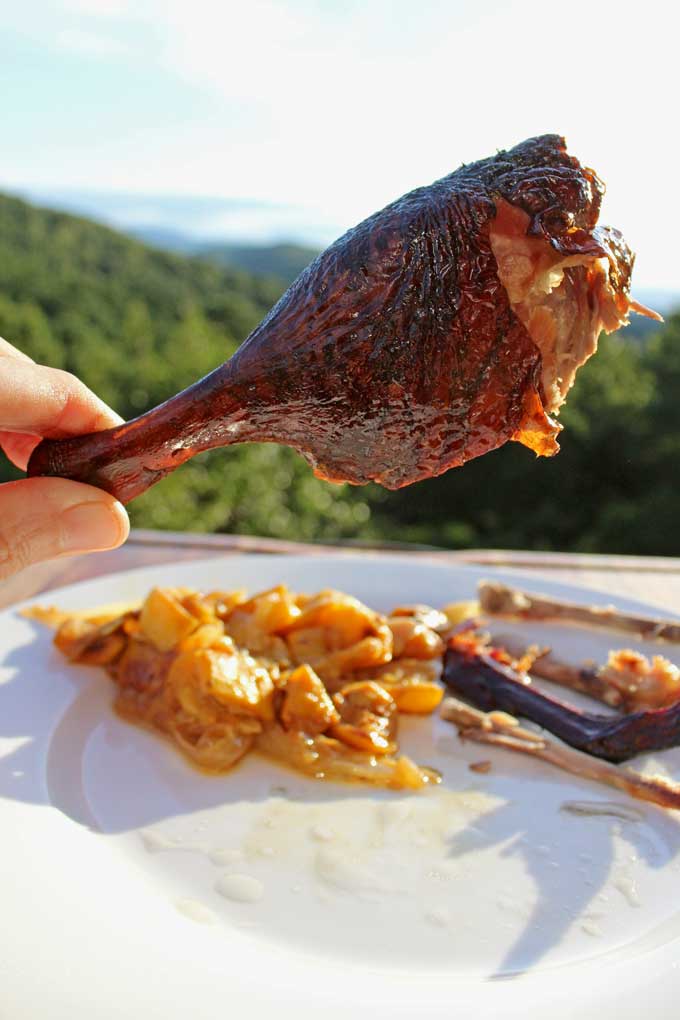
Ask David about duck meat, and you’ll get a mixed review. Ask me, and I will tell you I love it any way I can get it. I thought I loved smoked turkey. However, this smoked duck may very well be my new favorite poultry.
One thing is for sure, this smoked duck recipe is one David and I both agree on. So I told David I needed to try to explain why we chose to smoke a duck.
He glared at me and said, “We cook shit; that’s what we do; we’re The Mountain Kitchen.”
Lordy, he sure has a way with words, doesn’t he?

Perfectly smoked duck meat is tender and incredibly juicy. It also packs some serious flavor. Our first experience with smoking duck leaves us wanting more!
If you are looking for something new and different to place upon your smoker. You should try this recipe. Here, let us tell you how we did it.

Duck Meat
Duck meat is dark and moist with a distinctively rich and bold flavor. If you love the dark meat of a chicken or turkey, you will love duck meat! Duck is perfect for smoking because it has more fat than most birds, and this fatty meat retains the smoke flavor the best.
When smoking duck, it is best to smoke the whole bird rather than pieces. This results in a more tender and juicy finished product.
How To Purchase Duck
Unless you are a hunter and plan on using a wild mallard duck from your hunt, you will need to purchase a duck. David and I had never purchased a duck before, so we had to do a little research to help us find out what kind of duck to buy.
According to FineCooking.com, there are three types of duck you could come across at your grocery store. They are:
- White Pekin – tender, mild-flavored meat.
- Muscovy – slightly larger with a stronger flavor
- Moulard – a cross between a female Pekin and a male muscovy. This type of duck is mainly raised for their livers (foie gras). However, the breasts, (magrets), are considered a delicacy because of their large size and steak-like eating qualities. They do however have a stringier texture.
White Pekin is the most common variety of duck and can be found at any average grocery store. Most ducks are raised commercially and weigh between 3 to 6 pounds.
This recipe for the smoked duck was developed with a whole Pekin duck. Shop for a whole, USDA Grade A, fresh white Pekin duck that weighs about 5 pounds for tender, juicy results. The breast meat should be plump and firm, and light in color. Avoid any duck that has been plumped or comes in brine. They are way too salty!
If you cannot find a fresh duck, you can purchase a frozen one; make sure it has all the characteristics described above. If you find a smaller bird, you can cut back on the brine solution and glaze accordingly. Remember that ducks have heavier bone density than most birds, so consider that with the weight.
How To Thaw A Frozen Duck
To best way to thaw a frozen duck is to thaw the bird in the refrigerator. For a whole bird, this can take up to a couple of days.
If you don’t have time to allow the duck to thaw in the refrigerator, place the duck is inside a leak-proof bag and submerge it into cold water, changing the water every 30 minutes. A 3-4 pound duck can take 2-3 hours to defrost, whereas a 4-6 pound bird can take anywhere from 4-6 hours.
The most important takeaway is to make sure the duck has defrosted completely.
Useful Equipment:
- 16-quart cooler OR 16-quart container that can go inside a refrigerator
- Microplane
- 6-quart saucepan
- water smoker or charcoal grill
- charcoal
- charcoal chimney
- applewood chips
- water pan – (if using a standard charcoal grill with charcoal baskets)
- meat thermometer with a probe or instant-read thermometer
- tongs
Ingredients Needed for Smoked Duck
The recipe card at the end of this post provides a detailed list of ingredients.
The Duck:
Pekin duck (5-6 pound range) cleaned
Orange-Beer Brine
- Brown sugar
- Kosher salt
- Whole black peppercorns, toasted
- Bay leaves
- Large navel oranges, zest, and juice from each
- Beer, 2 (12-ounce) bottles amber-style
- Water
- Ice
- 1 tablespoon finely ground black pepper
Brown Sugar Soy Glaze
- Brown sugar
- Soy sauce
- Kosher salt
How To Smoke Duck
Prepare the Duck for Brine
Remove the duck from the packaging. Then remove the giblets from inside the duck and; discard them. Rinse the duck inside and out under cold running water, pulling out extra fat or cutting bits from the body cavity.
Brine the Duck
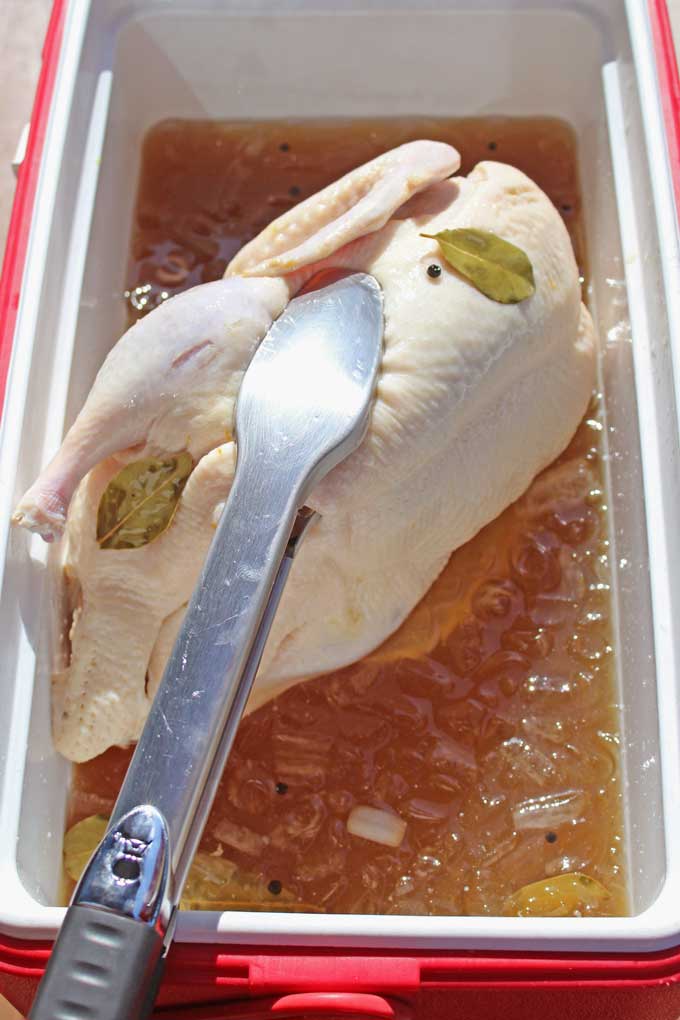
Combine the brown sugar, salt, peppercorns, bay leaves, orange zest and juice, beer, and water in a 6-quart stockpot and bring to a boil over high heat. When the brine comes to a boil, reduce the heat and simmer for 15 to 20 minutes. Please turn off the heat and allow it to cool completely.
Transfer the brine into a large 4-gallon (16-quart) cooler. Add enough ice water to measure as close to 3-gallons as possible (see recipe notes).
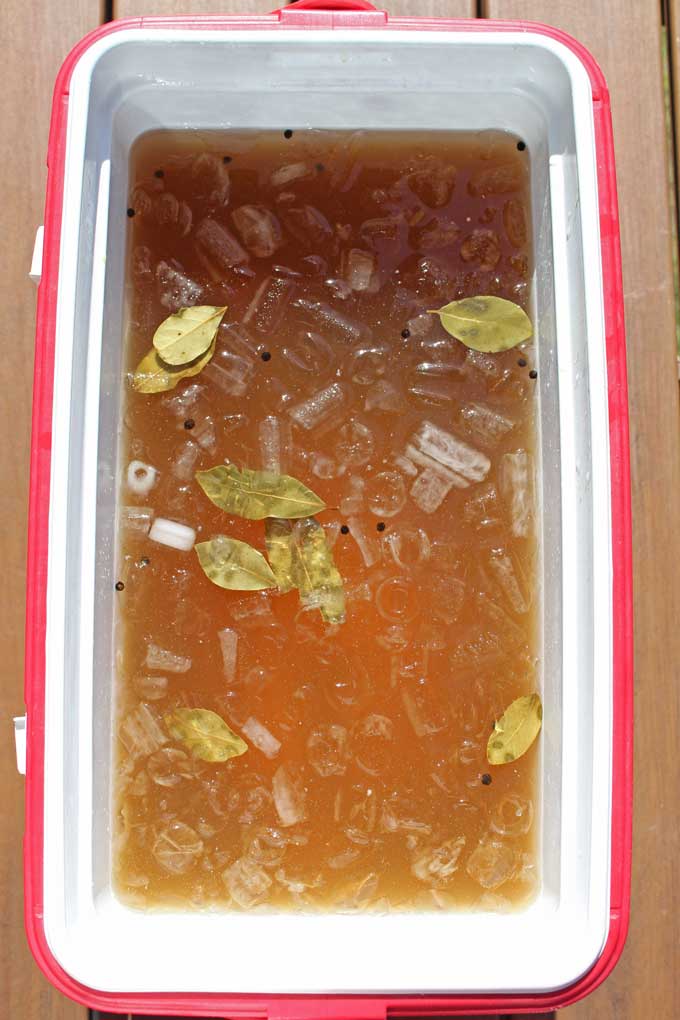
Dunk the prepared duck into the brine solution. You may need to hold the duck down until the body cavity fills with brine to ensure it is completely submerged in the brine solution.
Refrigerate the duck in the brine for 24-hours, stirring about halfway through.
If you have a large enough refrigerator and a big enough container, by all means, do so to ensure proper refrigeration. However, if you use a cooler, store it in the coolest place possible. You will need to add more ice about halfway through the brining. To maintain the salt-to-liquid ratio, add the ice to a plastic bag and seal it before putting it in the brine.
Prepare the Duck For Smoking
After 24 hours (a little more time won’t hurt), remove the duck from the brine and pat dry inside and out with paper towels. Place the duck on a clean workspace. Blot the duck dry with paper towels and allow it to come to room temperature for about 20 to 30 minutes.
Trim the neck skin off, leaving a 1-inch flap. Fold the flap down, closing up the neck hole.
Ducks have more fat than other types of birds, especially when it comes to game birds. This smoked duck recipe will provide you with crispy skin and meat so moist it practically falls off the bone. So this next step is crucial.
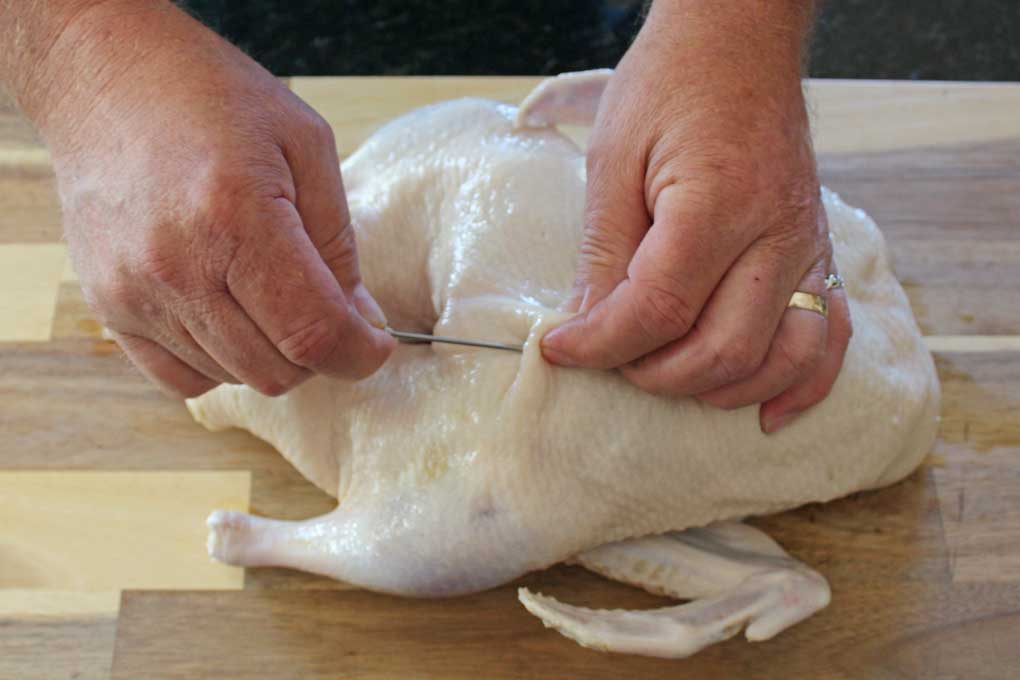
Using a sharp skewer, pinch the skin of the breast of the duck and pierce all along the surface of the breast without piercing the meat underneath. This is an essential step because it helps release and render the fat. The fat on top of the breast meat renders out of the skin, and the duck will practically baste itself as it smokes.
Make the Brown Sugar Soy Glaze
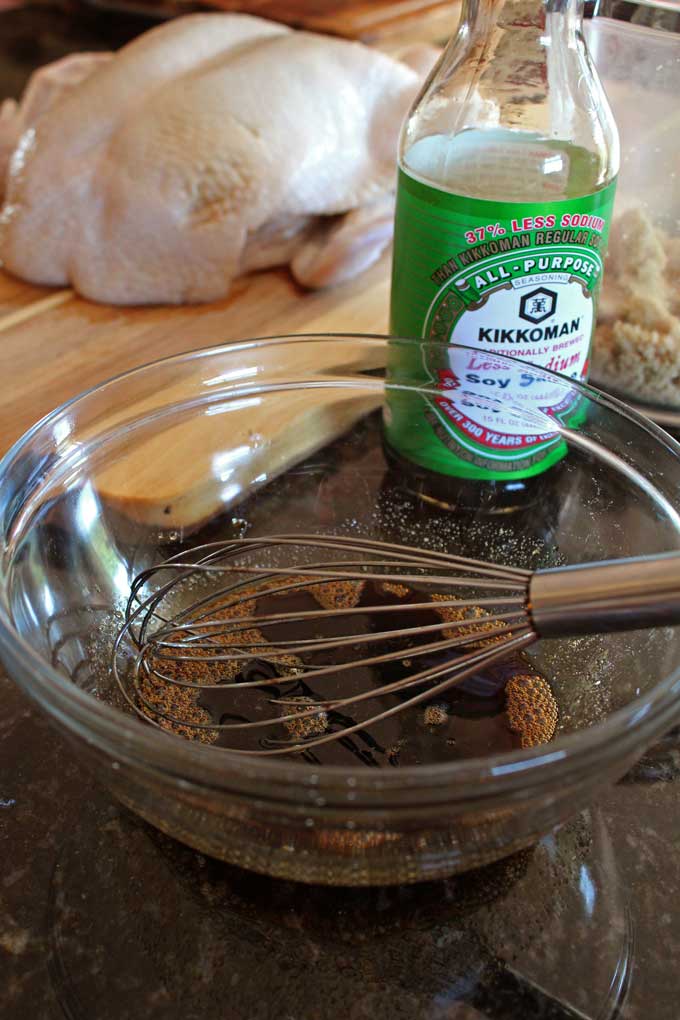
Whisk together the brown sugar, soy sauce, and salt in a small bowl until the sugar and salt have dissolved. Set aside until needed.
Fire Up The Smoker!
Soak a few handfuls of applewood chips for about 30 minutes in water before placing them on the coals.
Meanwhile, preheat the grill to 200-275 degrees F. Use only half as much charcoal as usual to maintain this low temperature. (A half chimney-full.)
Add the wood chips to get the smoke going. Place a water pan below the smoker’s cooking grate to create a humid environment and catch any drips.
Smoking the Duck
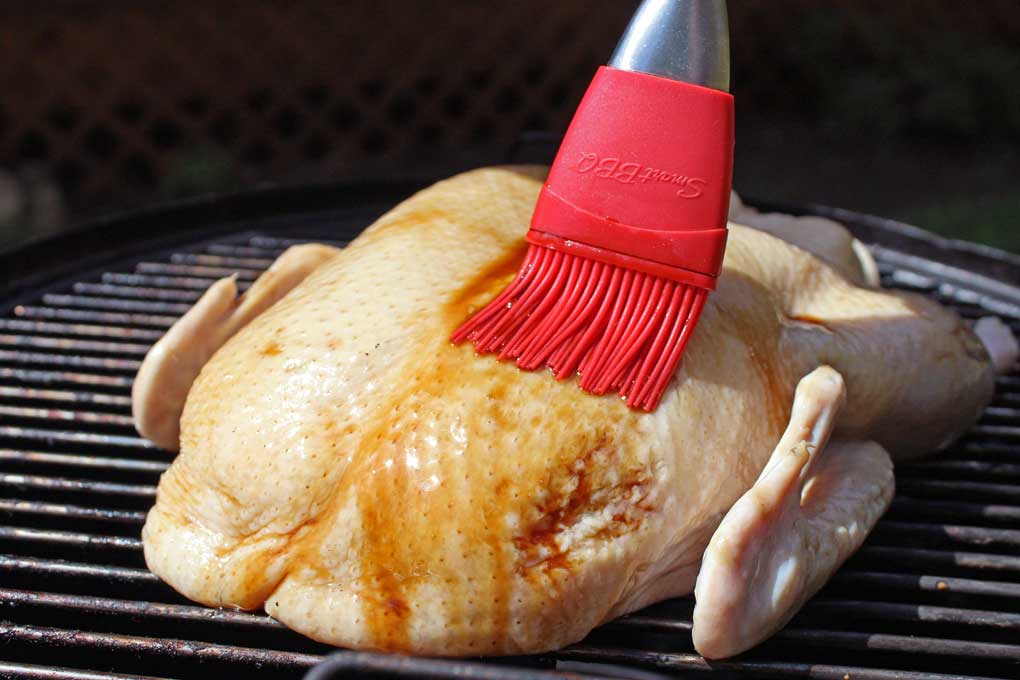
Give the brown sugar soy glaze a final whisk, then brush the duck all over. Place the duck in the center of the smoking grate and insert the temperature probes (if using a digital probe thermometer).
Bring the temperature up to 225 degrees F, using the vents and wet and dry wood chips to regulate the temperature. You will need to add fresh coals and more wood chips almost every hour for at least the first 4 hours.
Low and Slow
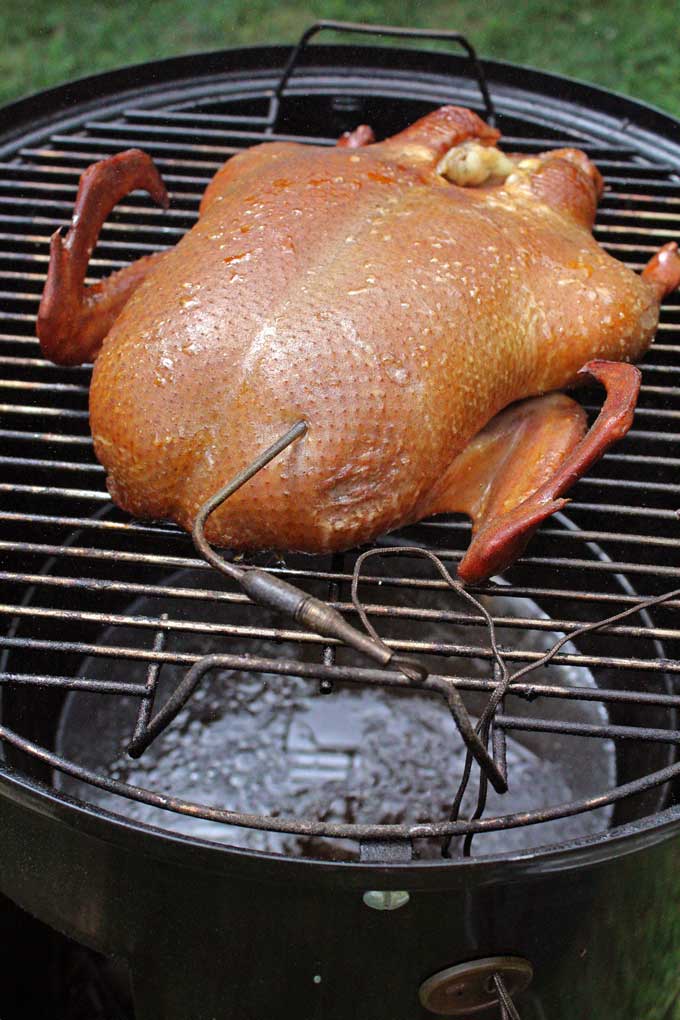
Check the temperature of the smoker every hour, staying as close to 225 degrees F as possible. Resist the temptation to open the lid unless you need to add more charcoal or soaked wood chips to maintain the temperature and smoke.

Testing the For Doneness
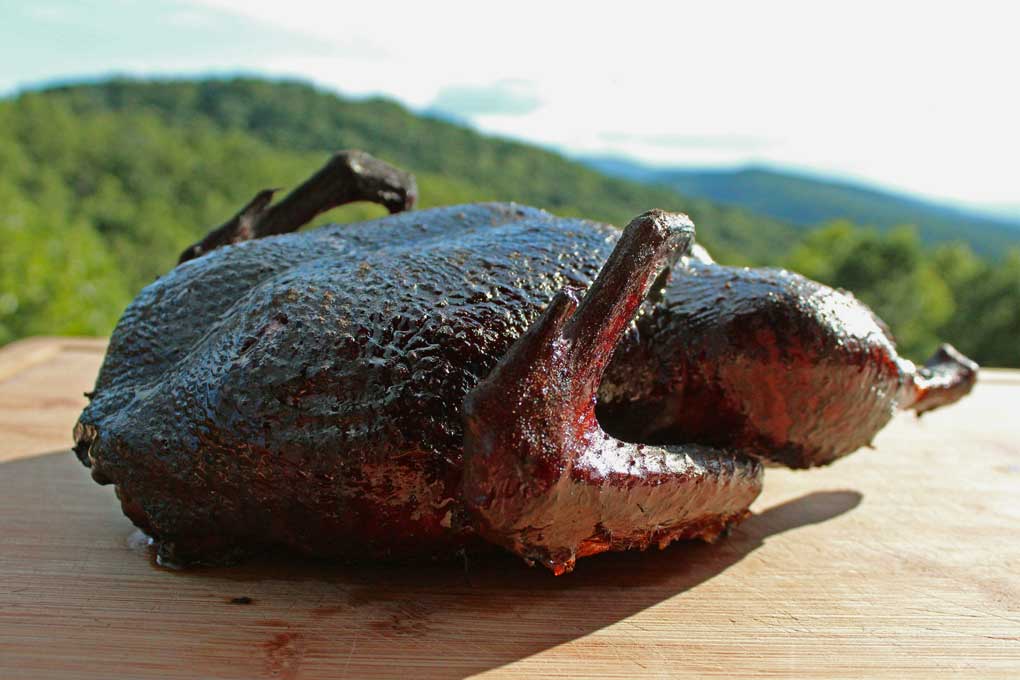
Smoke the duck until the breast is about half the size when you lay it on the smoker and the skin is an amber mahogany color. The internal temperature of the meat should be 165 degrees F for about 5 to 6 hours. At this point, the drumsticks should wiggle freely.

If you don’t use a probe thermometer, use an instant-read meat thermometer, such as the Thermoworks Thermapen® ONE, to test for doneness. Make sure the probe doesn’t touch any of the bones when taking the reading.
We use both types of thermometers to make sure the temperature is perfect.
Resting & Carryover Heat
Once you verify the temperature of 165 degrees F, pull the duck from the smoker and transfer it to a cutting board. Allow the duck to rest for at least 15 to 20 minutes before carving. The temperature should go up slightly from the carryover heat. This is normal and perfectly fine.
Once you verify the temperature of 165 degrees F, pull the duck from the smoker and transfer it to a cutting board. Allow the duck to rest for at least 15 to 20 minutes before carving. The temperature should go up slightly from the carryover heat. This is normal and perfectly fine.
Carving and Serving Smoked Duck
Perfectly smoked duck meat is tender and incredibly juicy. Serve cooled to room temperature or chill and serve as an appetizer or cold cut on a sandwich.
You can serve the legs and breasts sliced with some Cranberry BBQ Sauce for a special holiday meal.
Tips for Smoking Duck
- Wild mallard can also be used instead of Peking duck.
- Adding Brine Solution To The Cooler: Make sure you keep the salt-to-water ratio correct. The salt does not evaporate when the brine is boiled. You may need to add more ice water to the brine depending on how much liquid boils out. Measure the amount of brine solution you pour into the cooler then add enough ice water to make 3 gallons.
- Alternatively, it may be easier to test how much brine solution and ice water needs to be added to the cooler. Do this by pouring exactly 3 gallons of water into the cooler, then marking the inside of the cooler with a pen or some tape, so you know about how much ice water to add. Then dump the water out and go from there.
- If you have a large enough refrigerator and a big enough container, by all means, do so to ensure proper refrigeration. However, if you are using a cooler, you will want to add a little more ice about halfway through the brining.
Typically with poultry David and I go straight for the legs and thighs. Smoking this duck made us change our tune. The breast meat sliced super thing was our favorite part. However, the leg meat was a close second!
If you decide to smoke a duck using this recipe, please let us know how it turns out. We’d love to hear from you. Please leave your comments below!

Smoked Duck
Useful Equipment:
- Charcoal
- Applewood Chips
Ingredients
Orange-Beer Brine:
- 2 cups brown sugar
- 2 cups kosher salt
- ¼ cup whole black peppercorns toasted
- 8 bay leaves
- 4 large navel oranges zest and juice from each
- 24 ounces beer 2 (12-ounce) bottles amber-style
- 3 quarts water
- 21 cups ice water
- 5 ½ pound Pekin duck (5-6 pound range) cleaned
- 1 tablespoon finely ground black pepper
Brown Sugar Soy Glaze:
- 2 tablespoons brown sugar divided
- 2 tablespoons soy sauce
- 1 tablespoon kosher salt
Instructions
Prepare the Duck for Brine
- Remove the duck from the packaging. Then remove the giblets from inside the duck and; discard. Rinse the duck inside and out under cold running water, pulling out any extra fat or cut bits from the body cavity.
Brine the Duck
- Combine the brown sugar, salt, peppercorns, bay leaves, orange zest and juice, beer and water in a 6-quart stockpot and bring to a boil over high heat. When the brine comes to a boil, reduce the heat and simmer for 15 to 20 minutes. Turn off the heat and allow it to cool completely.
- Transfer the brine into a large 16-quart cooler. Add enough ice water to measure as close to 3-gallons as possible (see recipe notes).
- Dunk the prepared duck into the brine solution. You may need to hold the duck down until the body cavity fills with brine to ensure that it is submerged in the brine solution completely.
- Refrigerate the duck in the brine for 24-hours, stirring about halfway through.
- If you have a large enough refrigerator and a big enough container, by all means, do so to ensure proper refrigeration. However, if you are using a cooler, store it in the coolest place possible. You will need to add more ice about halfway through the brining. To maintain the salt-to-liquid ratio, add the ice to a plastic bag and seal before putting it in the brine.
Prepare the Duck For Smoking:
- After 24-hours (a little more time won’t hurt), remove the duck from the brine and pat dry inside and out with paper towels. Place the duck on a clean workspace. Blot the duck dry with paper towels and allow it to come to room temperature; about 20 to 30 minutes.
- Trim the neck skin off, leaving a 1-inch flap. Fold the flap down, closing up the neck hole.
- Ducks have more fat than other types of birds, especially when it comes to game birds. This smoked duck recipe will provide you with a crispy skin and meat so moist it practically falls off the bone. So this next step is crucial.
- Using a sharp skewer, pinch the skin of the breast of the duck and pierce all along the surface of the breast, without piercing the meat underneath. This is an important step, because it helps release and render the fat. The fat on top of the breast meat renders out of the skin and the duck will practically baste itself as it smokes.
Make the Brown Sugar Soy Glaze
- Whisk together the brown sugar, soy sauce and salt in a small bowl until the sugar and salt have dissolved. Set aside until needed.
Fire Up The Smoker!
- Soak a few handfuls of applewood chips for about 30 minutes in water before placing on the coals.
- Meanwhile, preheat the grill to 200-275 degrees F. To maintain this low temperature, use only half as much charcoal as usual. (A half chimney-full.)
- Add the wood chips to get the smoke going. Place a water pan below the smoker’s cooking grate to create a humid environment, and to catch any drips.
Smoke the Duck
- Give the brown sugar soy glaze a final whisk, then brush the duck all over. Place the duck in the center of the smoking grate and insert the temperature probes (if using a digital probe thermometer).
- Bring the temperature up to 225 degrees F, using the vents and wet and dry wood chips to regulate the temperature. You will need to add fresh coals and more wood chips almost every hour for at least the first 4 hours.
Low and Slow
- Check the temperature of the smoker every hour, staying as close to 225 degrees F as possible. Resist the temptation to open the lid unless you need to add more charcoal or soaked wood chips to maintain the temperature and smoke.
Testing For Doneness
- Smoke the duck until the breast is about half the size it was when you laid it on the smoker and the skin is an amber mahogany color. The internal temperature of the meat should be 165 degrees F, about 5 to 6 hours. At this point, the drumsticks should wiggle freely.
Resting & Carryover Heat
- Once you verify the done temperature of 165 degrees F, pull the duck from the smoker and transfer it to a cutting board. Allow the duck to rest for at least 15 to 20 minutes before carving. The temperature should go up slightly from the carryover heat. This is normal and perfectly fine.
Carving & Serving
- Perfectly smoked duck meat is tender and incredibly juicy. Serve cooled to room temperature or chill and serve as an appetizer or cold cut on a sandwich.





Mimi says
This looks fabulous! I’ve smoked chicken and turkey, but not duck. I cannot wait to try it, but I have to wait for company because my husband won’t eat duck. Dammit.
The Mountain Kitchen says
Mimi, do it for yourself!! There isn’t a whole lot of meat. You could eat duck all week and not even care…lol! 😀
Alexis says
Is this better done on a grill or would my actual smoker work too? Silly question, but I don’t want to mess up my first duck. I smoked a 17# Turkey on my charcoal grill last year and it was amazing! I just got this Camp Chef smoker and want to get some good use out of it.
The Mountain Kitchen says
Hi Alexis, use the same principles on both the grill and smoker. We understand why you are being cautious. Two points to remember: (1) cut the smoke off (not the heat) when you get the color you want & (2) focus on temperature vs. time. Let us know how it goes!!
Ed Dodson says
My son and I smoked two 7 lb. ducks following your recipe for a dinner party and had a great time. The duck was delicious and, sorry to say, there were no leftovers.
The Brining went well. We have a large pot that held both ducks and the double measure of brining fluid. Zesting 8 oranges was a chore. After a 24 hour brining period the meat came out very tender.
I have to watch my salt intake and reduced the amount of salt in the Brown Sugar Soy Glaze by 50 %, and it still tasted too salty to me. Some of the non-salt-restrictors at the dinner agreed. Next time I will use just soy and brown sugar.
This was a lot of fun and we will do it again, perhaps not 2 at a time.
The Mountain Kitchen says
So happy you had a successful cook and were able to adapt it to suite your needs. Thanks for you comment, Ed!