
This crispy fried chicken recipe uses a brine, double coating, and vodka batter for a crust that stays crisp under a honey drizzle.
Some meals just stick with you. Seven years ago, my husband David and I flew back to Las Vegas to celebrate our sixth wedding anniversary, and one dinner has stuck with me ever since.
We ended up at Mabel’s, Chef Michael Symon’s BBQ joint at the Palms. But the real magic happened behind an unassuming wall panel tucked inside, which opened into Sara’s, a hidden speakeasy. It felt like stumbling into a secret. David ordered prime rib, and usually I’m a beef girl, but I didn’t stick to character that night. I ordered fried chicken, unlike anything I’d had before. A honey drizzle, yet somehow still shatteringly crispy to the last bite. Sadly, Sara’s never reopened after the pandemic. That makes another small restaurant casualty of the pandemic. That meal is a memory I can’t relive in person anymore.
I never forgot that chicken, so when I found Michael Symon’s fried chicken recipe online, I had to try recreating that Sara’s magic at home. This crispy fried chicken recipe is the result. My first attempt didn’t go quite as planned. The brine turned out far saltier than I expected, but a second try got the balance right, and it’s been a regular in our kitchen since. Two touches bring it closer to that Sara’s experience: crispy fried sage leaves on top, and a generous drizzle of honey right before serving.
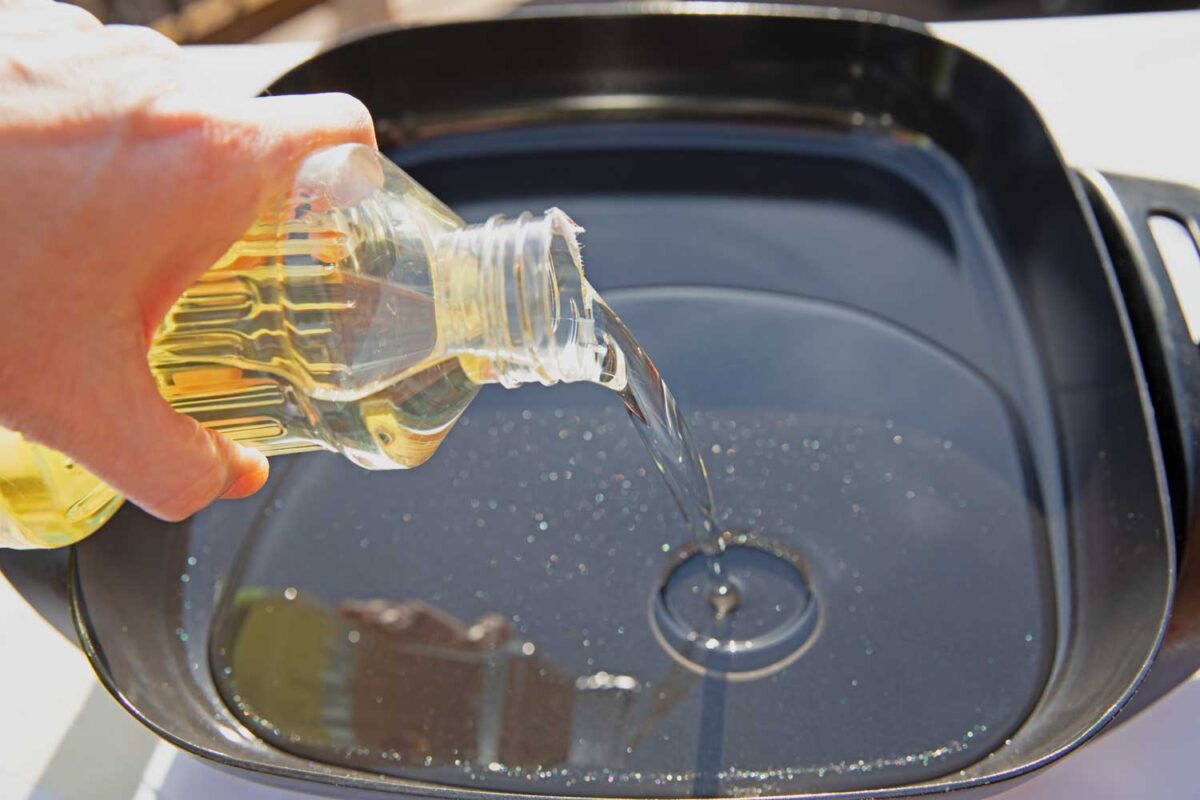
I grew up on fried food, so these days I treat it as an occasional indulgence rather than an everyday thing. Frying also happens outside now, in an electric frying pan, which keeps the smell and the mess, and the temptation, out of the kitchen.
What Makes This the Crispiest Fried Chicken Recipe
Most fried chicken goes soft within minutes of leaving the fryer. Add anything wet, like a honey drizzle, and it’s even worse. This recipe holds its crunch thanks to two things. An overnight brine seasons the meat all the way through. A vodka-based batter does the rest. The alcohol evaporates faster than water in the hot oil. That means the crust sets before it has a chance to get soggy.
If you’re looking for a simple flour-and-egg breading instead, check out our guide on how to properly batter chicken for the classic dry-wet-dry method. This recipe builds on that same principle. It takes things further with a brine and a double coating, for a heavier, shatter-crisp restaurant-style crust.
How to Make This Fried Chicken, Step by Step
This crispy fried chicken recipe looks like a lot of steps, but each one is doing real work. Most of the time is hands-off.
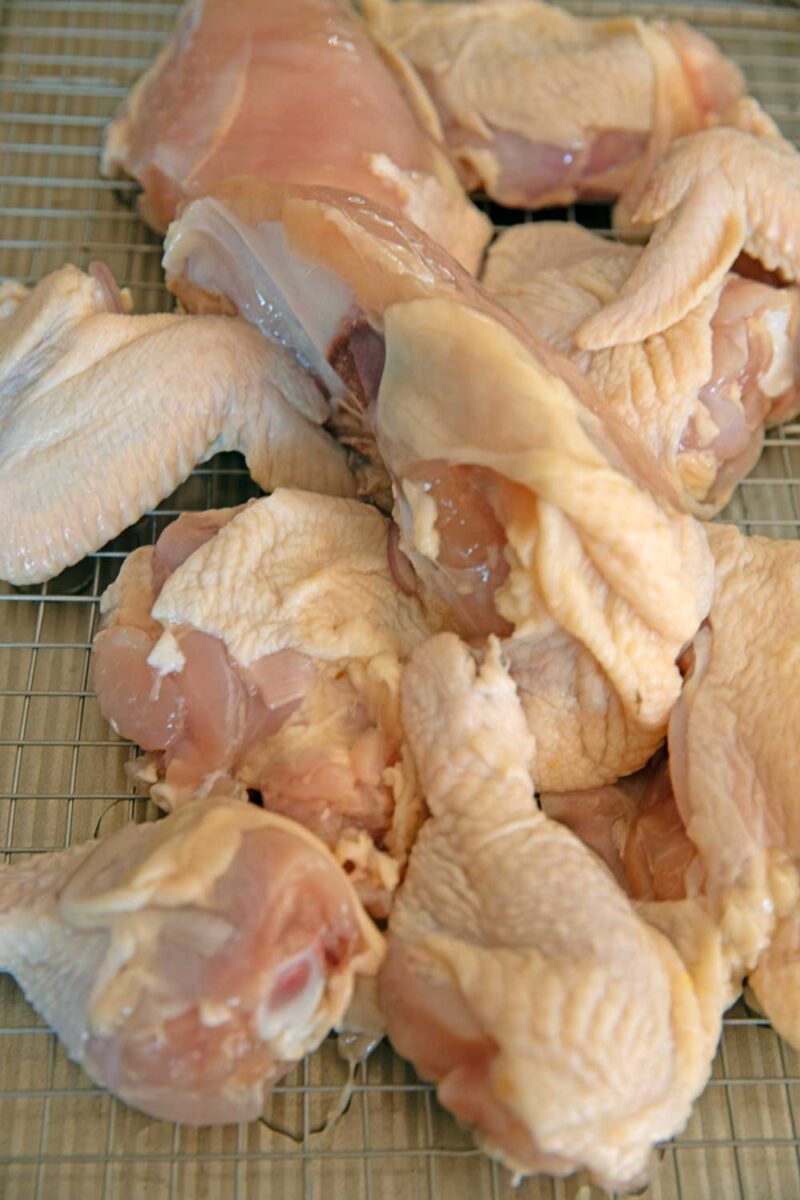
- Brine it overnight. Kosher salt, brown sugar, thyme, rosemary, garlic, and shallots go into the water, and the chicken soaks in this overnight in the fridge. This is what seasons the meat all the way through instead of just on the surface. The brine keeps it juicy once it hits the hot oil.
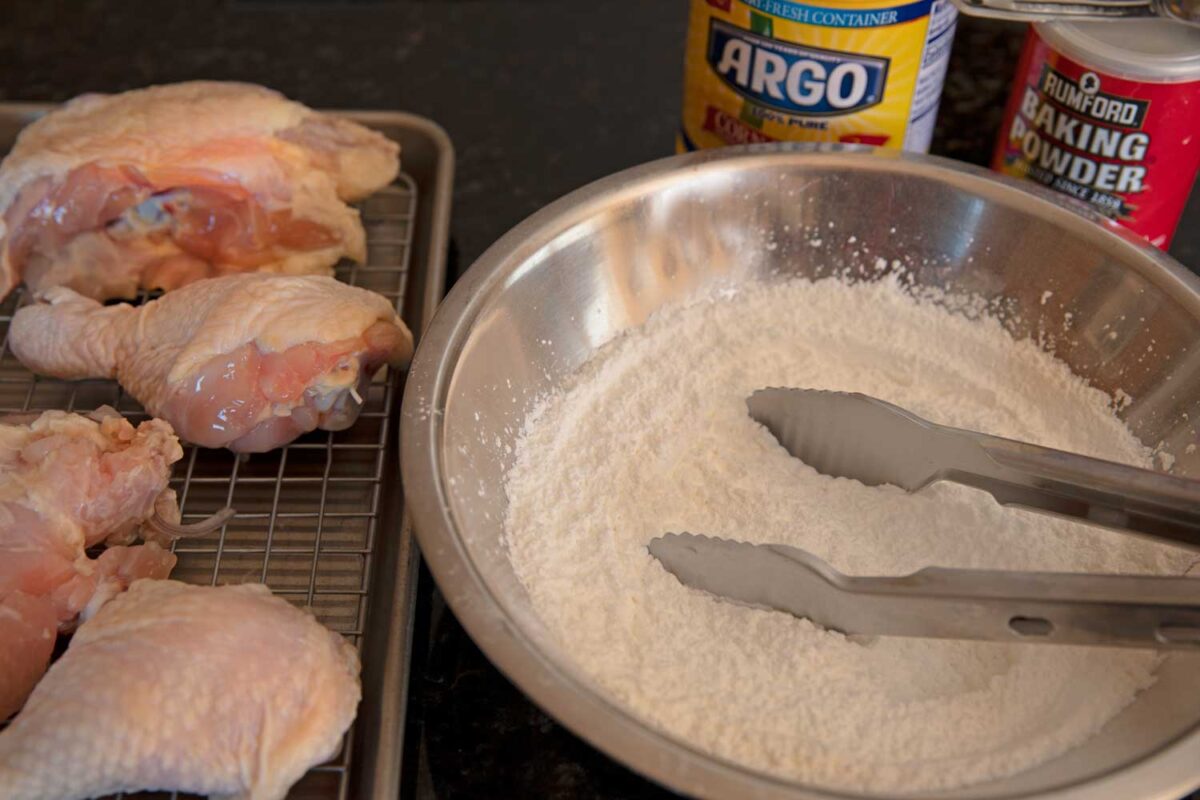
- Dry-coat it and let it rest. The next day, the chicken gets dredged in cornstarch and baking powder, then rests on a rack for a couple of hours (or up to overnight). This first coating builds structure and gives the wet batter something to cling to instead of sliding right off.
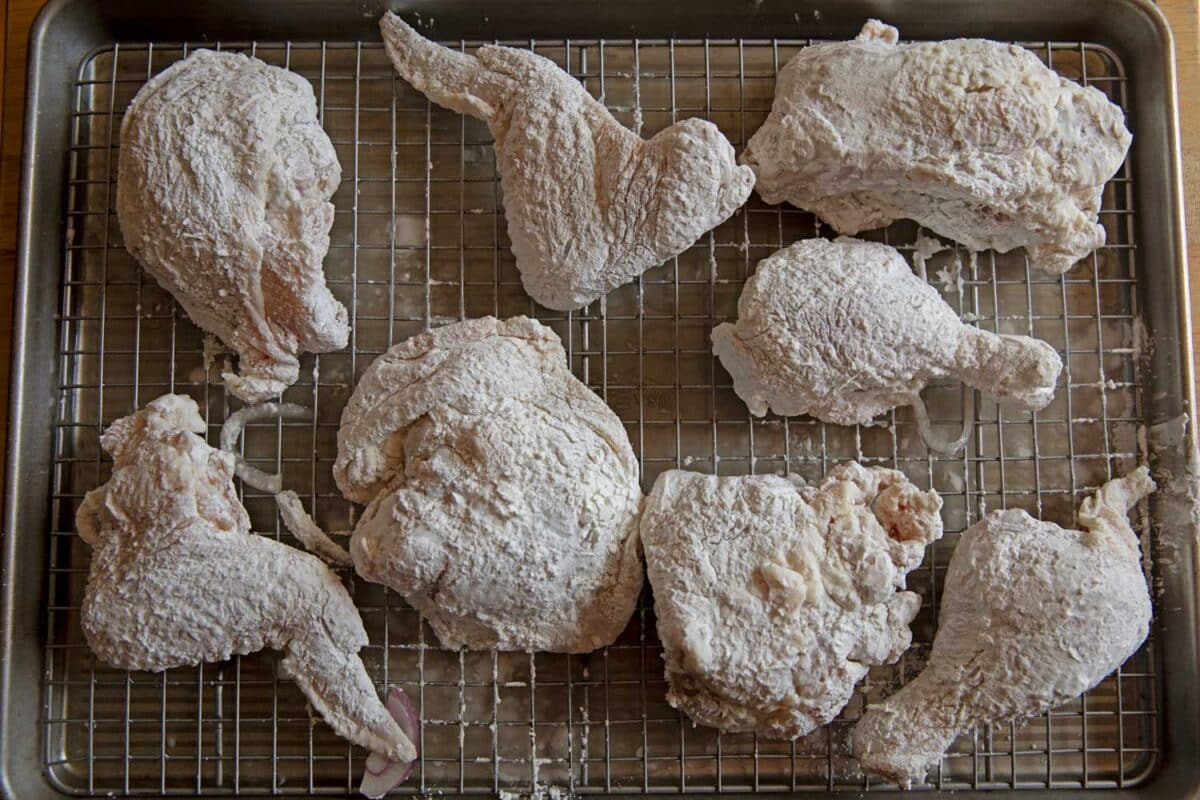
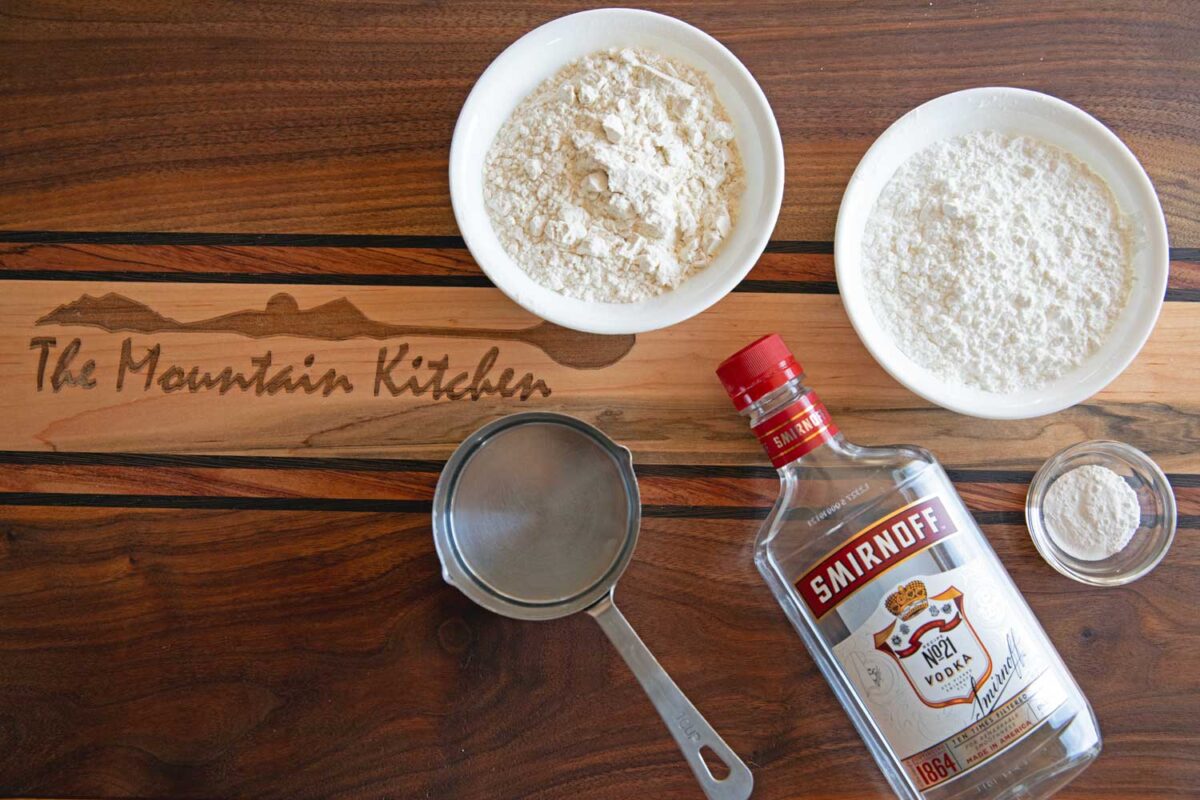
- Batter it with vodka. Right before frying, each piece gets dipped into a batter of flour, more cornstarch, baking powder, water, and vodka. The vodka is the real trick because it evaporates almost immediately in the hot oil, which is exactly what gives this chicken its shatter-crisp texture instead of a heavier, greasier crust.
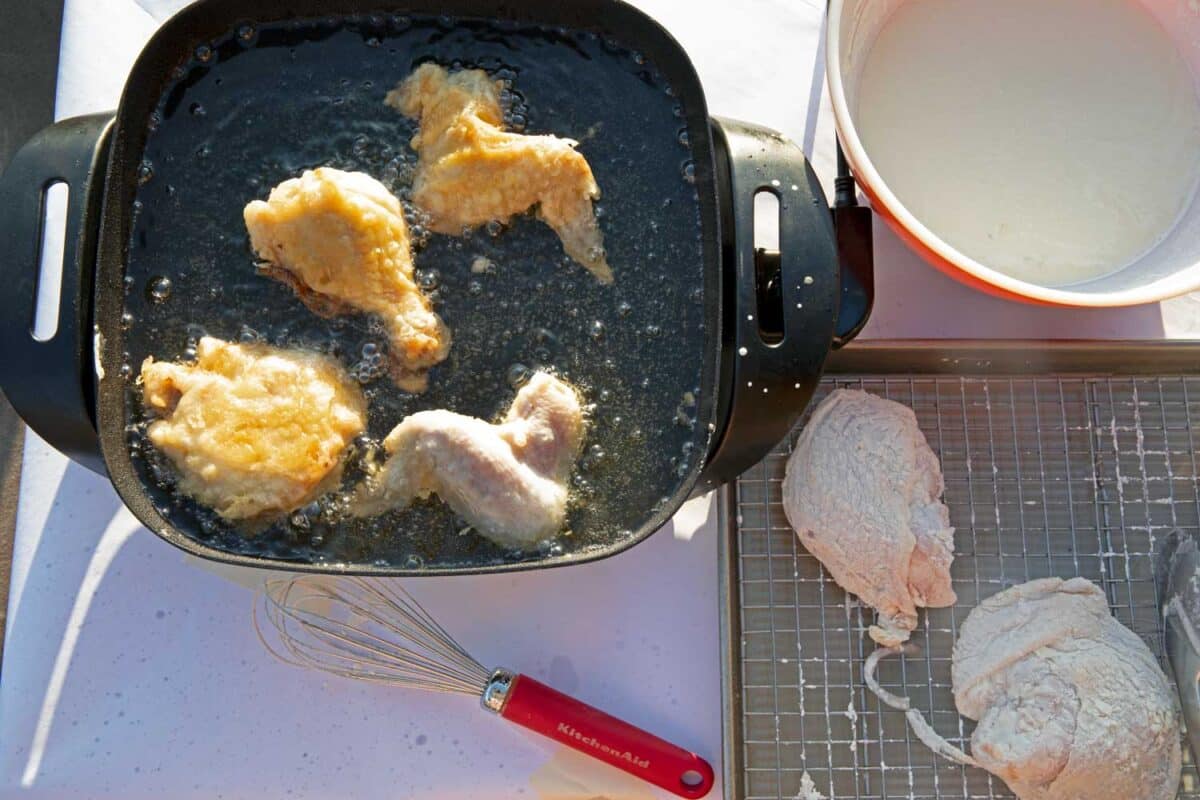
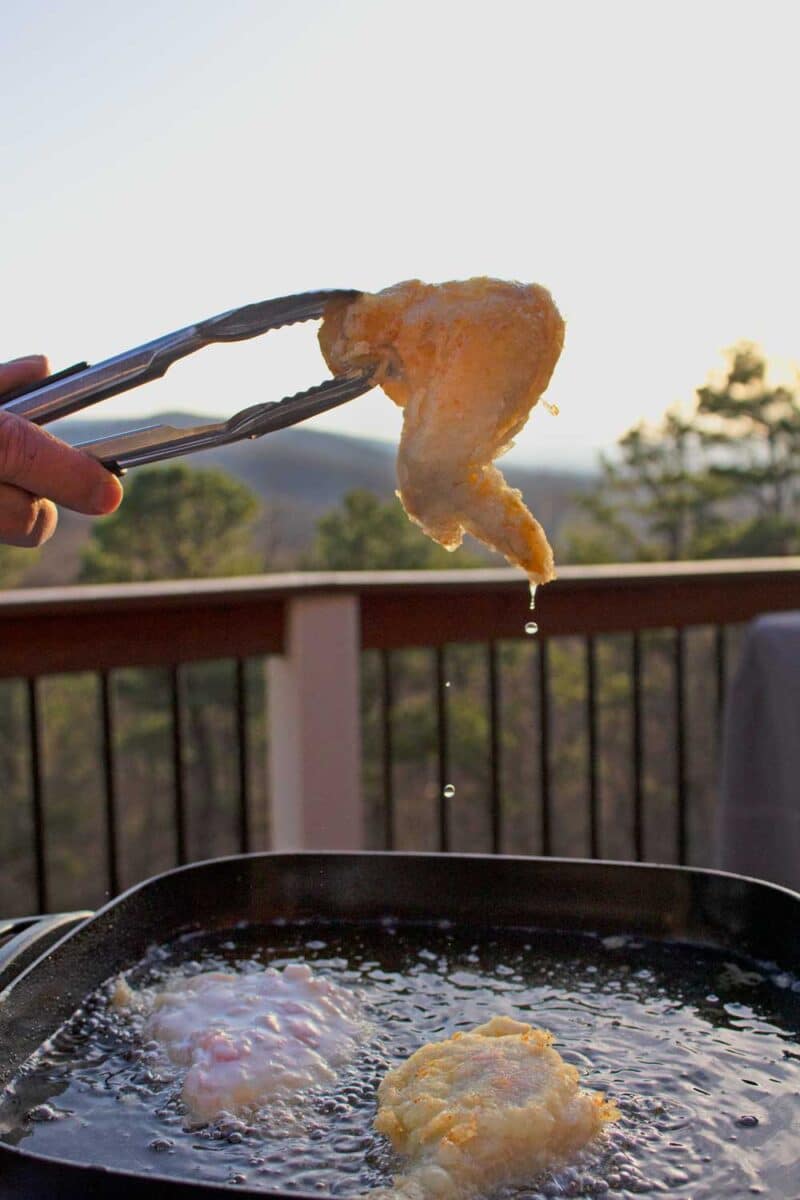
- Fry it in batches. Into 350 degrees F oil it goes, cooking until deep golden brown, then straight onto a wire rack to rest. I do all my frying outside in an electric frying pan, which keeps the oil smell out of the house (worth considering if you have the space for it).
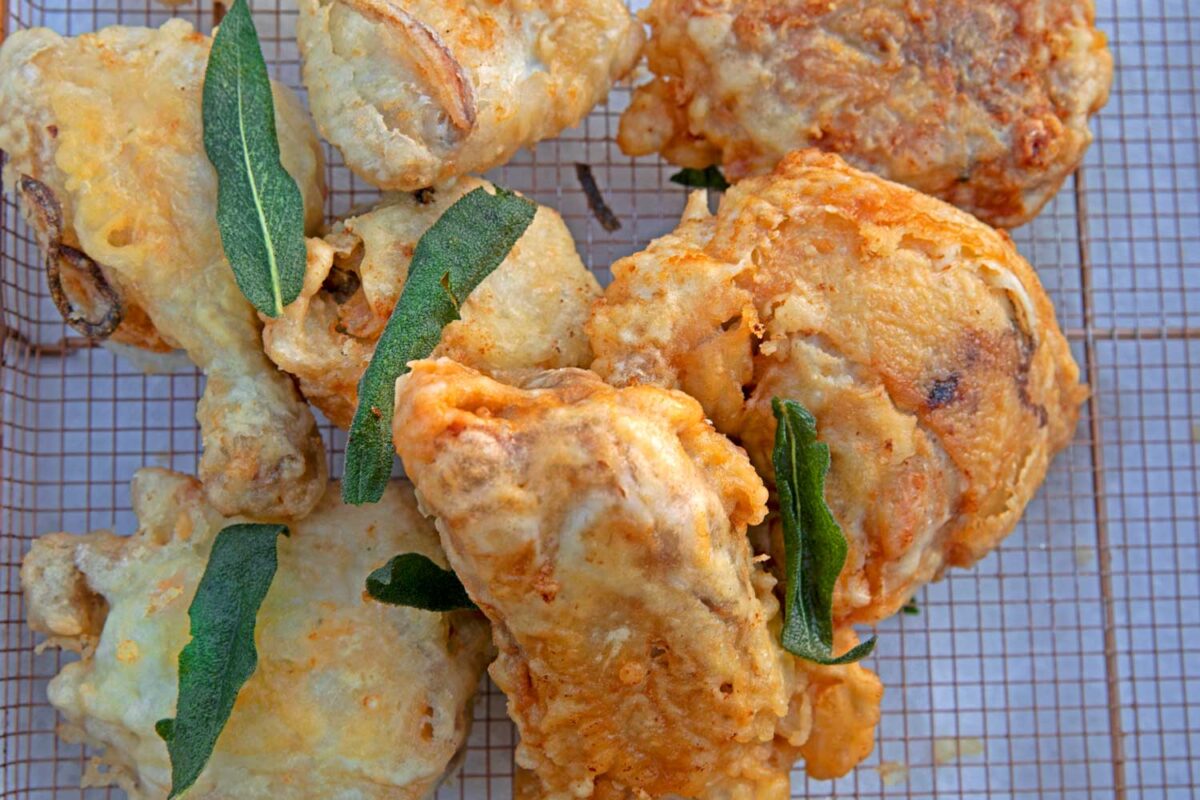
- Fry the sage right at the end. Drop the sage leaves into the same hot oil with the last batch of chicken. They don’t take long; they only need 10-15 seconds to crisp up and turn a darker green, so pull them out with a slotted spoon before they burn.
- Plate and drizzle. Arrange everything together and finish with a generous drizzle of honey, the way it was served to me at Sara’s. Because the crust is built to stay crisp, the honey doesn’t soften it the way it would a standard breaded chicken.
Recipe FAQs
Alcohol evaporates at a lower temperature than water. When vodka in the batter hits hot oil, it cooks off fast, leaving behind a thinner, drier, crispier shell instead of a heavier, moisture-laden crust.
The brine and coating steps can be done a day ahead. In fact, letting the chicken sit in the coating overnight helps it adhere even better. Fry just before serving for the crispiest results; fried chicken is always best eaten fresh out of the oil.
If you’d rather not cook with alcohol, cold seltzer or club soda is the closest substitute. The carbonation helps lighten the batter, though you won’t get quite the same shatter-crisp effect as the evaporating alcohol.
Not with this method. Because the crust is built to stay crisp (double coating plus the vodka batter), a light honey drizzle right before serving won’t soften it the way it would a standard breaded chicken.
More Crispy Frying Tips & Recipes
- How to Properly Batter Chicken — our classic dry-wet-dry breading method, great for a simpler, everyday fried chicken
- Battered Potatoes
- The Perfect Batter for Fried Okra
This crispy fried chicken recipe will always take me back to that little hidden room behind the wall panel at Mabel’s, but now I get to relive it in my own kitchen, and David gets the benefit too.
If you try this recipe, I’d love it if you left a star rating and a comment below—it helps other readers (and me!) know how it turned out.
With Love & Flavor,

Michael Symon’s Crispiest Fried Chicken Recipe
Useful Equipment:
Ingredients
For the Chicken
- 1 whole chicken cut into 10 pieces (2 legs, 2 thighs, 2 wings, 2 breasts—each cut in half)
- Canola oil for frying
For the Brine
- ½ cup kosher salt
- ¼ cup brown sugar
- 1 gallon water divided
- 1 small bundle thyme sprigs
- 1 small bundle rosemary sprigs
- 6 cloves garlic smashed
- 2 shallots peeled and finely sliced
For the Coating
- 1 cup cornstarch
- 2 teaspoons baking powder
For the Batter
- 1 cup flour
- 1 cup cornstarch
- 1 teaspoon baking powder
- 1 cup water
- 1 cup vodka
To Finish
- 1 bunch fresh sage leaves
- Honey for drizzling
Instructions
- Make the brine. Add the salt and brown sugar to 4 cups of warm water and whisk until dissolved. Add the remaining 12 cups of room-temperature or cold water, then stir in the thyme, rosemary, garlic, and shallots. Submerge the chicken pieces completely in the brine, cover, and refrigerate overnight.
- Coat the chicken. The next day, remove the chicken from the brine to a draining rack and discard the brine. Whisk together the cornstarch and baking powder, then dredge each piece of chicken in the coating, returning it to the rack. Let the chicken sit in the coating for 2 hours, or up to overnight, in the refrigerator.
- Heat the oil. Heat a pot of canola oil for frying to 350 degrees F.
- Batter and fry the chicken. Whisk together the flour, cornstarch, baking powder, water, and vodka to make the batter. Once the oil is hot, dip each piece of chicken in the batter, letting the excess drip off, then gently lower it into the oil. Don't overcrowd the pan. Fry in two batches if needed. Fry until golden brown and crispy, and the chicken reaches an internal temperature of 165 degrees F, about 15 minutes. Transfer to a wire rack (not paper towels, which trap steam and soften the crust).
- Fry the sage with the chicken. During the last batch of chicken, add the sage leaves directly to the hot oil alongside the chicken pieces for the final 10-15 seconds of frying, until they turn a darker green and crisp up. Remove the sage first with a slotted spoon (it crisps faster than the chicken) and drain on a rack.
- Finish and serve. Arrange the fried chicken on a platter, scatter the crispy fried sage leaves over the top, and finish with a generous drizzle of honey. Serve immediately while the crust is at its crispiest.
Notes
- The vodka matters: it sounds unusual, but it really is the secret to that shattering crust that holds up even under a drizzle of honey.
- Fry the sage last, right after the chicken, so you’re working with hot, flavorful oil and everything comes together while it’s still warm.





Leave a Reply