

Fresh pumpkin puree makes a huge difference in the way your pumpkin recipes taste. The flavor is sweeter, and a little milder than the canned varieties. Not to mention you know what the heck it is made of.
I’m not sure I would love pumpkin as much as I do, had I not learned how to make my own pumpkin puree. The stuff in the can is okay, but I don’t really trust what is in the can.
I kept seeing headlines on the internet about how pumpkin in the can isn’t exactly pumpkin. So I dug into it a little and this is what I found. According to the USDA canned pumpkin has a very loose definition:
“Canned pumpkin and canned squash is the canned product prepared from clean, sound, properly matured, golden fleshed, firm shelled, sweet varieties of either pumpkins or squashes by washing, stemming, cutting, steaming and reducing to a pulp. The product is properly sieved and finished in accordance with good commercial practice and is then sufficiently processed by heat to assure preservation of the product in hermetically sealed containers.”
Not very clear is it?
Well, never fear, making pumpkin puree is so easy to make! With Thanksgiving coming up next week, I want to share this how-to guide on how to make your own pumpkin puree or any winter squash puree for that matter.
Let’s start with the basics…
What is pumpkin puree?
First, let’s define what pumpkin puree is. Pumpkin puree is the product of a cooked pumpkin that is blended in a food processor. A puree is nothing but a thick smooth pulp. You can bake, roast, sautee, steam or boil pumpkin to make a puree. Each of these methods of cooking can change the flavor of the puree.
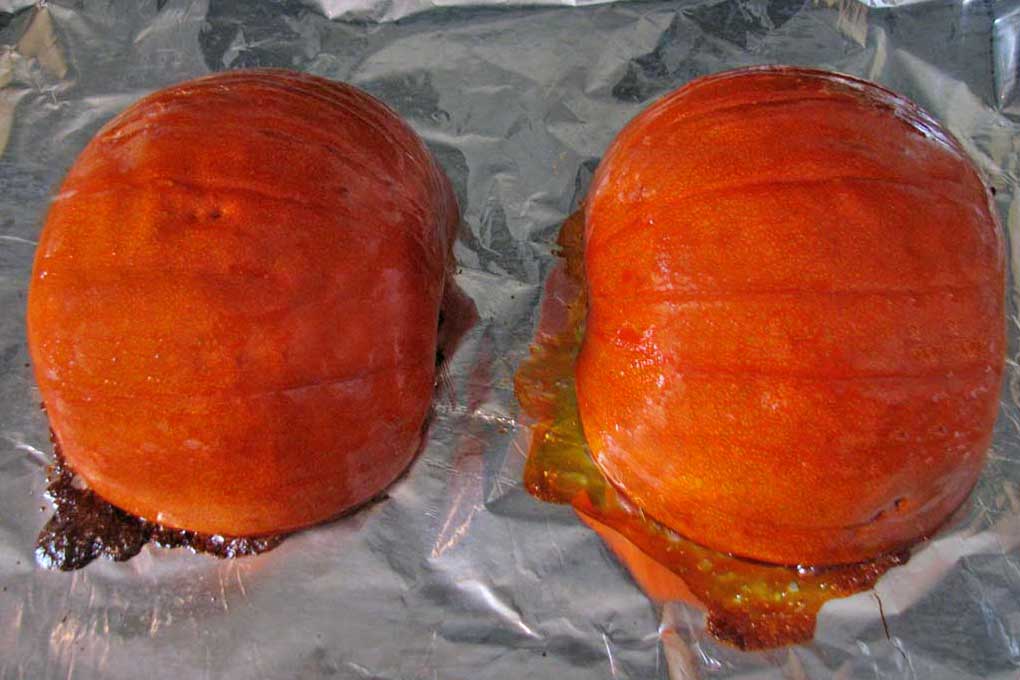
The best method to cook the pumpkin for a puree is to roast it. Roasting the pumpkin reduces a lot of the moisture within the pumpkin. You will notice that the pumpkin is roasted in the oven cut side down so that the flesh doesn’t hold the moisture.
How To Select A Pumpkin For Cooking
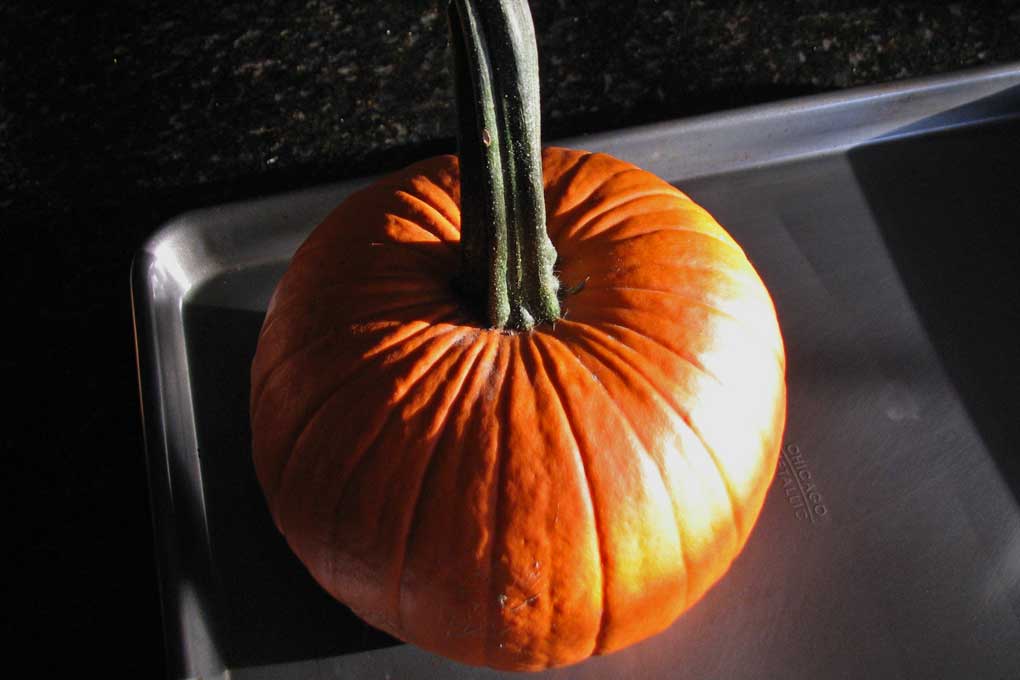
Pumpkins can vary in shape, color, flavor, and texture. When selecting a pumpkin for cooking, look for a small pumpkin, not a large one like you would carve. Large pumpkin varieties tend to have more moisture, less flavor, and stringy texture. Cooking pumpkins usually weigh between four and eight pounds. Typically a 3-pound pumpkin yields about 1 cup of puree. Look for pumpkins labeled “sugar pumpkin” or “pie pumpkin”. They are dense with a smooth texture and high sugar content.
If you stock up on cooking pumpkins when they go on sale, store the uncut pumpkins for up to two months in a dark cool place.
Other Winter Squash:
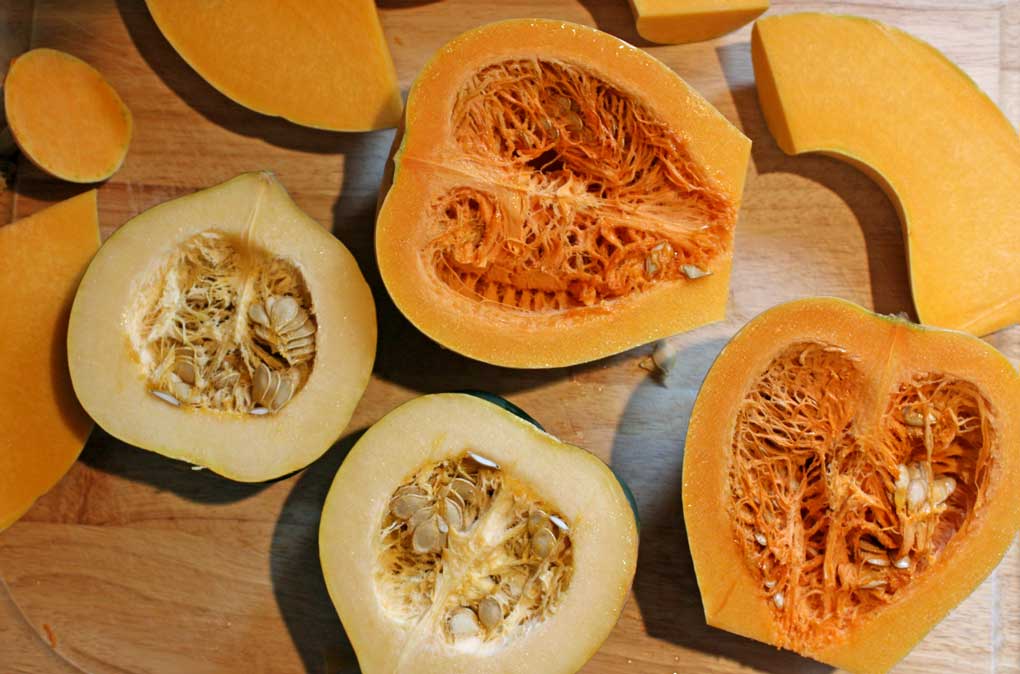
This recipe will work for pumpkin or any other winter squash, such as acorn, butternut, and neck pumpkins, just to name a few. The roasting time may need to be adjusted, but the method of making puree from these squash is the exact same.
How To Make Pumpkin Puree
Ingredients:
- 1 medium sugar pumpkin
- canola oil for oiling pumpkin skin
Equipment:
- heavy sharp knife
- baking sheet
- aluminum foil
- pastry brush
- food processor or blender
Directions:
Preheat the oven to 375 degrees F. Line a baking sheet with aluminum foil.
Rinse the pumpkin and pat dry with paper towels.
First, cut off the stem of the pumpkin. Sometimes it will pull off, but if not, cut it off with a knife.
Next, cut the pumpkin in half. To do this, stick a heavy sharp knife down inside the top of the pumpkin near the stem. Push the knife down towards the bottom of the pumpkin.
Be sure to keep your fingers out of the way of the knife. Rotate the pumpkin around so that you cut it all the way through. Sometimes they are tough to get open.
A rubber mallet is useful for tapping the knife through the pumpkin. If the knife gets stuck, carefully give the pumpkin a few firm whacks on the counter, until it releases the knife. Sometimes this will help the knife penetrate all the way through.
Spoon out the seeds and scrape the stringy pulp until the inside of the pumpkin is smooth; discard the seeds and pulp.
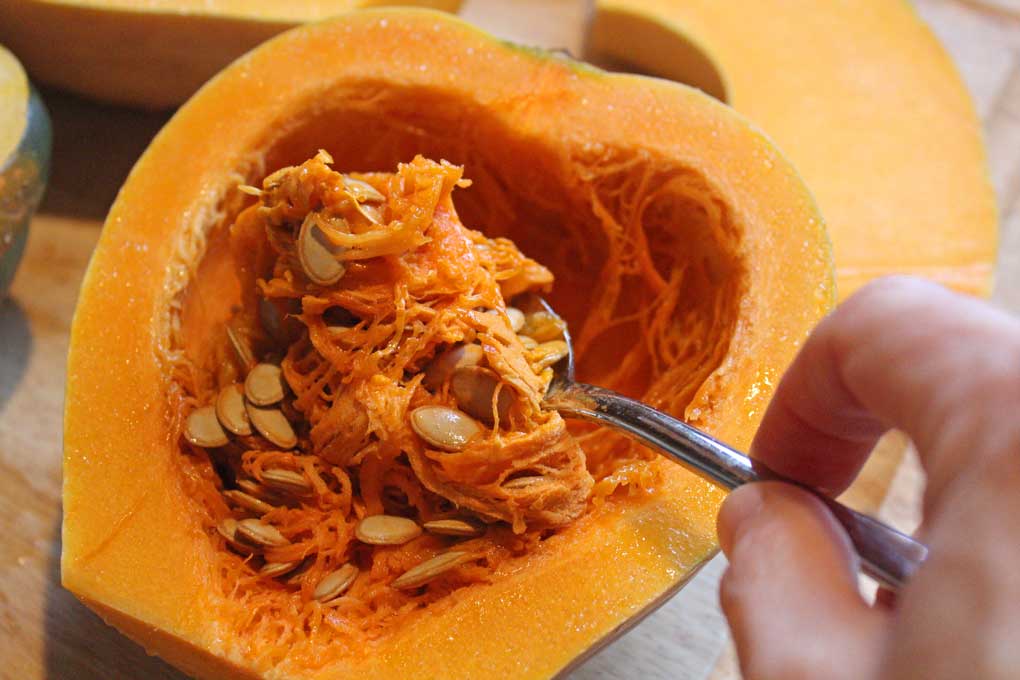
Note: Seeds from all pumpkins and winter squash can be roasted and eaten. Save them if desired.
Lay the two pumpkin halves cut-side down onto the prepared baking sheet. Brush canola oil all over the outside of the skin.
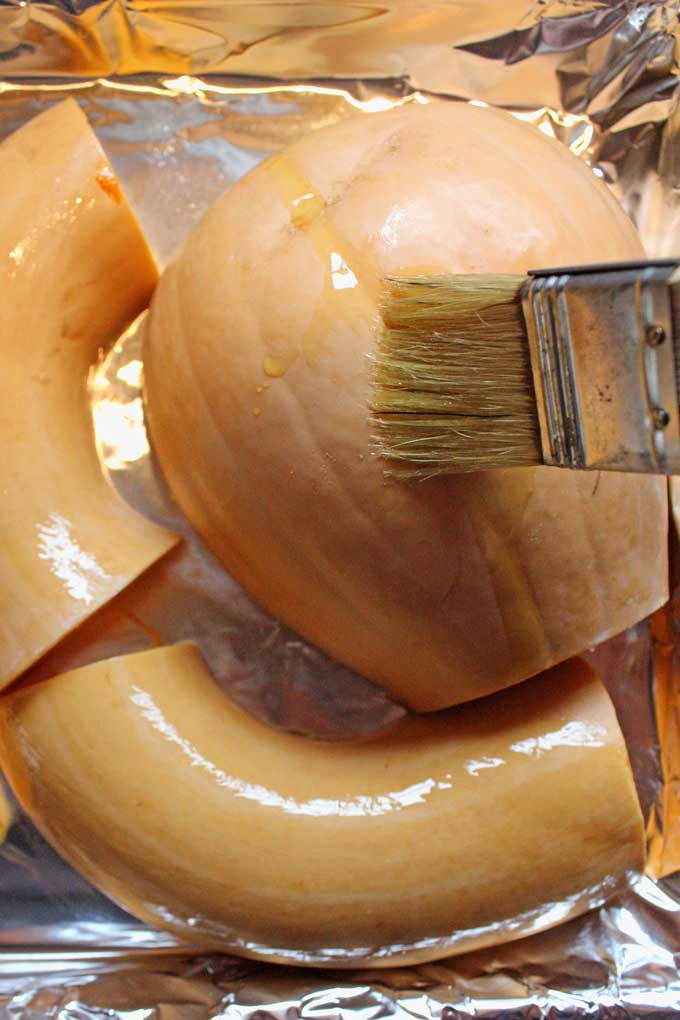
Bake in the preheated oven for about an hour, or until fork-tender. Baking time will vary depending on the size and shape of your pumpkin (or squash).
Allow the pumpkin to cool completely.
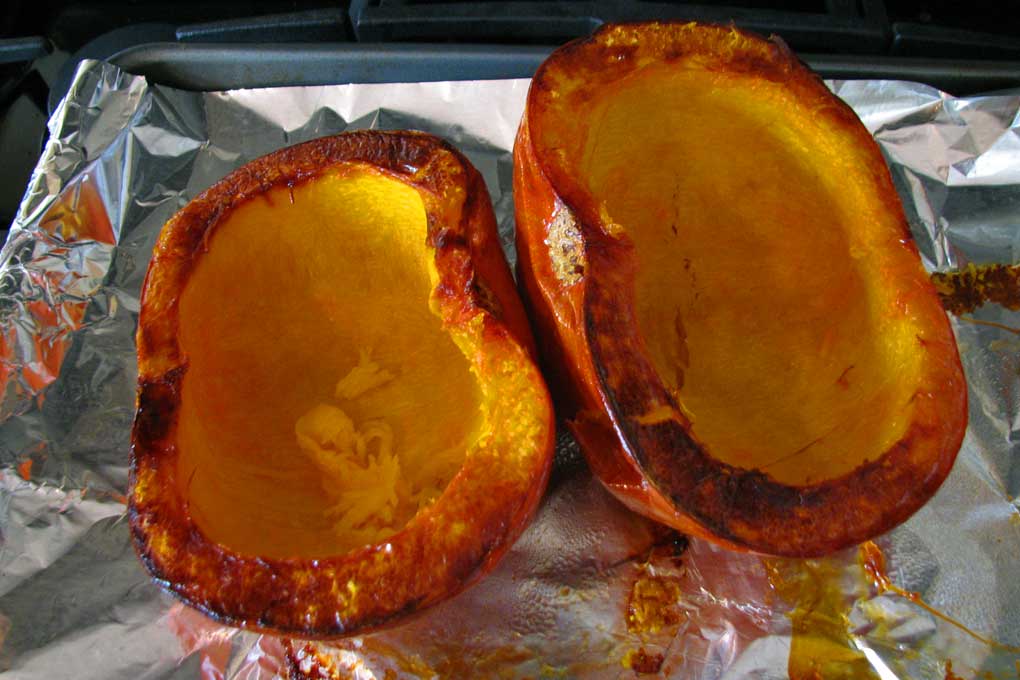
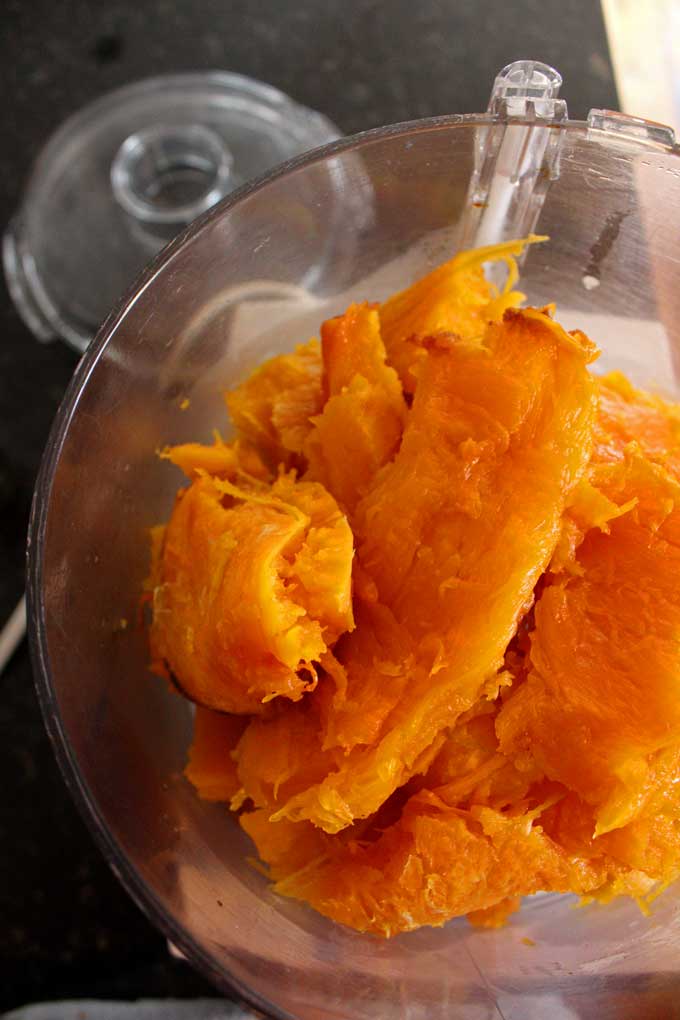
Once the pumpkin has cooled, use a large spoon to scoop out the pulp directly into the food processor or blender. Puree until smooth.
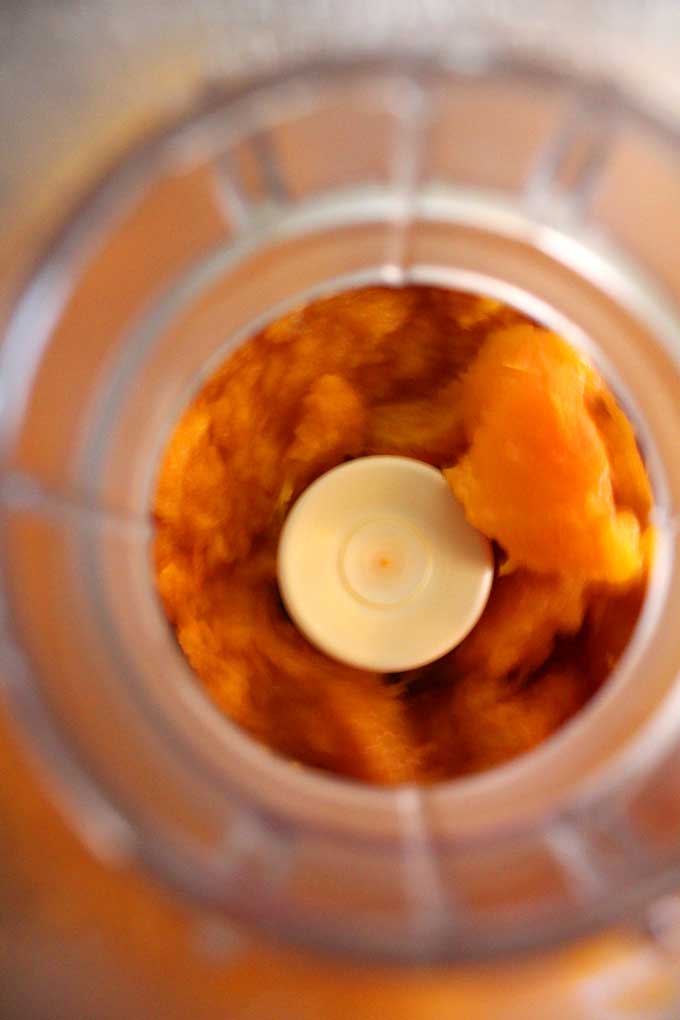
Although the pumpkin puree should be ready to use right away, sometimes it can still be a little watery even after roasting. If you would like the pumpkin puree to be a little thicker, drain the puree before storing it.
To drain, use a fine sieve, or a colander lined with a coffee filter or cheesecloth. Allow the puree to drain for about an hour after pureeing.
How to Store and Freeze Pumpkin Puree
A pumpkin or winter squash usually provides more puree than you can use right away. You can store pumpkin puree sealed tightly inside an airtight container in the refrigerator for a few days.
If you do not use the puree within a few days, place the puree in pre-measured amounts inside plastic containers or freezer bags. I usually store in cup size (8-ounce) portions.
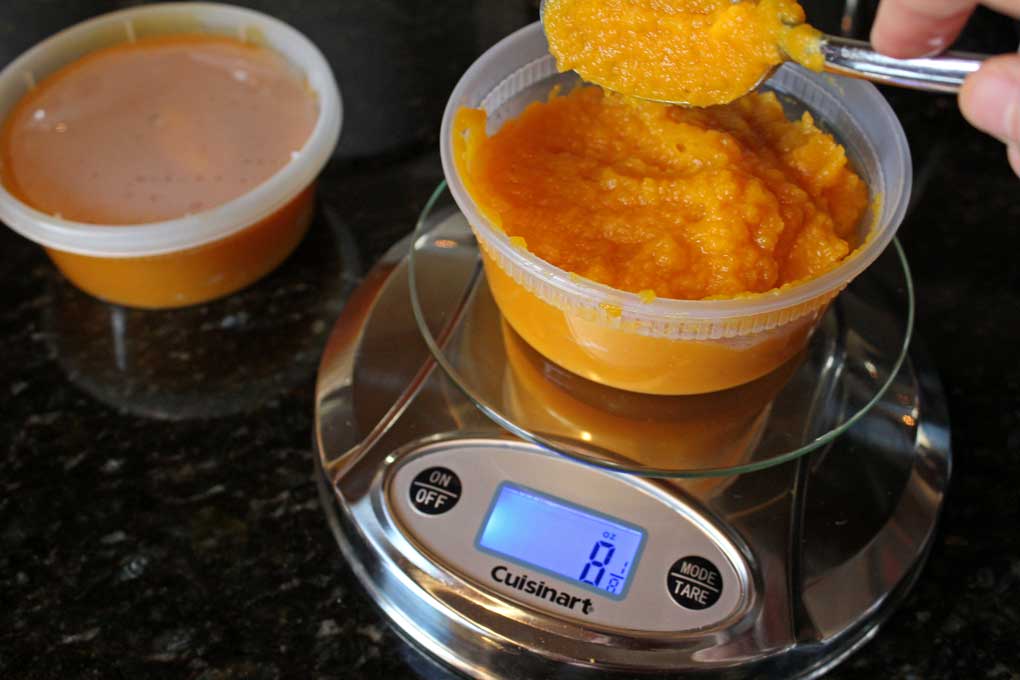
I adore my Cuisinart Kitchen Scale for doing tasks like this.
Freeze pumpkin puree for 6 months to 1 year. To thaw frozen pumpkin puree, place it in the refrigerator overnight. If you need to thaw it out faster, place the pumpkin puree into a bowl of lukewarm water for 15 to 30 minutes. The puree may separate or become a little watery when thawed. If this occurs, just give it a good stir before using.
Recipes That Use Pumpkin Puree
Pumpkin flavor delicious is a crowd-pleaser. As an ingredient can be used in so many different ways. Here are a few recipes that call for pumpkin puree:
- Easy Pumpkin Roll
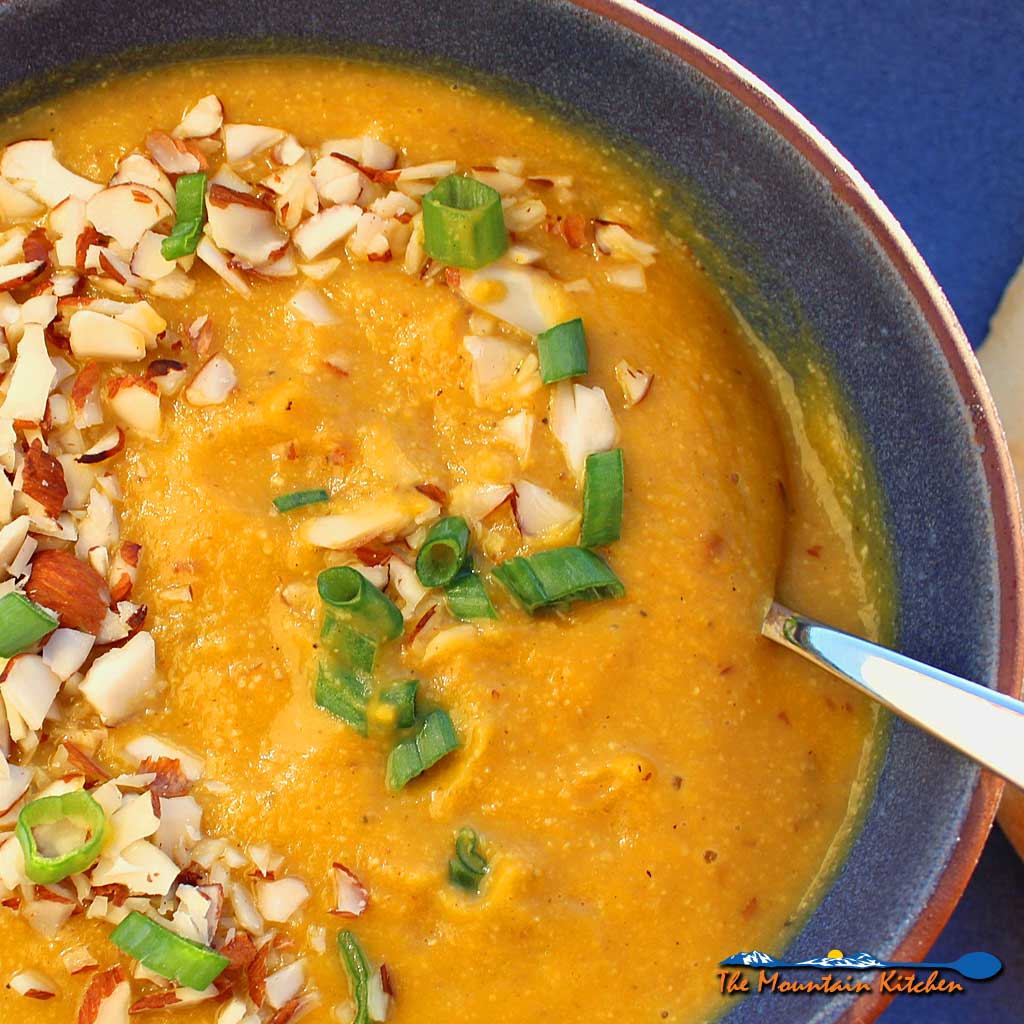
- Roasted Pumpkin Soup With Almonds and Sage
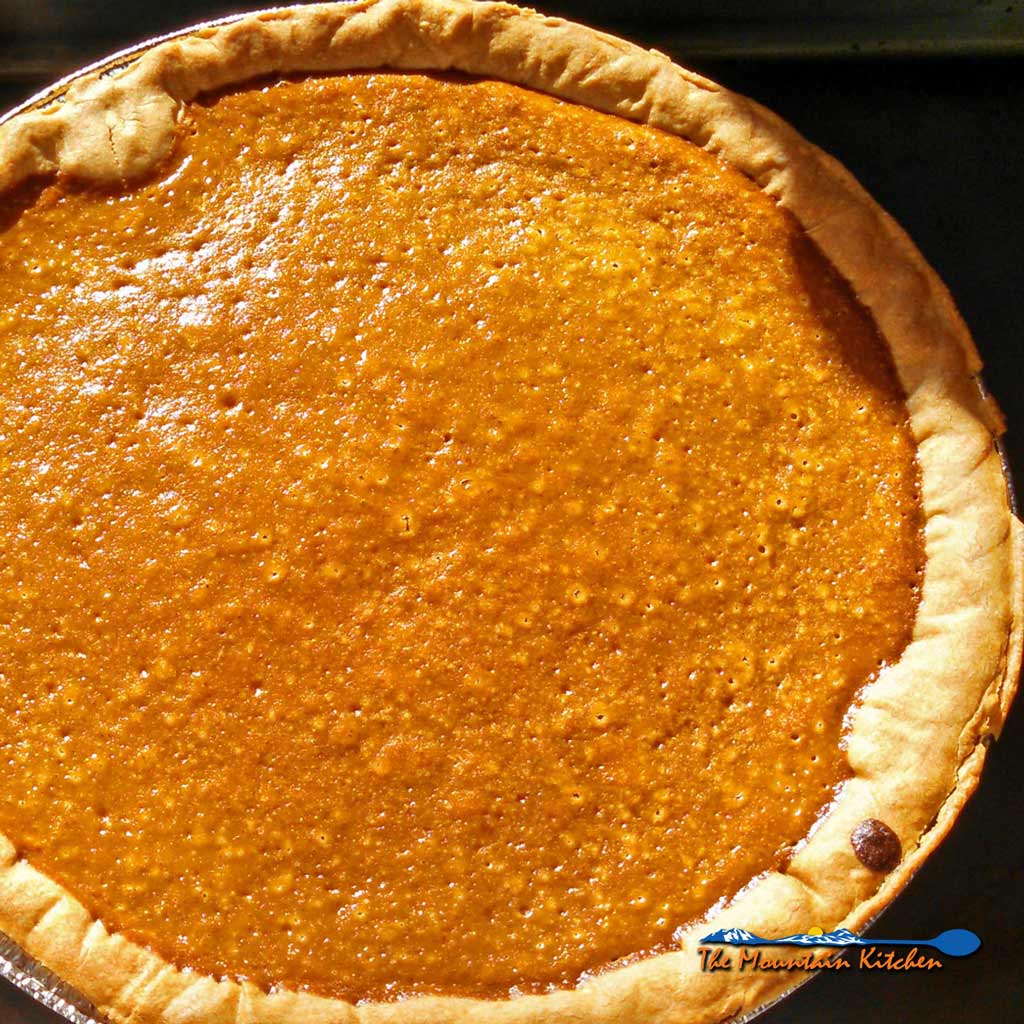
- Homemade Pumpkin Pie
- Pumpkin Cinnamon Bread
I hope this helps make your pumpkin recipes even better. If you make your own pumpkin puree, I bet you’ll never buy the canned stuff again!

How To Make Pumpkin Puree
Useful Equipment:
- Sharp Knife
- Aluminum Foil
Ingredients
- 1 medium sugar pumpkin
- canola oil for oiling pumpkin skin
Instructions
- Preheat the oven to 375 degrees F. Line a baking sheet with aluminum foil.
- Rinse the pumpkin and pat dry with paper towels.
- Cut off the stem of the pumpkin. Then cut the pumpkin in half. To do this, stick a heavy sharp knife down inside the top of the pumpkin near the stem. Push the knife down towards the bottom of the pumpkin. Rotate the pumpkin around so that you cut it all the way through.
- Spoon out the seeds and scrape the stringy pulp until the inside of the pumpkin is smooth; discard the seeds and pulp.
- Lay the two pumpkin halves cut-side down onto the prepared baking sheet. Brush canola oil all over the outside of the skin.
- Bake in the preheated oven for about an hour, or until fork-tender.
- Allow the pumpkin to cool completely.





Debbie - MountainMama says
I have a gorgeous winter squash that I grew sitting in my dining room waiting for me to do something with it. This is a great plan – I can roast it and freeze the puree!! I have a recipe on my blog for a pumpkin lasagna that was out of this world, and I’d like to make it again….this will be perfect!
The Mountain Kitchen says
The fact that you grew it makes it even better, Debbie. Enjoy! 🙂