

Easy homemade recipe for sauerkraut with just cabbage and salt. Tangy, crunchy, and perfect for sandwiches, sides, or snacking straight!
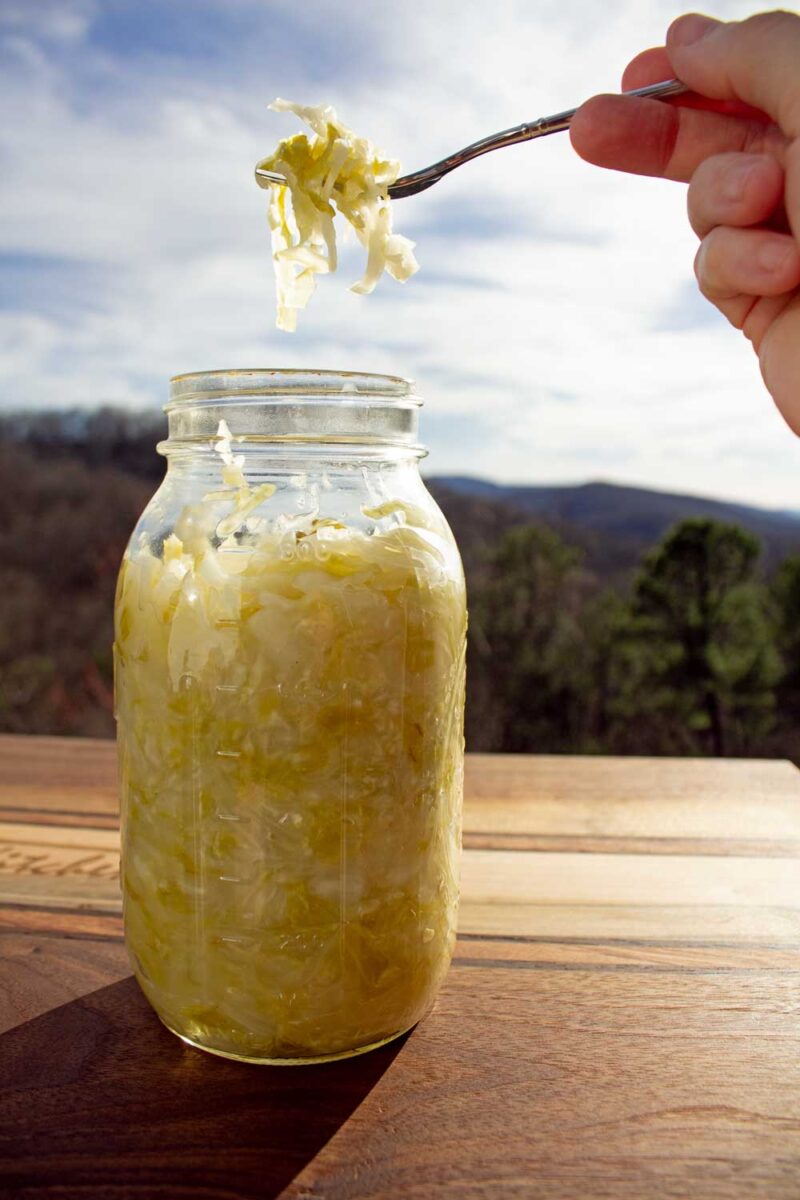
If you’ve never made homemade sauerkraut before, you’re in for a treat. To me, there’s just something about turning a plain head of cabbage into a tangy, crunchy mason jar of goodness. It might sound intimidating at first, but it’s pretty simple. Once you taste your first batch of homemade kraut, you’ll wonder why you ever bought it from the store.
I wanted to learn how to make sauerkraut because every March, David smokes homemade pastrami for St. Patrick’s Day. I figured if we’re already putting in the time to cure a brisket for corned beef, then I might as well go the extra mile and make the sauerkraut from scratch, too.
I’ve been using this recipe for sauerkraut for a couple of years now, and it always turns out great. It doesn’t take much, just cabbage, salt, and a little patience. And let me tell you, the flavor surpasses anything you can find in the store.
So what is sauerkraut, exactly?
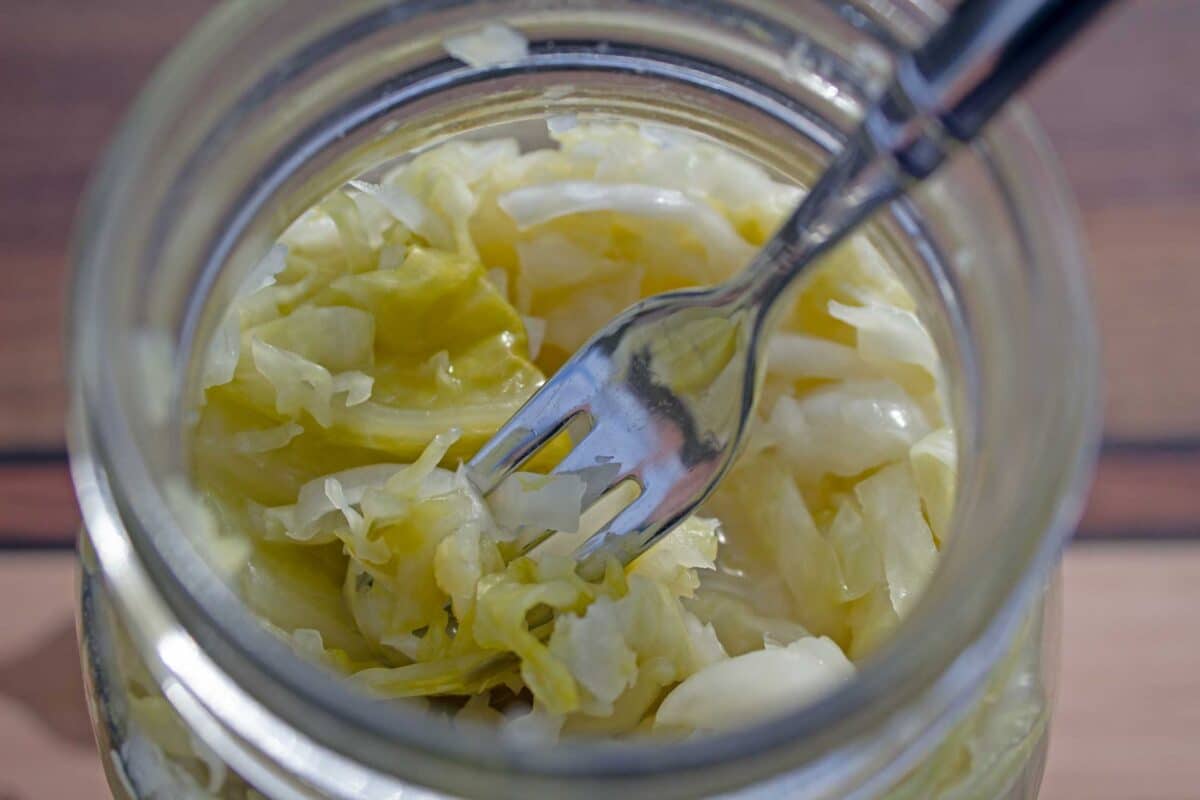
It’s finely sliced cabbage that’s been salted and left to ferment in its own brine. During the fermentation process, lactobacillus bacteria (natural good bacteria) go to work, producing lactic acid. That’s what gives sauerkraut its signature tang and helps preserve it. A good homemade sauerkraut recipe doesn’t need vinegar or fancy tools, just time, salt, and nature doing its thing. It’s a simple, time-tested way to transform cabbage into something flavorful and nutritious.
Why I Love This Recipe
The fermentation process is like magic. Yes, it takes some time, patience, and a little bit of faith. But in the end, it’s also incredibly rewarding. All you need is cabbage, salt, and a bit of care. There is no vinegar, no preservatives, just nature doing its thing.
Don’t even get me started on the health benefits and the probiotics for your gut health. It’s excellent!
This recipe for sauerkraut is flexible, depending on the amount of cabbage you have, and can be scaled up or down accordingly. Whether you’re filling a single quart jar or a giant fermentation crock, the process stays the same.
What You’ll Need
Here’s a quick rundown of the equipment I use to make sauerkraut. No fancy tools required, just some basics you probably already have in your kitchen.
- Large mixing bowl – you’ll need plenty of room to toss the shredded cabbage
- Sharp knife – so important when cutting up cabbage heads
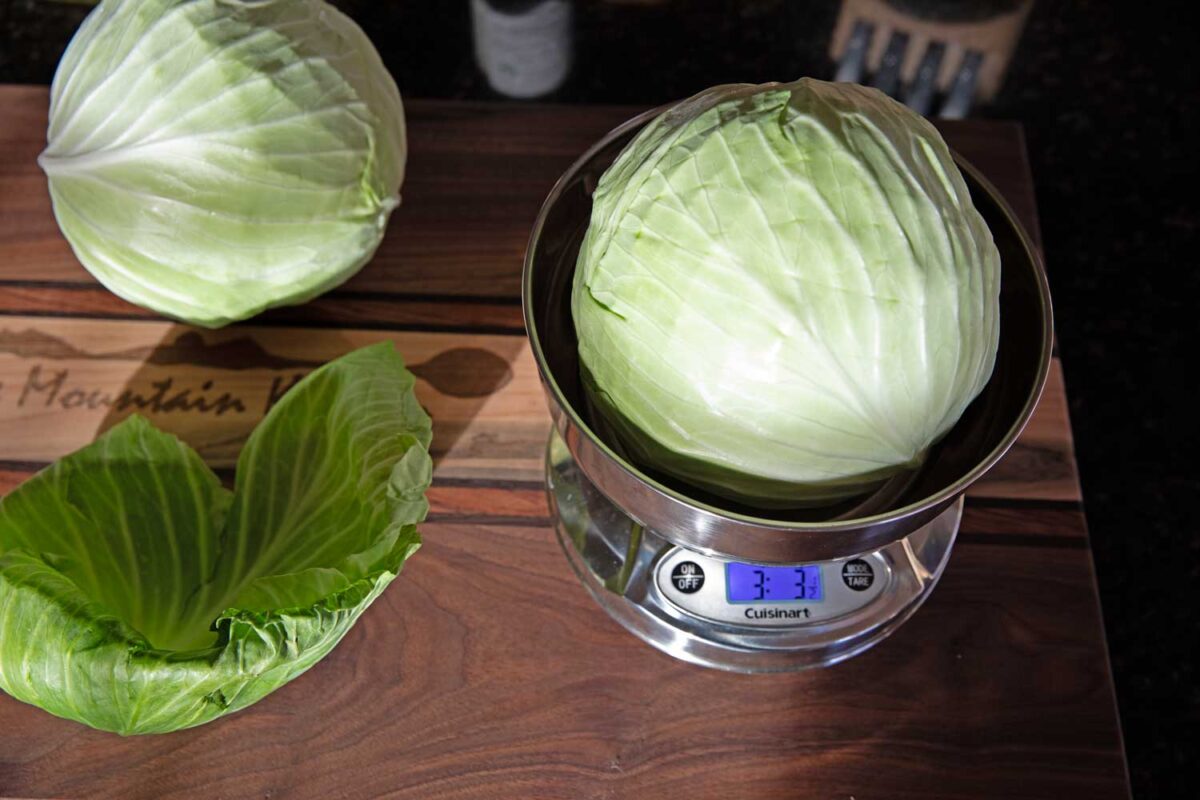
- Food Scale – to weigh the cabbage after it’s shredded
- Wide Mouth Funnel – makes it easy to get the cabbage into the jar.
- Fermenting Jar (or a quart-size Wide-mouth glass jar)
- Tamper or Muddler – to press the shredded cabbage into the jar.
- Plastic lid (if using a glass jar – metal can rust during fermentation)
- Fermentation Weight or small clean rock wrapped in plastic (yes, really)
- Rimmed Pan – or a small dish to catch the overflow
Ingredients
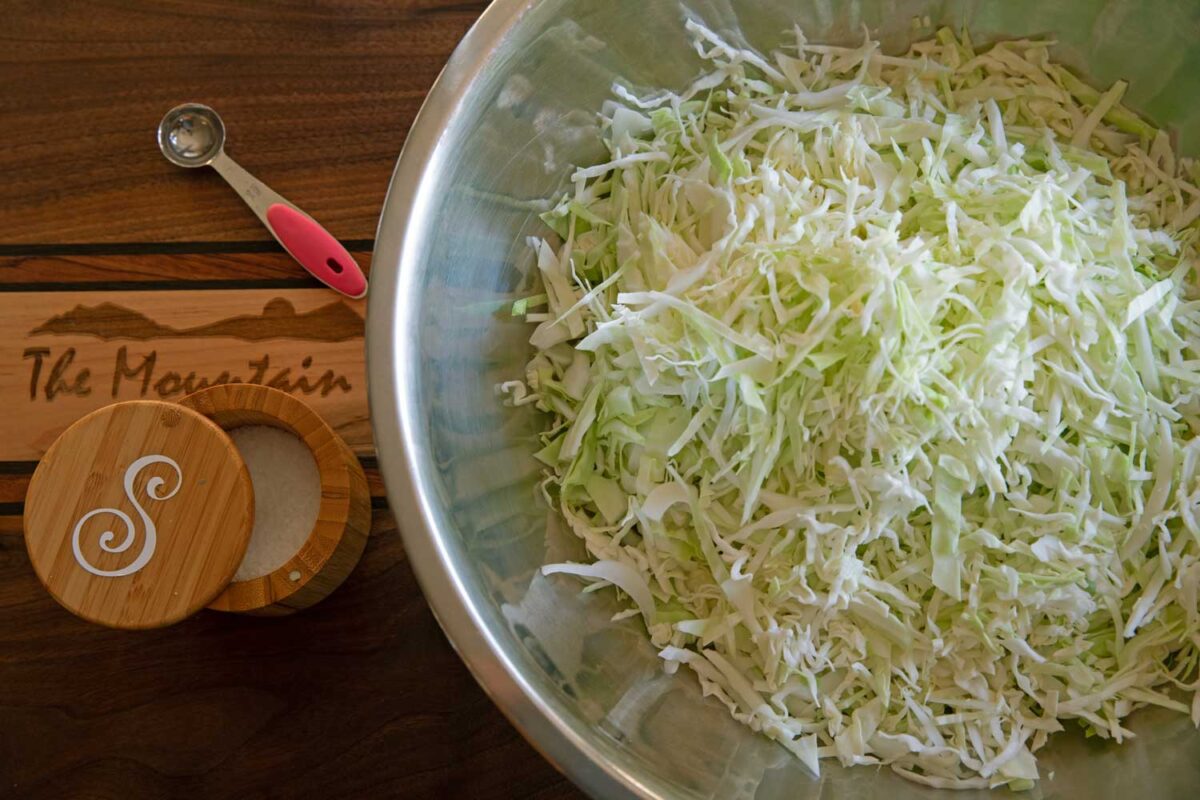
There are only two ingredients in sauerkraut: green cabbage and salt. I use kosher salt for this recipe, and so should you.
🧂 Salt to Cabbage Ratio Guide
Use 1½ to 2 teaspoons of salt per pound of cabbage (Or about 2% salt by weight)
| Cabbage Weight | Salt (1.5 tsp/lb) | Salt (2 tsp/lb) |
| 1 pound | 1 ½ teaspoon | 2 teaspoons |
| 2 pounds | 3 teaspoons (1 Tablespoon) | 4 teaspoons |
| 2 ½ pounds | 3 ¾ teaspoons | 5 teaspoons |
| 3 pounds | 4 ½ teaspoons | 6 teaspoons |
| 3 ½ pounds | 5 ¼ teaspoons | 7 teaspoons |
| 4 pounds | 6 teaspoons (2 Tablespoons) | 8 teaspoons |
| 5 pounds | 7 ½ teaspoons | 10 teaspoons (3 Tablespoons + 1 teaspoons ) |
Let’s Make Sauerkraut!
Weigh the cabbage: Use about 1½ to 2 teaspoons of kosher salt per pound. No scale? Just estimate.
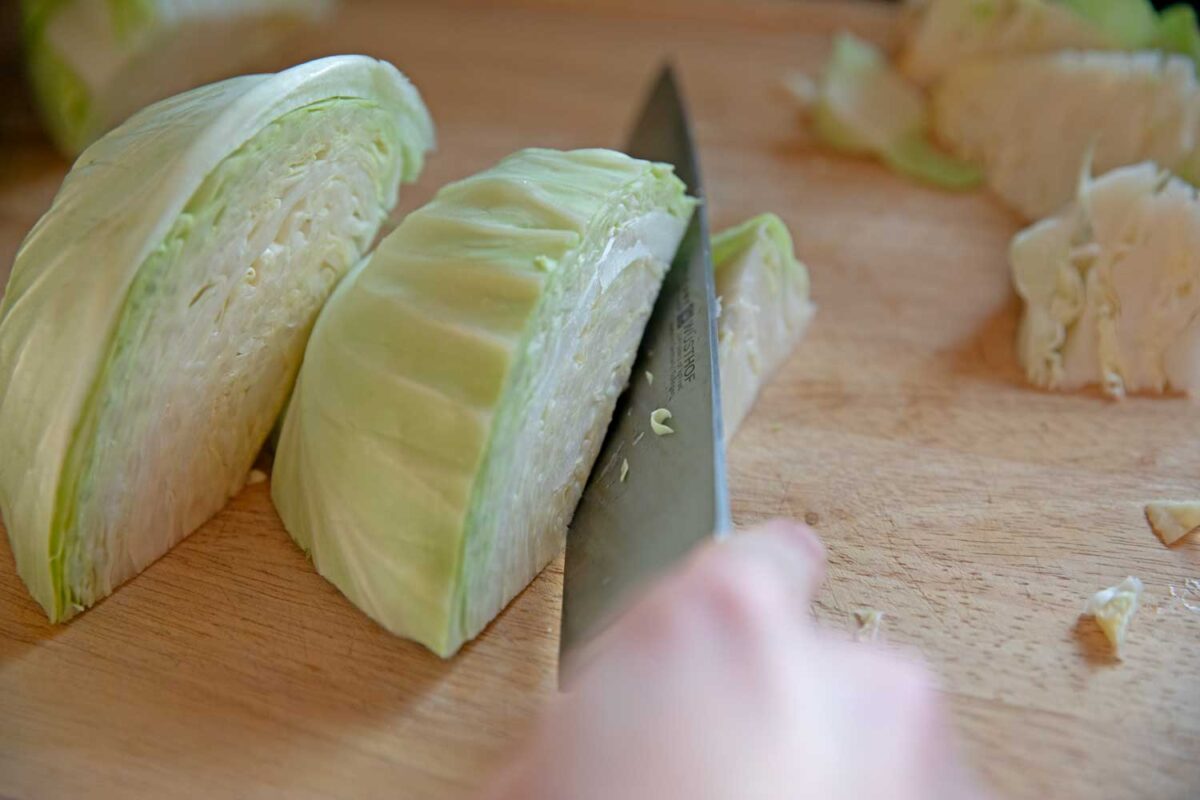
Prepare the cabbage: Peel off any dirty or wilted leaves. Save one clean outer leaf for later. Rinse the cabbage well, cut it in half, and remove the core.
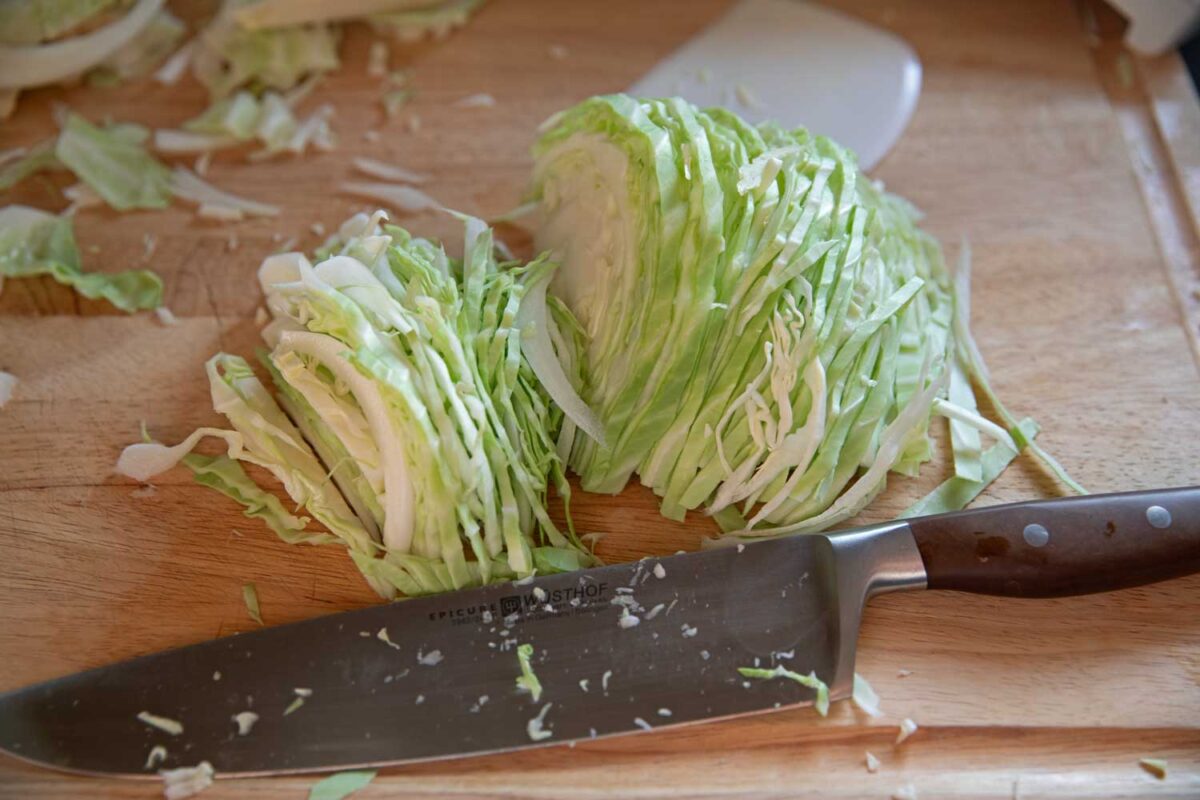
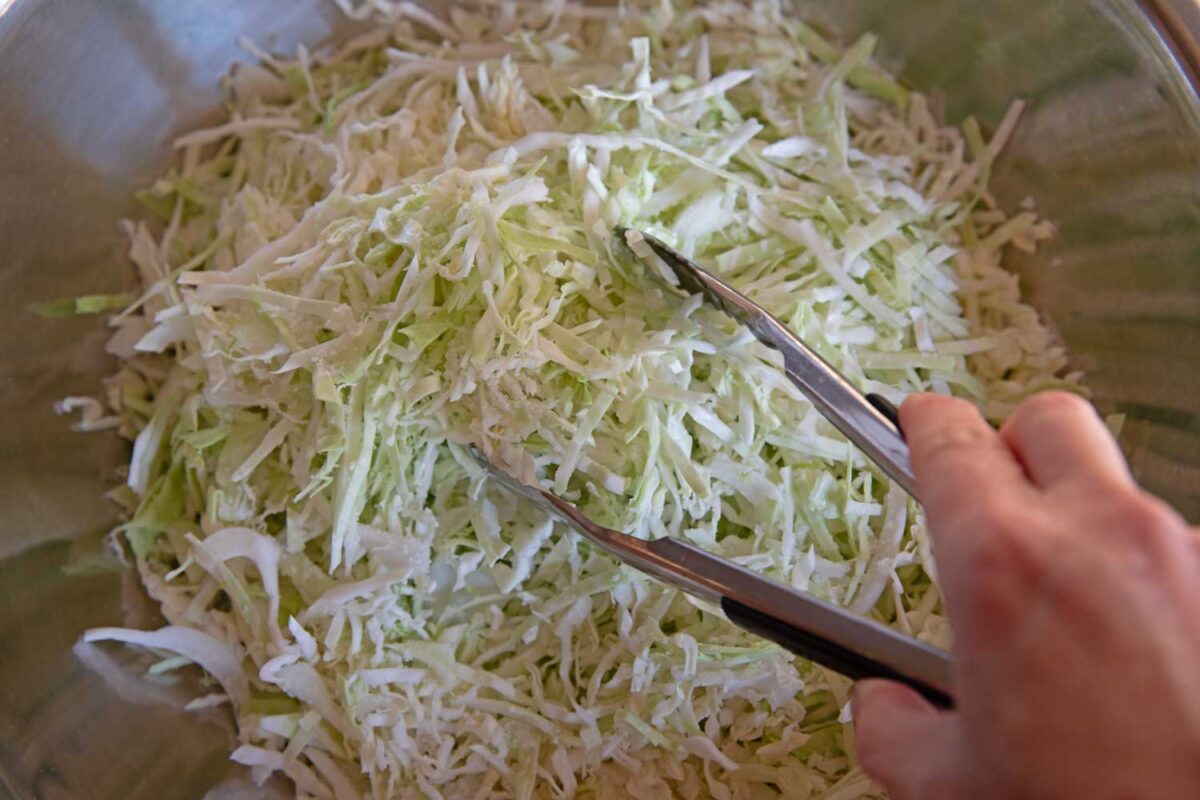
Slice it thin: A sharp knife is best for achieving a great texture. The thinner, the better.
Salt and rest: Toss the cabbage with salt in a large bowl. Let it sit for 15 minutes to start drawing out moisture.
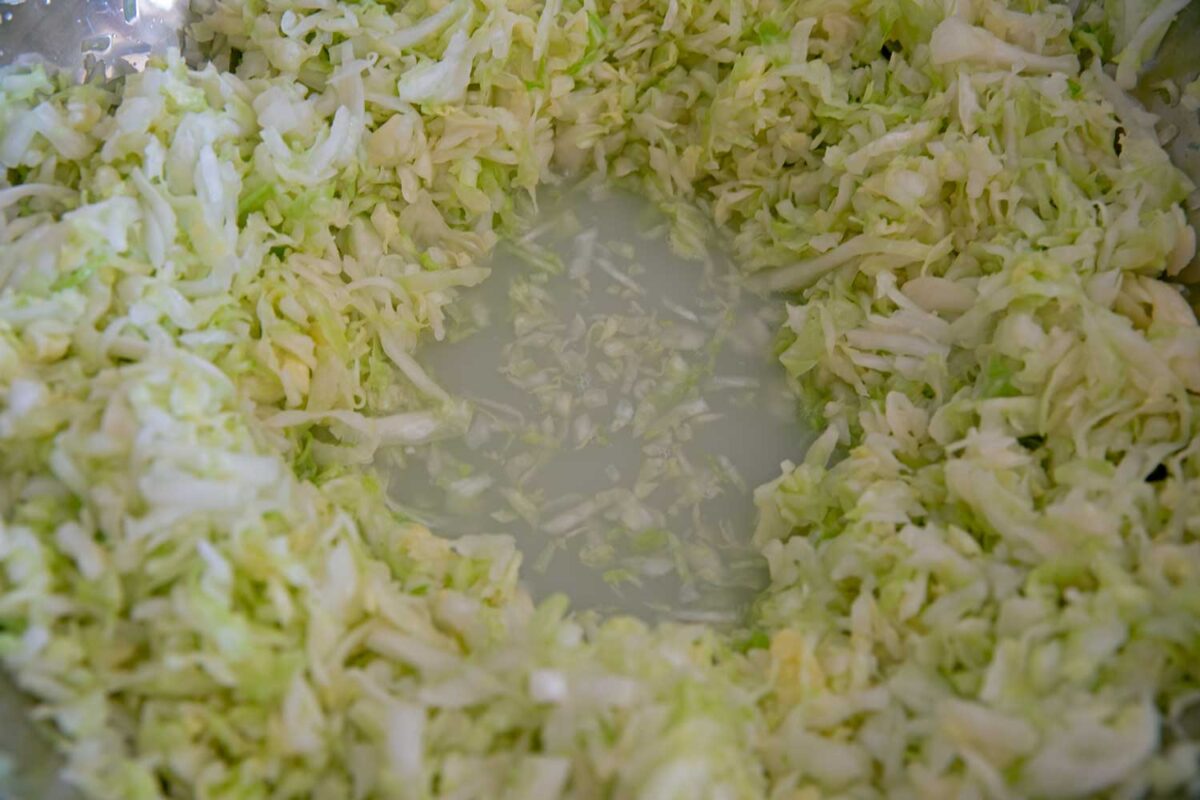
Massage it: Use your hands to massage for about 5 minutes. The cabbage will soften, and a briny liquid will form; that’s your natural fermenting brine. – DON’T SKIP THIS STEP!
Pack the jar: Press the cabbage and brine into a clean glass jar, packing it down tight to remove air pockets.
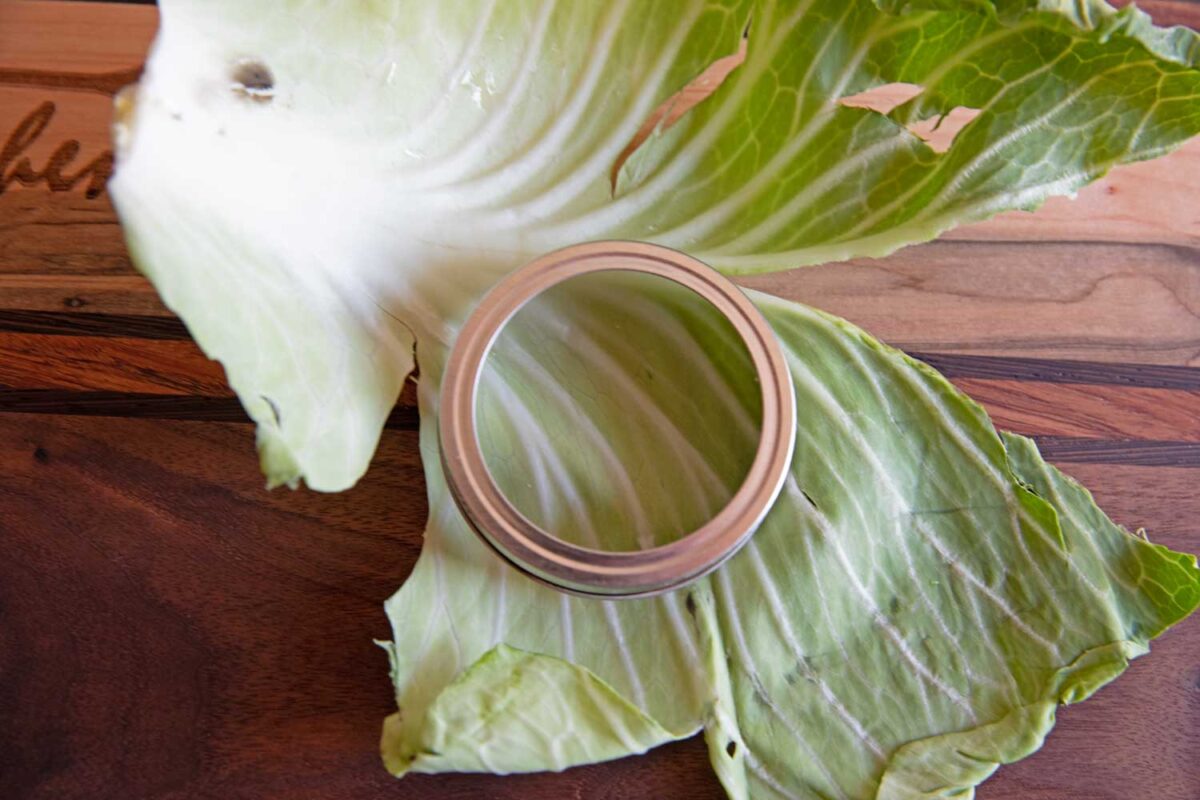
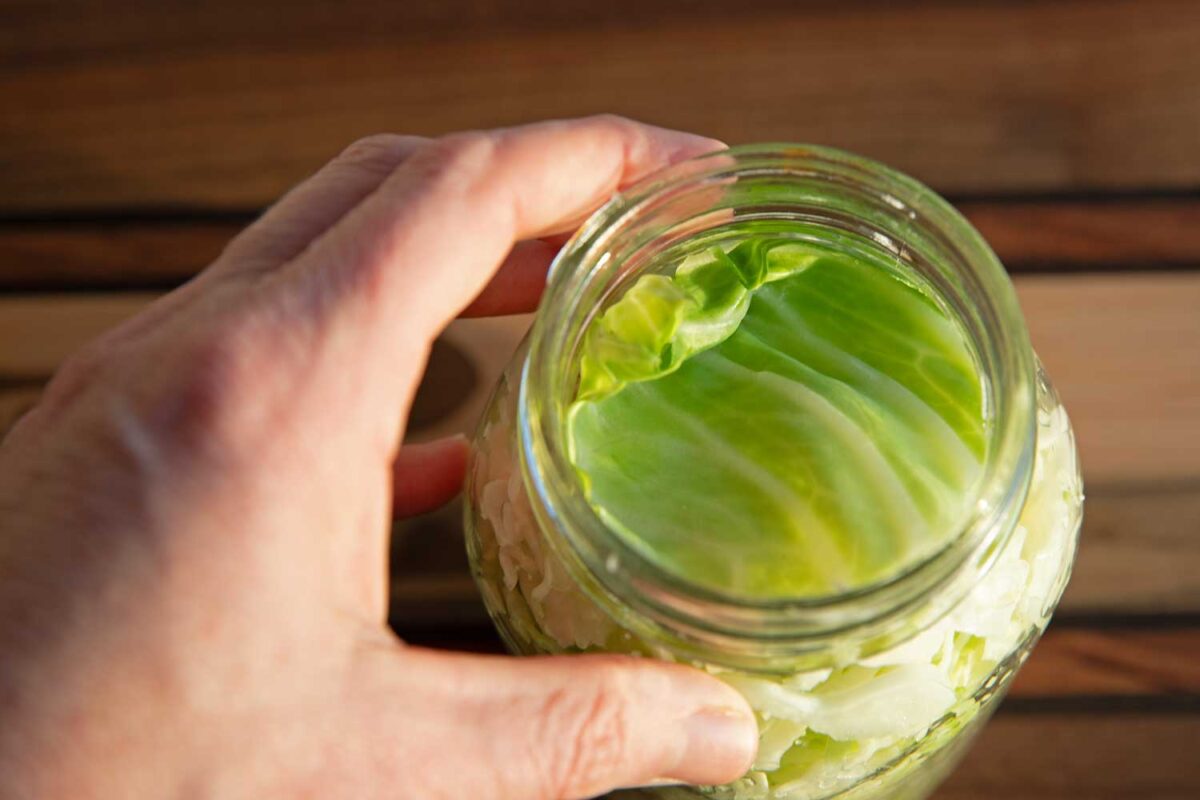
Top it off: Use the reserved cabbage leaf as a barrier, then add a fermentation weight. If needed, pour in a 2% brine (1 teaspoon of salt per 1 cup of water) until the cabbage is fully submerged.
Seal it up: Use a plastic lid (metal can corrode). Place the jar in a shallow dish to catch overflow. Store at room temp (65-75 degrees F) out of sunlight.
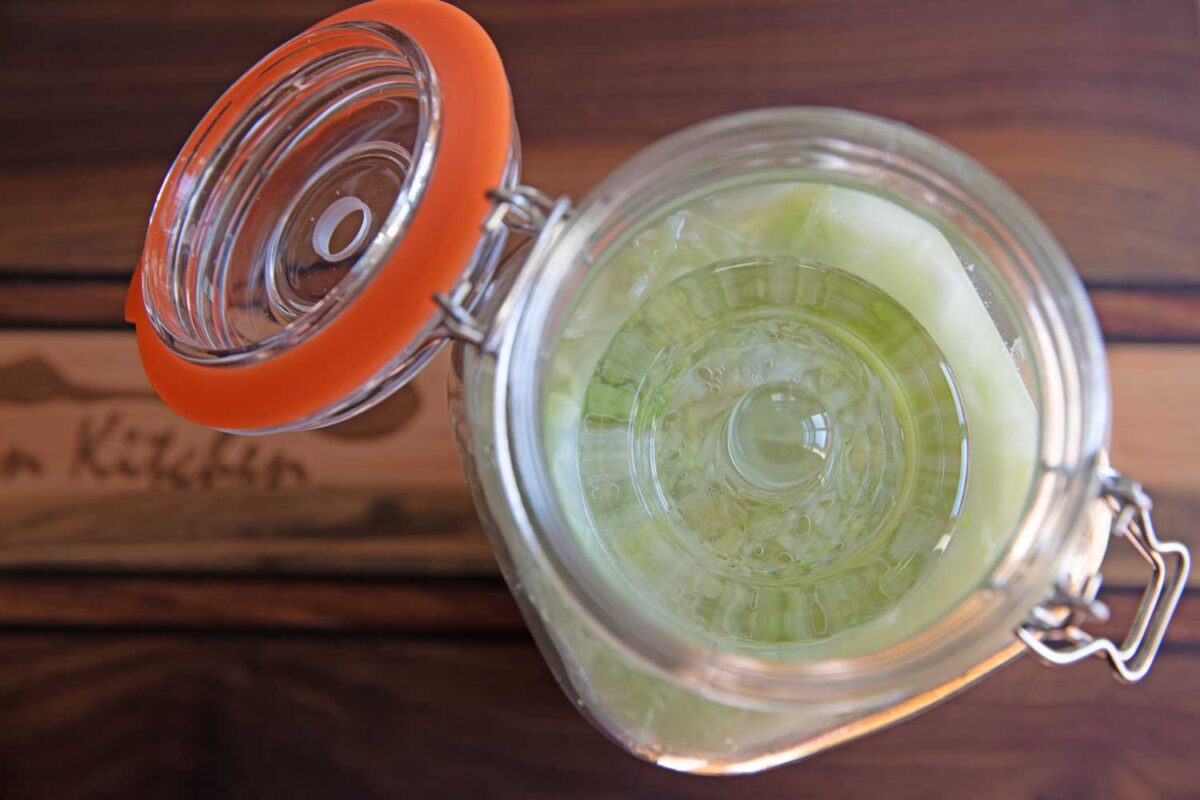
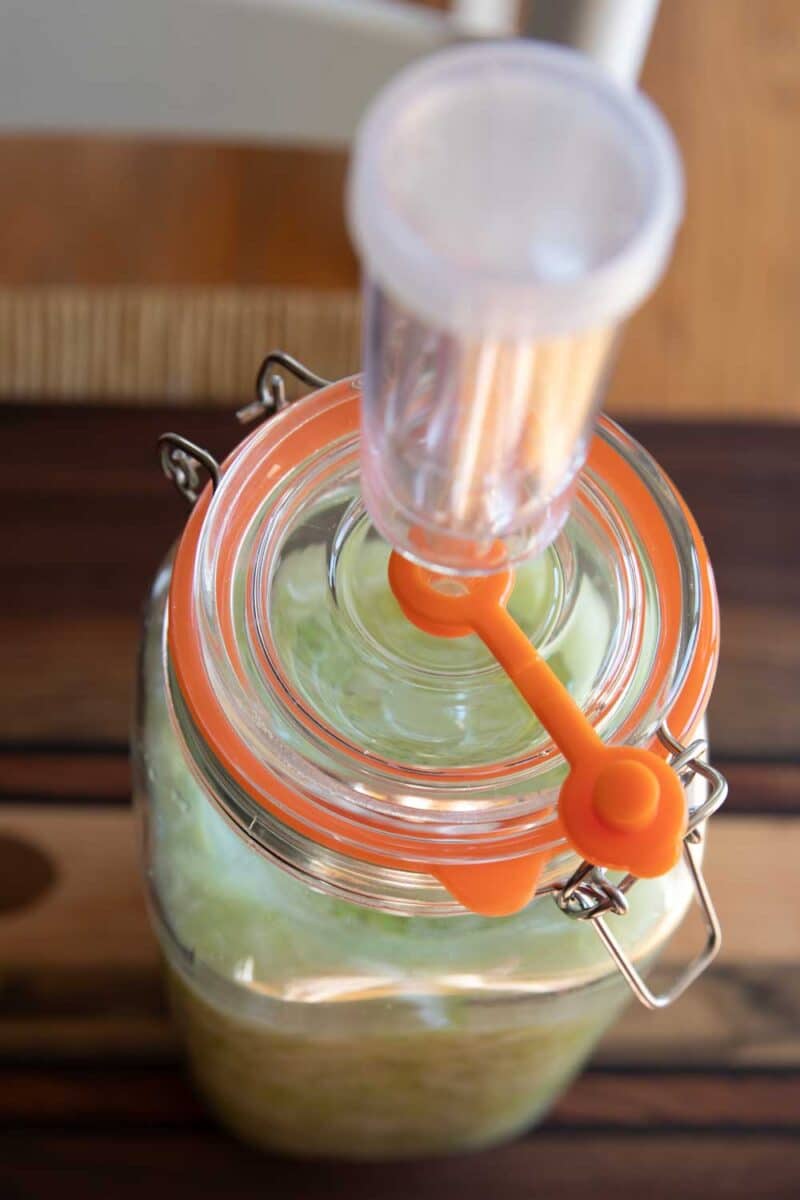
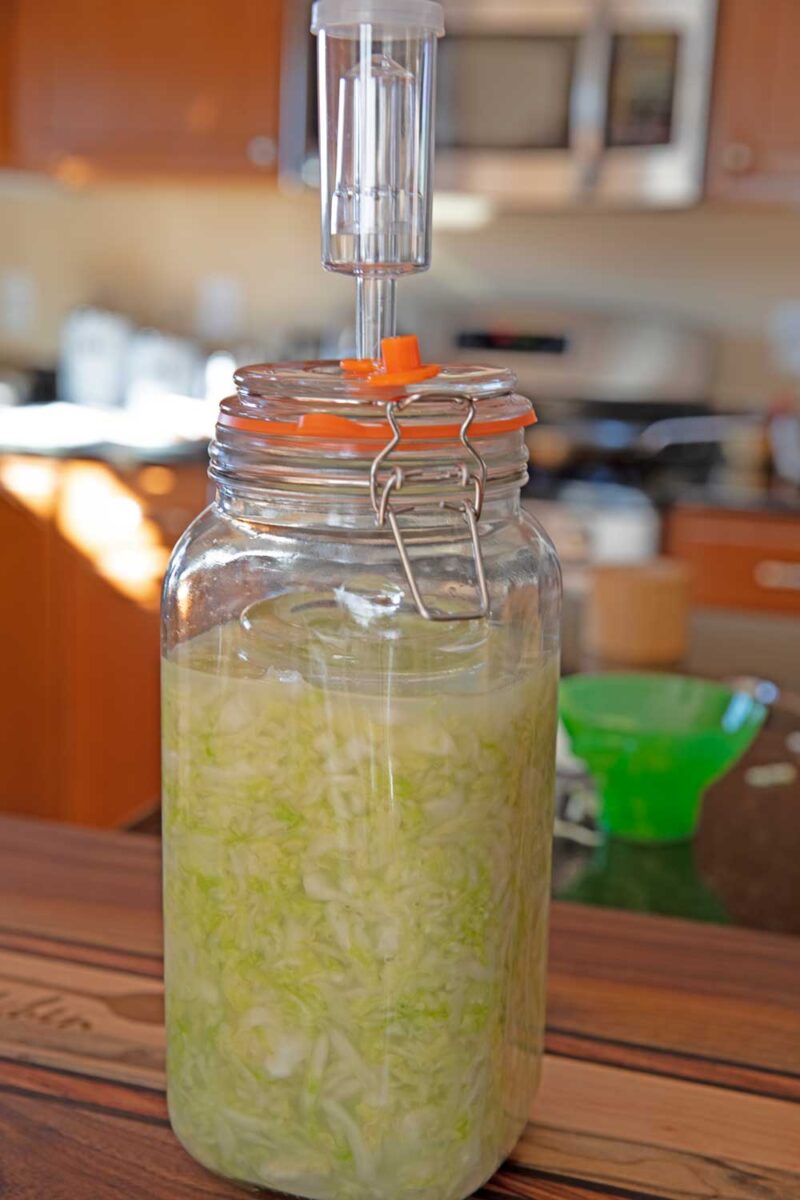
Let it ferment: Taste after 2 weeks. If it needs more tang, keep going. I like it best around 4-6 weeks.
Refrigerate when ready:
Once it hits your preferred flavor, move it to the fridge. It’ll keep for up to 6 months!
Tips From My Experience
- Slice the cabbage by hand. I’ve used a food processor and mandolin, but they tend to overdo it, and they make the cabbage too fine, more like cabbage confetti. Hand-slicing yields a better texture and retains its quality longer in the jar.
- Use real fermentation jars if you’re planning to make kraut regularly. The airlocks prevent gases from escaping with a mess, and they’re worth the investment.
- Label your jars. Trust me, it’s easy to forget when you started. I use masking tape and a Sharpie right on the lid.
- Don’t worry if you see bubbles. That’s a good sign! Fermentation in action.
- If you see mold floating on top of the brine, throw it out and START OVER. This hasn’t happened to me, but I wouldn’t recommend playing with mold. As long as your cabbage stays under the brine, you’re usually in the clear.
- Cool and dark place is best. Keep your jar out of sunlight while it’s fermenting. A pantry or cupboard works well. I put mine down in our finished basement on a storage shelf.
Fermenting your own sauerkraut might feel intimidating at first, but once you try it, you’ll realize how easy and natural the process really is. This recipe is my go-to because it’s simple, adaptable, and always turns out well. It’s a great entry point into fermented food, and honestly, it’s just fun to watch your food transform over time.
Whether you’re topping a Reuben sandwich with juicy pastrami, bratwursts, mixing it into salads, or just enjoying it straight from the jar (guilty!), this recipe for sauerkraut brings something special to the table every time.
Give it a try. You might end up hooked like I did.
With love and flavor,

My Go-To Recipe For Sauerkraut
Useful Equipment:
Ingredients
- 2-3 lbs cabbage (about 1 medium-large head)
- 4 to 5 teaspoons kosher salt (1.5 to 2 teaspoons per pound of cabbage)
Instructions
Weigh the Cabbage
- Use a kitchen scale to weigh your cabbage. You’ll need about 1½ to 2 teaspoons of salt per pound of cabbage.
Prepare the Cabbage
- Remove and discard any damaged or dirty outer leaves.
- Set aside one clean outer leaf (you’ll use it later).
Clean and Core
- Cut out the core, then rinse the cabbage thoroughly, making sure water gets between the leaves.
Shred the Cabbage
- Finely slice the cabbage with a sharp knife.
Salt the Cabbage
- Place the shredded cabbage in a large bowl. Sprinkle with the measured salt and toss to coat evenly.
Massage and Brine
- Let it rest for 15 minutes, then massage firmly with your hands for about 5 minutes. You should feel the cabbage soften, and it will start to release a briny liquid (your fermenting brine).
Pack into a Jar
- Transfer the cabbage and the liquid (brine) into a clean, wide-mouth glass jar.
- Press down firmly with a spoon or muddler to remove air pockets.
Add the Brine and Weight
- Pour the remaining brine from the bowl over the cabbage.
- Cut the reserved cabbage leaf to fit the diameter of the jar and place it on top (Optional).
- Add a fermentation weight (or small weighted object) to keep everything submerged.
Top Off If Needed
- If the cabbage isn’t fully covered by liquid, add a 2% brine (1 teaspoon salt per 1 cup of water) until fully submerged.
Seal and Set Aside
- Screw on a plastic lid (metal can corrode). Place the jar in a shallow dish to catch overflow. Store at room temperature (65–75°F) out of direct sunlight to ferment.
Fermentation Time
- Let ferment for 2 to 6 weeks, depending on your taste. Start tasting after 2 weeks. If it’s not tangy enough, continue fermenting for another week and taste again.
Refrigerate When Ready
- Once it reaches your preferred flavor, move the jar to the refrigerator. Cold storage slows fermentation and keeps the sauerkraut fresh.
Notes
- Extra brine (2% salt solution = 1 tsp salt per 1 cup water), in case needed. You may not need it. Sometimes I do, sometimes I don’t.
I did not like the way a food processor or mandolin slices the cabbage. Yes, they work faster but tend to cut the cabbage up like confetti. I recommend hand-slicing the cabbages; it gives a much better texture and lasts longer. - If you truly love sauerkraut, I highly recommend investing in fermentation jars. They hold a lot of kraut and are designed especially for fermentation with an airlock to let the gases escape. This will eliminate any mess.
- Label jars with dates if you have trouble remembering when you started fermentation and when you stopped it.
For best results, store in a cool, dark space while fermenting. Avoid direct sunlight. - Look for signs of successful fermentation, including bubbling, a tangy smell, and a softening texture.
- Discard if you see mold above the brine (Never eat kraut exposed to air with mold).







Leave a Reply