
If you love dill pickles, listen up! You’re going to love these small-batch easy refrigerator dill pickles! There is no canning involved, so there is no jar sterilizing or special canning equipment required. All you have to do is cut the cucumbers, place them in a jar with brine and place them in the fridge.
Easy refrigerator dill pickles are fresh, bright, and seasoned with tangy, well-balanced classic dill pickle flavor. They are amazingly crunchy, and you can make them as garlicky as you want.
I have loved dill pickles all my life. That is not a surprise, especially given that I can practically drink a bottle of vinegar by itself. I love the tangy sourness!
Mama used to pull pickles off her cheeseburgers and give them to me to eat. I don’t understand why she wouldn’t special order her burgers without pickles. I guess she always knew she could give them to me to enjoy.
This recipe is a far cry better than the squishy dill pickles I wasted time and money on trying to can a few years ago. That was a disaster!
Ok, let’s make some delicious dill pickles without a lot of work!
Ingredients for Easy Refrigerator Dill Pickles
To make these delicious dill pickles, you will need the following ingredients:
Pickling Cucumbers:
Kirby, Gherkin, and Mini-English cucumbers are a special variety of cucumbers with a thicker skin that will hold up to the pickling brine and remain crunchy.
You will need 6 to 7 average size pickling cucumbers for this recipe. Choose firm cucumbers that have dry skin without yellowing, blemishes, puckering, or sinkholes on the skin.
Water:
David and I are blessed with really clean mountain water. I use our tap water to make pickles. You want to use clean, clear, non-chlorinated water to make pickles. You can use tap water, but buy bottled water if it doesn’t taste good out of the tap.
White Vinegar (5% Acidity):
This and most all pickle recipes call for distilled white vinegar with 5% acidity. Distilled white vinegar is clear and colorless, made by fermenting grains. The aroma and tart acid flavor do not really affect the color of the light-colored cucumbers. This makes it perfect for pickles. Cider vinegar is a common option, with a mild flavor, but it will cause the cucumber to darken.
Pickling Salt:
Pickling salt is a pure granulated salt (aka sodium chloride). When I say “pure,” that means this salt does not contain anti-caking ingredients, which can turn pickling brine cloudy. It does not contain iodine, which can make pickles dark. This salt usually comes in tiny granules that make it easier to dissolve and are ideal for pickling.
Morton or Ball are both great brands of pickling salt.
Pickling salt is usually found on the baking aisle or in the canning section of your local grocery store, where you find other salts. Our local grocery store, Martin’s, has a small canning section set up at the end of an aisle. Pickling salt can also be found in hardware stores where canning jars are found. Even your local Walmart should have canning products.
Sugar:
A small amount of sugar is needed to balance out the flavor of the dill pickles. Nothing fancy is required. Granulated sugar works just fine!
Turmeric:
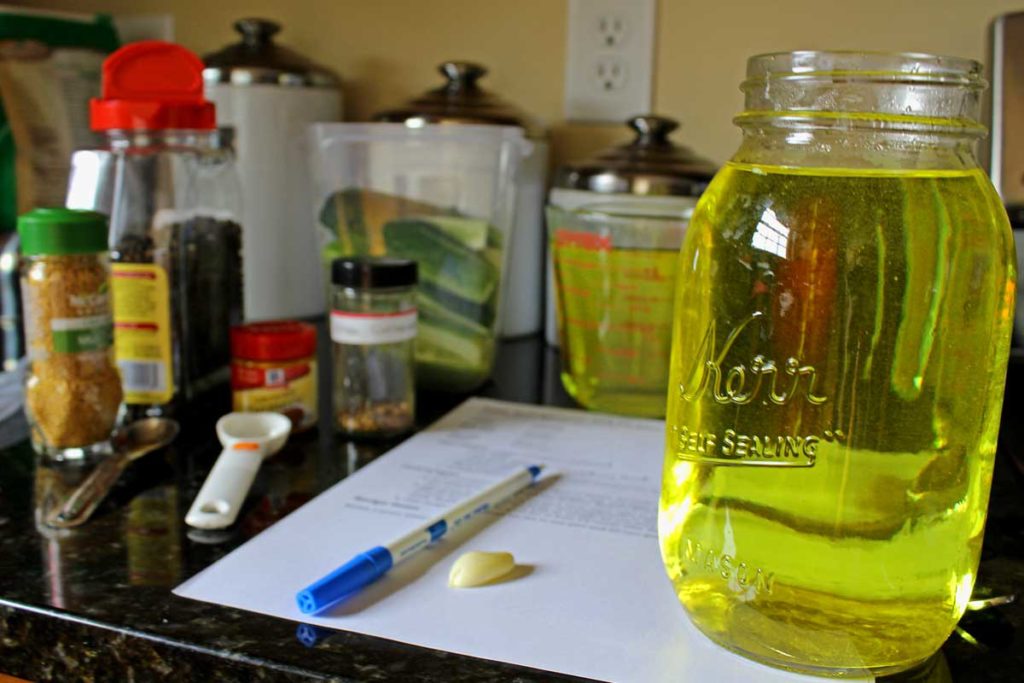
The first time I made this recipe, the pickles looked like they were swimming around in swamp water, especially with the dill, peppercorns, mustard seeds, and coriander. It just did not look appetizing to me. The pickles really needed some color to make them look like you weren’t eating swampy fingers… GROSS!
To make the pickles more appetizing, they needed some color. Food coloring would be the obvious solution. However, I don’t like to use food coloring because it contains artificial ingredients, and David and I try to stay away from anything artificial.
Turmeric is an all-natural way to give color to your food. Adding in just ½ teaspoon of turmeric turned the olive green swamp water bright and green. The pickles looked more appetizing to eat, and the turmeric gave the brine an unmistakable rich earthiness.
Fresh Dill:
Fresh dill is a must when making these pickles. Dried dill will not have the same effect, not to mention dried dill would coat the pickles as you pull them out of the pickle jar.
Fresh dill can be found in the produce section of your local grocery store. Purchase fresh dill with unwilted leaves and fresh-looking stems.
You should use the dill within a few days. Surprisingly, fresh dill freezes very well, so you don’t have to worry about wasting it if you can’t use it up in time.
Garlic Cloves:
It’s a fact, David and I do not care for garlic dill pickles. We usually leave them on our plates when served at a restaurant accompanying a sandwich or burger. These dill pickles are not intended to be garlic dill pickles.
However, you have to add a little garlic for flavor. I actually tried dill pickles without adding garlic. The pickles were definitely missing something. When I tried them again with garlic, it rounded out the flavor.
I smashed one garlic clove and added it to the jar for this recipe. The single clove is mild and helps round out the flavor.
Having said that, make these pickles your own! If you like garlicky pickles, go for it! Smash 3 to 4 cloves to get that garlicky taste that you crave.
Spices:
Peppercorns, mustard seeds, and whole coriander are used for spice and flavor. Both peppercorns and mustard seeds infuse a subtle heat into the pickling brine, while the whole coriander provides a mellow, slightly citrusy taste with notes of sweetness.
How To Make Easy Refrigerator Dill Pickles
This recipe is so easy to make. It only takes about 10-minutes of prep time and about 5-minutes of cooking time.
Cookware:
When making pickles or cooking high-acid foods, always use nonreactive cookware, such as stainless steel, glass, ceramic, or Teflon. Do not use aluminum, cast iron, or unlined copper. These are all examples of reactive metals that will cause foods to taste metallic.
Make the Brine:
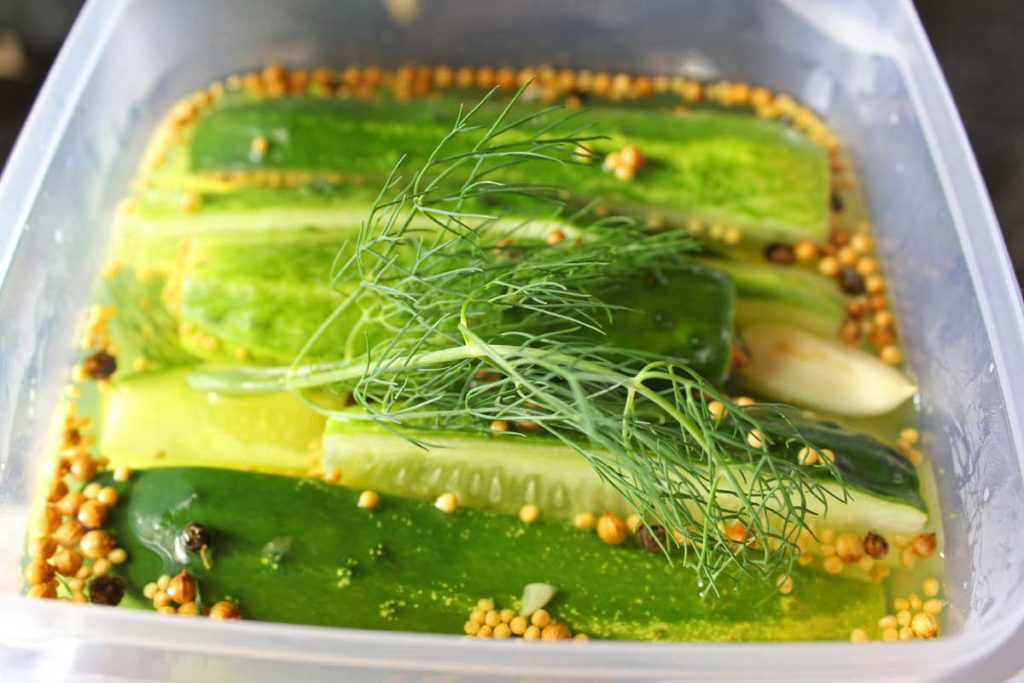
Combine water, vinegar, salt, and sugar in a medium nonreactive saucepan. Bring to a boil over medium-high heat. Whisk the solution to ensure sugar and salt have dissolved before turning off the heat.
Whisk in the turmeric and allow the brine solution to cool to room temperature.
Wash and slice the cucumbers into ¼-inch slices or spears.
How to Cut the Cucumbers:
Cutting the cucumbers into ¼ slices usually takes a little less time to pickle than cutting them into spears. Spears are typically ready to eat within 5 to 7 days, while slices should be ready to eat in about 3 to 5 days.
For uniform pickle slices, use a mandoline or even a crinkle-cut knife if you want to get fancy about how they are cut.
Prepare the Pickle Jar:
You’ll need a clean 1-quart jar with a lid for this recipe.
Add the cucumber slices, fresh dill, smashed garlic clove(s), peppercorns, mustard seeds, and whole coriander to the jar.
Make sure not to pack the cucumbers too tight, so there is enough room for the brine solution to do its magic.
Finish the jar by pouring enough of the cooled brine solution into the jar, making sure to cover the cucumbers. You should have more than enough of the brine solution to cover the cucumbers, but if you don’t, you can add equal amounts of water and vinegar to make up the difference.
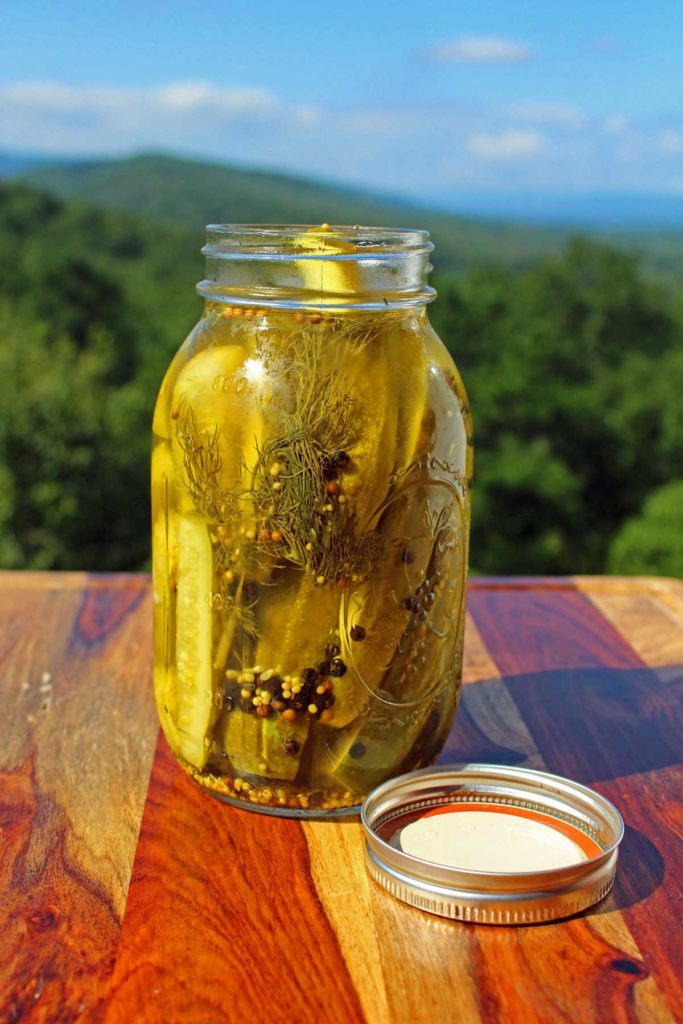
Seal the cucumber slices and pickling brine with an airtight lid and store in the refrigerator.
When will the easy refrigerator dill pickles be ready to eat?
For at least one week for the best results.
Cutting the cucumbers into ¼ slices usually takes a little less time to pickle than cutting them into spears. Spears are typically ready to eat within 5 to 7 days, while slices should be ready to eat in about 3 to 5 days.
How do easy refrigerator dill pickles last?
Pickles should be good and crunchy for at least 4-6 weeks after they are ready. However, they will last about 3 to 4 months sealed in a tightly sealed jar inside the refrigerator, although they will lose their crunch.
What are some ways to eat easy refrigerator dill pickles?
There are so many ways you can enjoy these refrigerator pickles. Here are a few of our favorite ways to enjoy pickles, besides straight from the far:
- Tuna fish salad – instead of sweet pickles
- Sandwiches and Wraps
- Burgers
- Salads
- Dill Pickle Soup
- Bloody Marys or Martinis
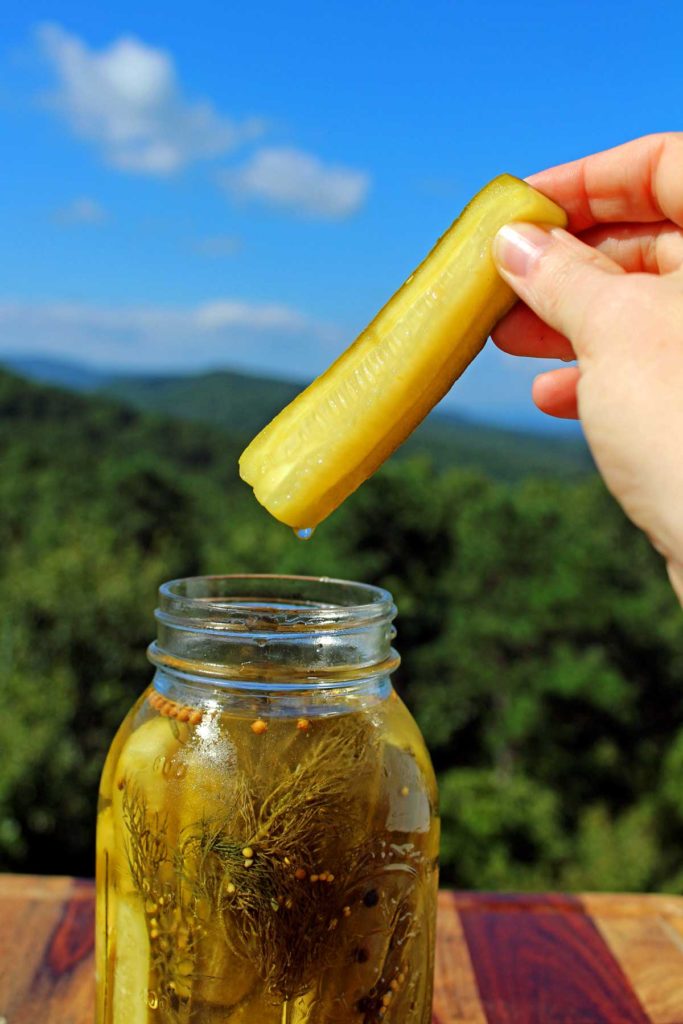
If you like dill pickles, you should try this recipe. If you do, let us know how they turn out. We’d love to hear from you!

Easy Refrigerator Dill Pickles
Useful Equipment:
Ingredients
- 1 pound pickling cucumbers 6 to 7 average size pickling cucumbers
- 4 cups water
- 2 cups white vinegar (5% acidity)
- 2 tablespoons pickling salt
- 1 teaspoon sugar
- ½ teaspoon turmeric
- ½ cup fresh dill
- 1 clove garlic smashed
- 1 teaspoon peppercorns
- 1 teaspoon mustard seed
- 1 teaspoon whole coriander
Instructions
Make the Brine:
- Combine water, vinegar, salt, and sugar in a medium saucepan (see notes). Bring to a boil over medium-high heat. Whisk the solution to ensure sugar and salt have dissolved before turning off the heat.
- Turn off the heat and whisk in the turmeric.
- Allow the brine solution to cool to room temperature.
Prepare the Pickle Jar:
- Meanwhile, wash and slice the cucumbers into ¼-inch slices or spears (see notes).
- Add the cucumber slices fresh dill, smashed garlic clove, peppercorns, mustard seeds, and whole coriander to a clean quart-size jar (see note).
- Finish the jar by pouring enough brine solution into the jar making sure to cover the cucumbers (see note). Seal with an airtight lid and store in the refrigerator for at least one week for best results.
- Pickles should be good for at least 4 to 6 weeks after that.
- Make sure not to pack the cucumbers too tight, so there is enough room for the brine solution to do its magic.
- For uniform pickle slices, use a mandoline or even a crinkle-cut knife if you want to get fancy about how they are cut.
- Add the cucumber slices fresh dill, smashed garlic clove, peppercorns, mustard seeds, and whole coriander to a clean quart-size jar (see note).
- Finish the jar by pouring enough of the cooled brine solution into the jar making sure to cover the cucumbers. You should have more than enough of the brine solution to cover the cucumbers, but if you don’t you can add equal amounts of water and vinegar to make up the difference.
- Seal with an airtight lid and store in the refrigerator for at least one week for best results.
- Pickles should be good for at least 4-6 weeks after that.





Diane Hakey says
We didn’t plant cukes this year. One volunteer plant from last year did come up, so have had just a few cucumbers for salads. We are getting a nice harvest of Jalapeno Peppers this year though and my husband pickled and jarred one jar of those so far. and we have also given some of the raw Jalapenos away to neighbors who enjoy hot food. I don[‘t have the recipe for the ones he sliced and jarred though, but they are better than store bought. Your pickles look super!!
The Mountain Kitchen says
Thank you, Diane! We love pickled jalapenos also! I have a jalapeno plant (Jose) that is still producing peppers at FIVE YEARS OLD!! I have written about him many times and we make so much with them. Thanks for stopping by!
Billy says
Thanks for sharing this – it looks pretty easy to make. How often do you find yourself making this?
The Mountain Kitchen says
Not often enough, Billy. 🙂
Nancy Washington says
This is the best!! Thank you!
The Mountain Kitchen says
So glad to hear you enjoyed this recipe, Nancy. Thank you for your feedback!
Nancy says
This is my favorite pickle recipe. My family loves them.