
The three most important steps to honey smoked salmon are curing, drying, and temperature. Use this step-by-step guide to learn how to smoke salmon!
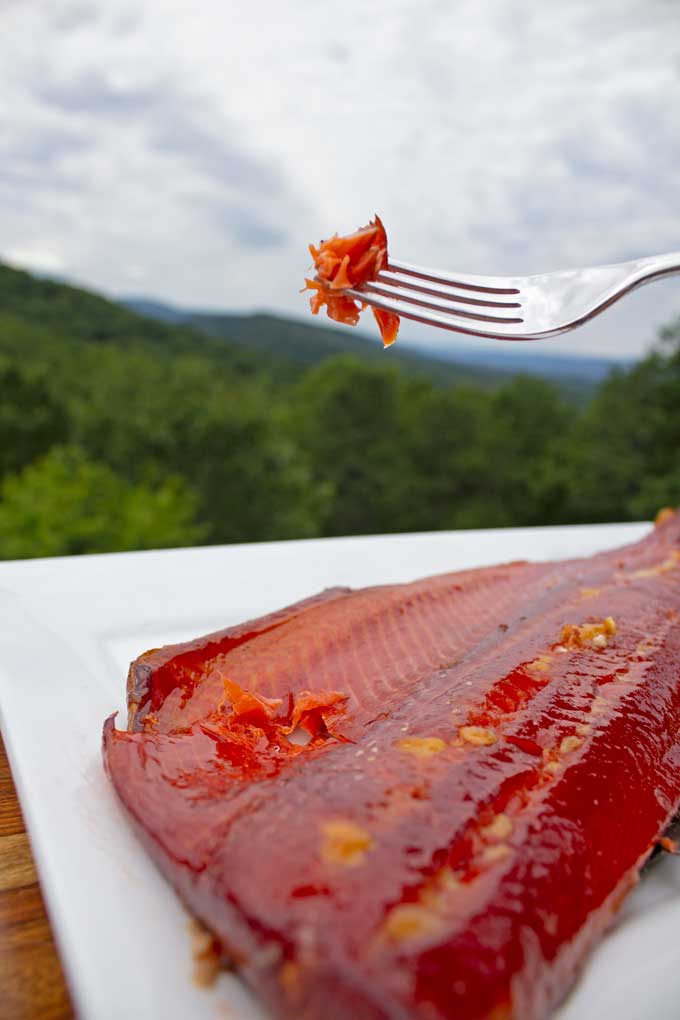
David and I get excited every year when the salmon season rolls because that can mean only one thing… SMOKED SALMON!
Because of our love of salmon, we spent a lot of time last summer smoking salmon and perfecting our recipe. We want to help you make delicious smoked salmon, so today, we will show you exactly how easy it is to make smoke salmon with a honey glaze in this how-to guide.
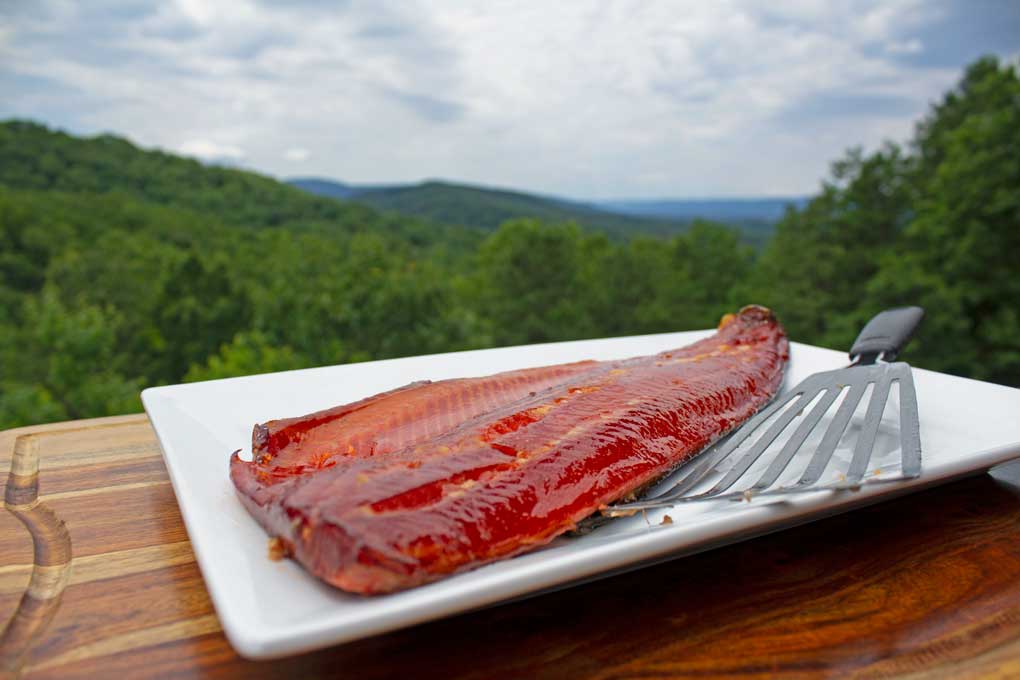
The goal of a perfectly smoked salmon is moist, flaky meat with the perfect balance of salt and sweetness to complement the rich fillet. For this recipe, we finish off the salmon with a glaze of pure, rich honey instead of maple syrup, as most recipes call for. When the salmon cools, the honey forms a candy-like coating on the salmon that is to die for!
The process may seem complicated, but it’s not. Smoking salmon is quicker and easier to smoke than it ever would be to smoke pork or beef.
There isn’t a lot of hands-on preparation. Most of the time comes from curing and drying the salmon fillet to prepare it for the smoke. It just takes a little time to ensure you get the perfect piece of honey smoked salmon.
Let’s smoke some salmon!
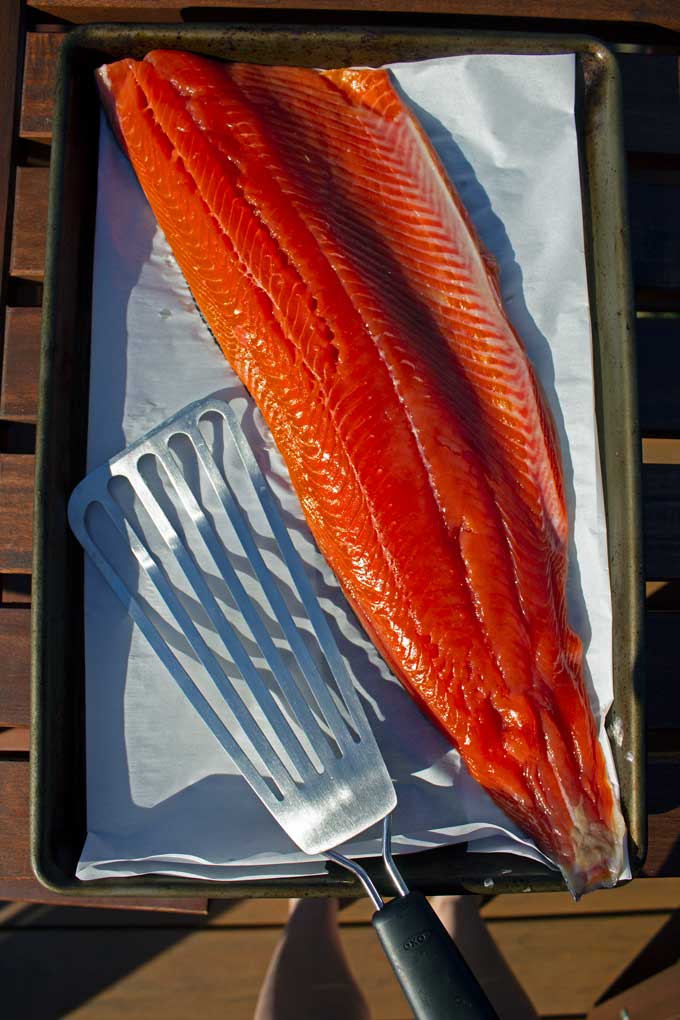
Ingredients Needed To Smoke Salmon
You can find a full list of ingredients and measurements in the recipe card at the end of this post.
- Salmon: The star ingredient is a one to two-pound fresh salmon fillet
- Brine Solution: only three ingredients – water, brown sugar, and kosher salt
- Honey: the main ingredient once the salmon is on the grill. Locally sourced honey is always best!
- Wood: cherry wood chunks have great flavor. Keep reading and learn about substitutions.
What’s the Best Salmon for Smoking?
David and I have tested this salmon recipe on Sockeye, Coho, Atlantic salmon, and King Salmon. Any of these types of salmon will work. For this guide, we used Sockeye, but you can use your favorite kind of fresh salmon.
What to look for when purchasing salmon:
- Wild Caught: Wild-caught salmon is only available 3 to 4 months out of the year, so we strive to find the freshest wild-caught salmon possible when they are in season. We prefer wild salmon over farm-raised because farm-raised salmon can be injected with coloring and who knows what else.
- Quality Fresh Fish: The salmon should never smell overly fishy or foul. The meat should be firm and plump without wrinkles.
- Skin-on-Fillet: It is best if the salmon fillet still has the skin intact because it helps hold the meat together when binging, curing, and smoking it. Look for salmon with shiny, moist skin.

What Type of Wood Do I Use To Smoke Salmon?
Alder wood is the traditional wood of choice in the Pacific Northwest for smoking salmon. However, that’s not something we often see on the store shelf in the Southeast. Instead, we have used both soaked maple chips and dry cherry chunks. Between the two, we love the sweetness of the cherry wood. It has the best flavor.
Hickory, oak, and pecan are good options for smoking salmon, but we have not used them.
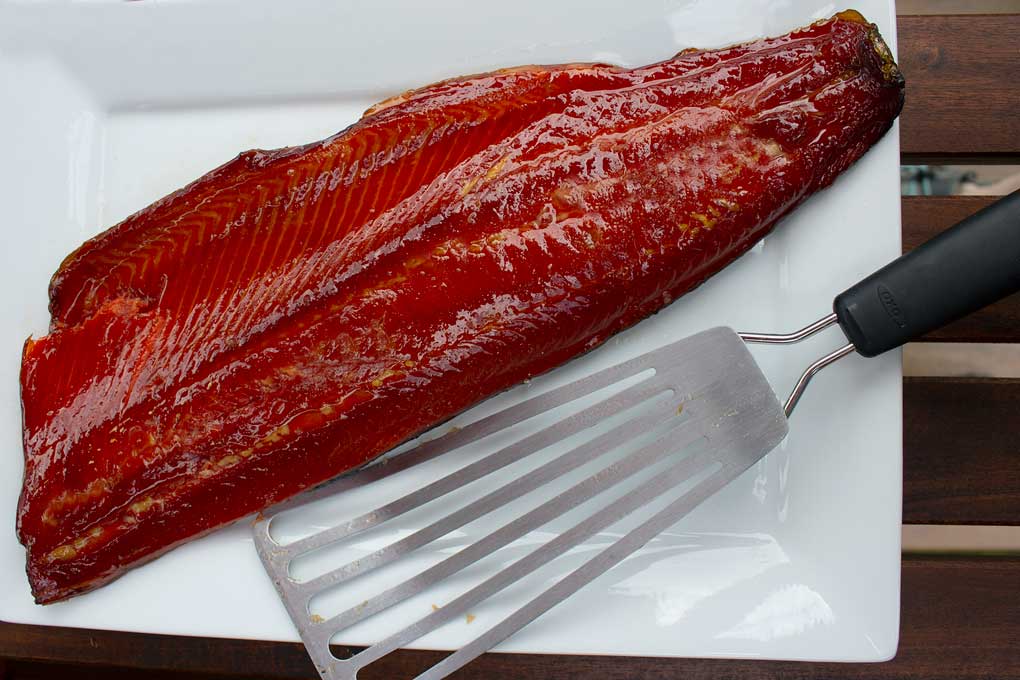
How To Make Honey Smoked Salmon
The 3 Most Important Steps To Smoked Salmon: Curing, Drying, and Temperature. The step-by-step guide below will show you how each comes into play.
Step #1 Prepare The Salmon For Brine
When it comes to salmon fillets, your fishmonger or grocer has probably done all the work for you, so there isn’t much prep to prepare the fish for the brine.

However, running your fingers down the center of the fillet is important to ensure that all pin bones have been removed. David uses a clean pair of needle nose pillars to remove any pin bones. He starts as the tail and works his way to the head, pulling out any bones he feels or sees.
If you prepare fish often, a pair of fishbone tweezers may be worth buying. You can find a set of tweezers HERE.
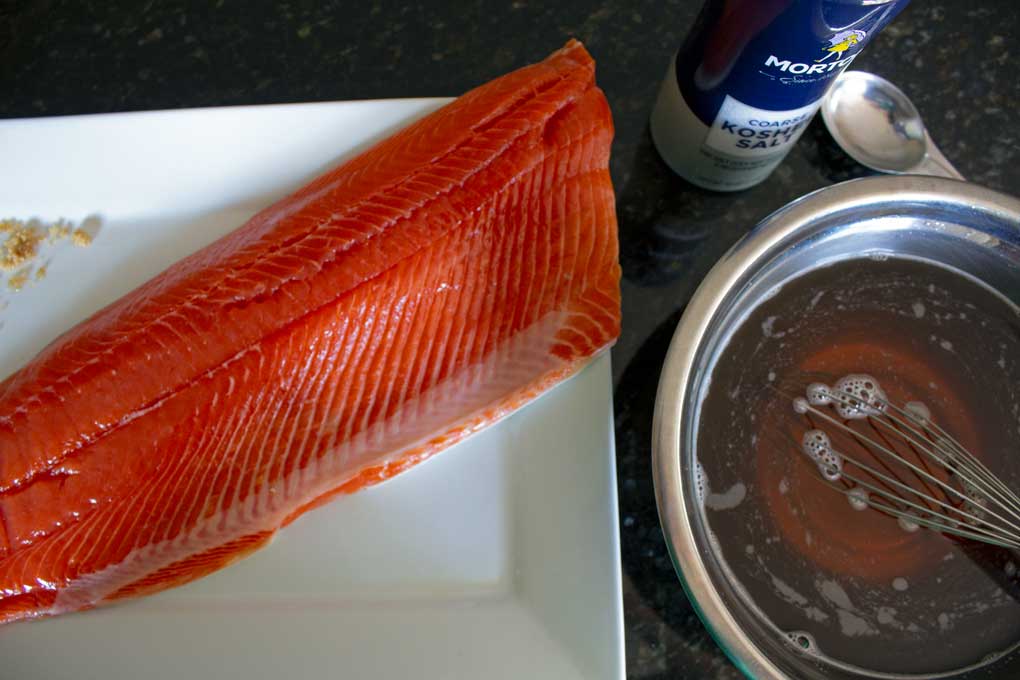
Step #2 Brine the Salmon
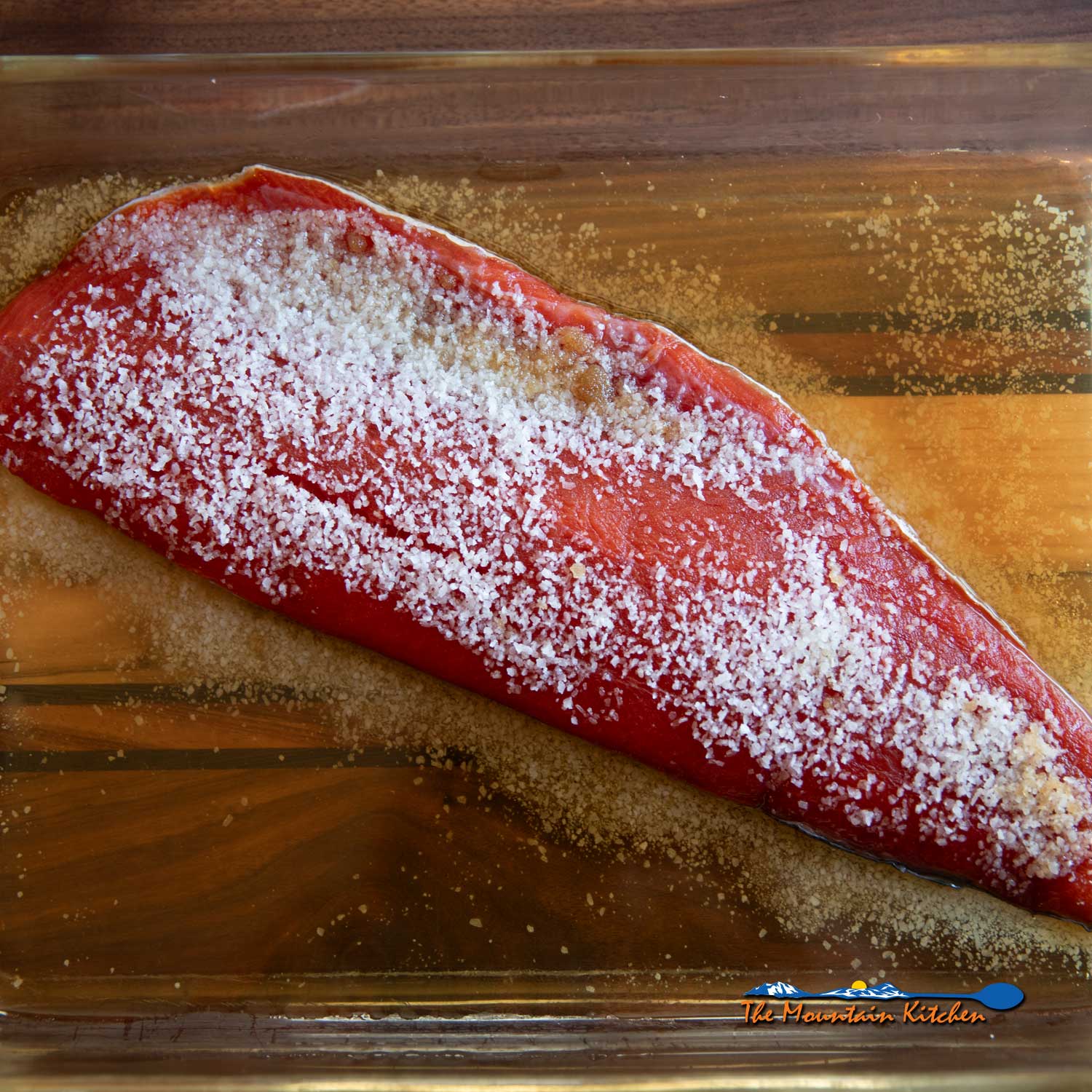
Curing salmon in a brine solution preserves it and helps eliminate some of the moisture in the fillet. Infusing the fish with salt helps salmon last longer after it is smoked.
Our brine solution is simple: water, kosher salt, and brown sugar. The salt helps draw out some moisture and season the fish, while the brown sugar gives it a little sweetness to help round out the flavor. We love using this simple solution because it does not mask the fish and allows the salmon flavor to come through.
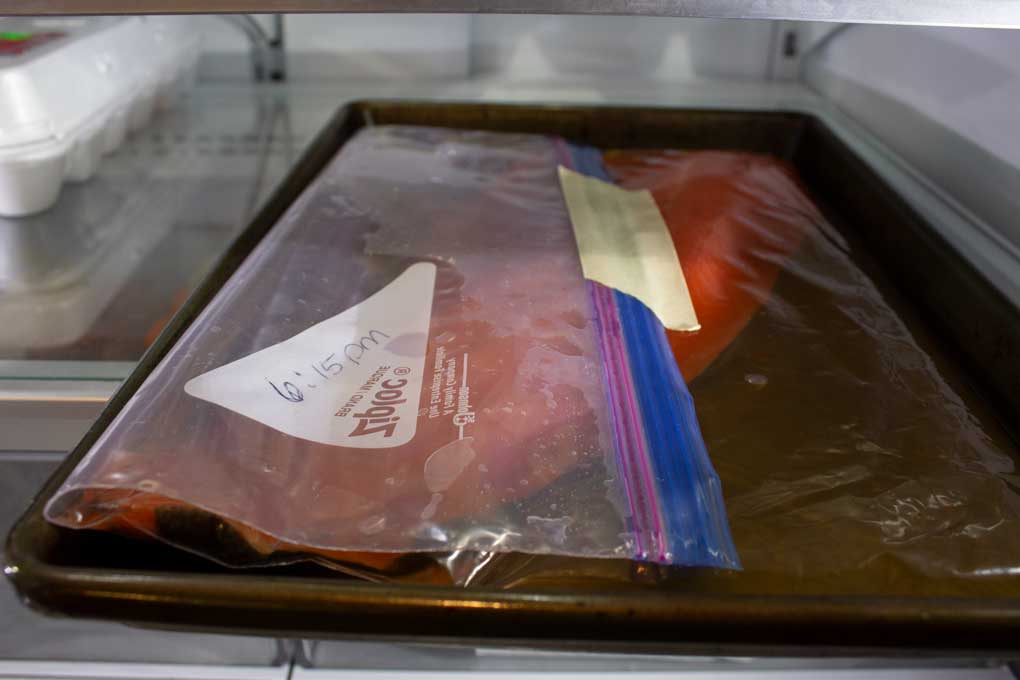
Mix all the brine ingredients with a whisk until the salt and sugar have dissolved completely in a small bowl. Transfer the cleaned salmon filet inside a 2-gallon plastic bag, then pour in the brine solution, squeezing out as much air as possible. Place the bag onto a sheet pan or casserole dish. Situate the fillet inside the bag so that it is completely submerged inside the brine solution. Place it inside the fridge to cure.
If there is not enough brine to submerge the entire fillet, you can double the brine mixture and make another batch.
About Curing Times
Curing times may vary according to the thickness of the fillet. Sockeye salmon fillets are usually pretty thin, so our experience is that the fillet needs 8 to 12 hours of curing time. A thick piece of salmon may require up to 24 to 36 hours to brine. Be careful not to over-brine the salmon, or it will be way too salty to enjoy.
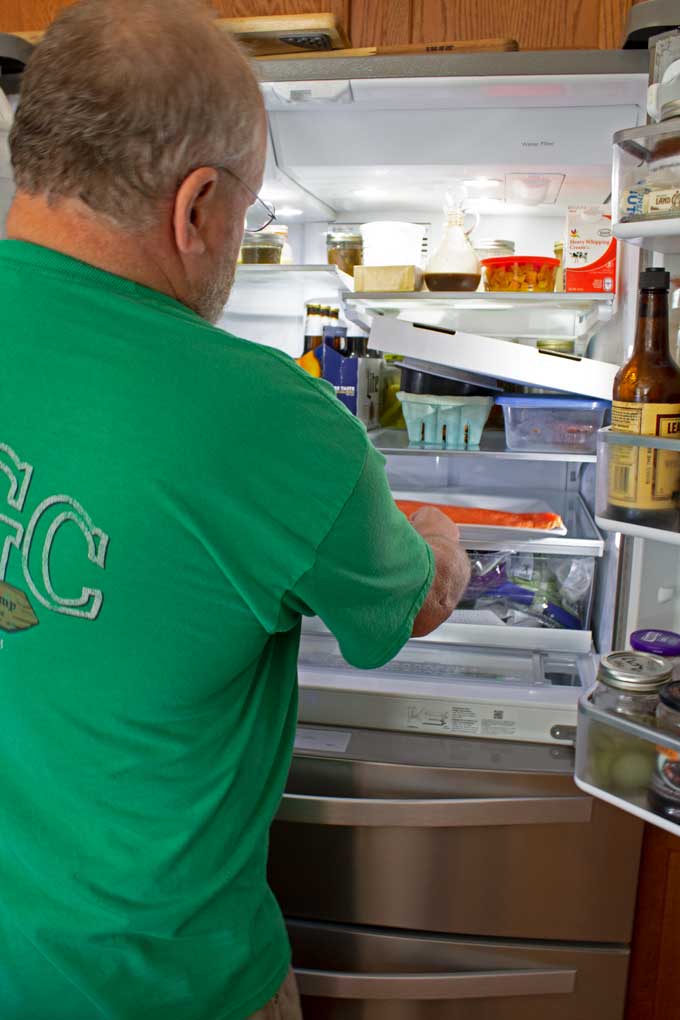
Step #3 Air Dry the Salmon – Forming the Pellicle
This next step is completely effortless BUT one of the most important steps to smoking good salmon. The salmon needs to form a pellicle. This slightly tacky layer has a thin, dry sheen like the flesh has been brushed with lacquer. This layer gives the smoke something to stick to.

Remove the salmon from the brine and carefully rinse it with cold water. Gently pat the fillet dry with paper towels, then lay it skin side down onto a platter or sheet pan long enough to lay completely flat. Leave the salmon uncovered and place it in the refrigerator for at least 4 hours or overnight.
We typically dry our fillets in the refrigerator overnight for about 12 hours.
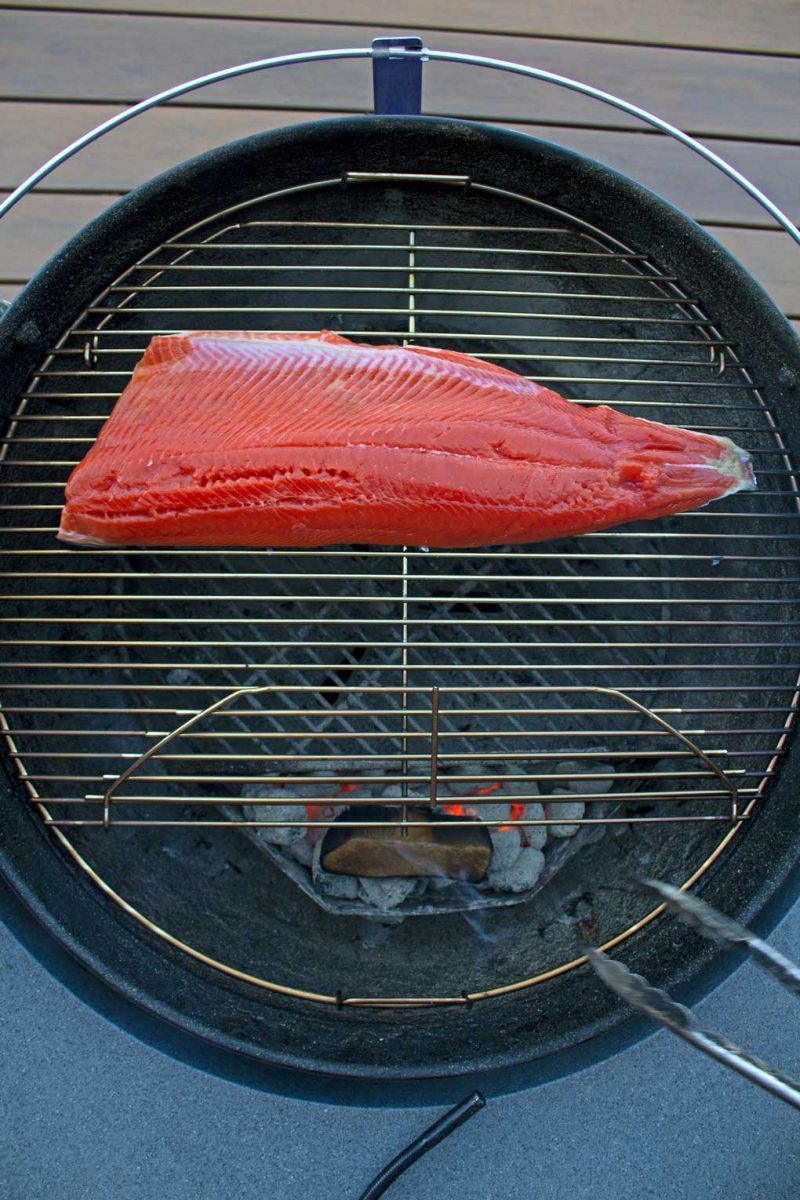
Step #4 Fire Up the Grill, But Watch The Temperature!
David uses his Weber Performer for this smoke, making the temperature control harder to maintain. Precision comes with knowing your charcoal grill and with experience, of course.
The salmon is smoked using a hot smoking process, but before firing up the grill or smoker, it’s important to know that when smoking salmon or fish of any kind, it is important to maintain a constant low temperature. The goal smoking temperature is between 150 and 200 degrees.
- Light the charcoal chimney with about a dozen briquettes inside. It’s important to start with a small fire and work your way up if it’s not hot enough.
- Set the grill for indirect heat when the coals are ready by pouring the hot coals from the chimney into a charcoal basket or pushing them to one side of the grill. Throw a chunk or handful of wood chips of cherry wood onto the coals.
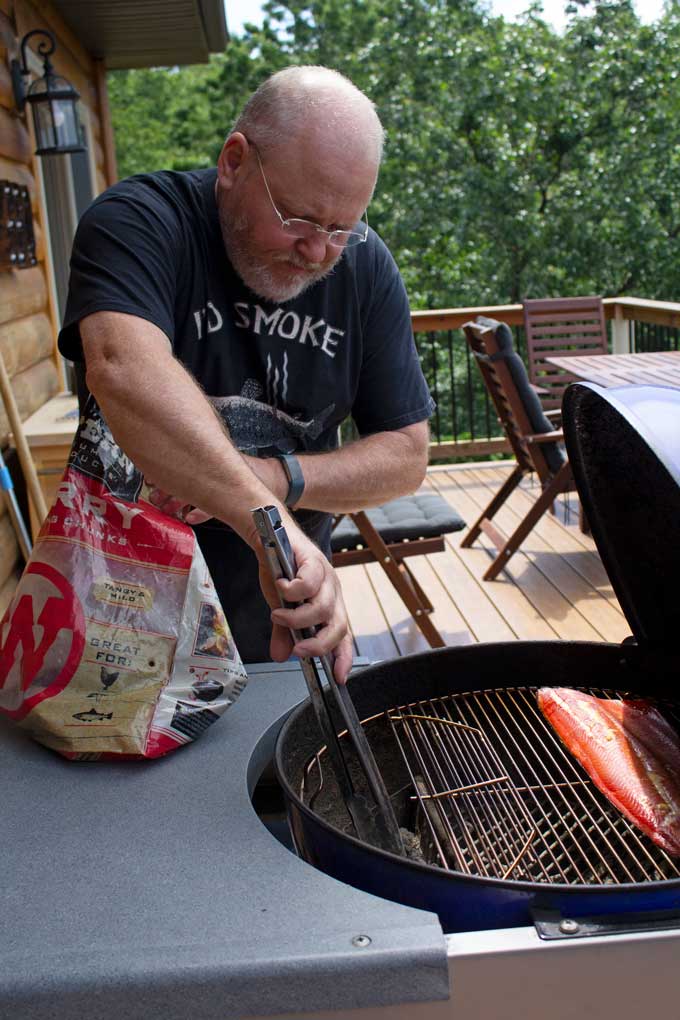
Step #5 Smoke The Honey Smoked Salmon
- Place the grate on the grill—Preheat the grill to an ideal temperature of about 170 degrees. Add more charcoal to make the fire hotter, if needed. Having a hinged grate makes it easy to tend the fire and add wood.
- Use a paper towel to add oil to the hot grate, then lay the cured and dried salmon fillet skin side down on the cool side of the grate. Alternatively, you can use a perforated grilling tray that allows 360-degree smoke and heat penetration. This will ensure the salmon doesn’t stick. It’s also good to use if you smoke a salmon fillet without the skin.
- Cover with the lid and smoke the salmon. Keep the temperature low and slow. Adding too much heat at once will cause white albumin to “bleed” on the surface of the meat. Albumin is a liquid protein in raw fish. When the fish is exposed to heat, the albumin coagulates and starts to solidify. As the meat cooks, the albumin squeezes out onto the surface of the meat.

The picture above is one of our first salmon fillets. We learned about albumin early on. The temperature of the fillet got hot too quickly. It’s pretty nasty looking, but this weird slimy white substance on the surface of the salmon is normal, and there is nothing wrong with the fish.
Forming the pellicle and monitoring the grill temperature will help minimize the collection of albumin. A little bit is normal, but the salmon is not ruined if you get a lot. You can also brush the white gunk off when tending to the coals.

How Long Does It Take to Smoke Salmon?
- Smoke the salmon for about 1 to 1 ½ hours. Add more coals and wood as needed. Spot-check the temperature of the salmon with an instant-read thermometer. At this point, the fillet should be around 120 degrees F. Close the lid and continue to smoke for the remaining time, checking the fish every 30 minutes.
- Use a silicone grilling brush to baste the salmon with honey after about an hour or when the albumin stops and the fish has the color you’re looking for from the smoke. At this point, there is no need to add any more wood to the coals. Just maintain a steady low temperature. – NOTE: skip this step if using the salmon in savory dishes like a salmon dip.
- The salmon is done with the meat flakes, and the internal temperature of the salmon in the thickest part reaches 135 to 145 degrees F. Remove the honey-coated salmon from the grill and serve. Use an instant-read thermometer to help monitor the temp.
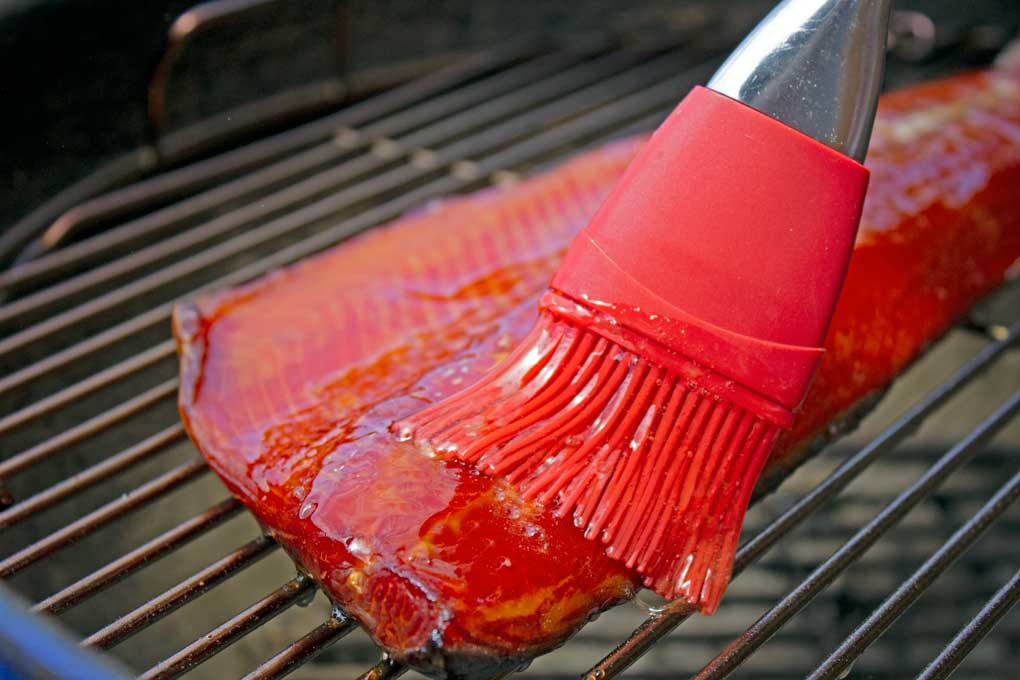
Allow the honey smoked salmon to cool on a rack for at least one hour before putting it into the refrigerator.
Storing Leftover Smoked Salmon
Salmon will keep in an airtight container in the fridge for 8 to 10 days.
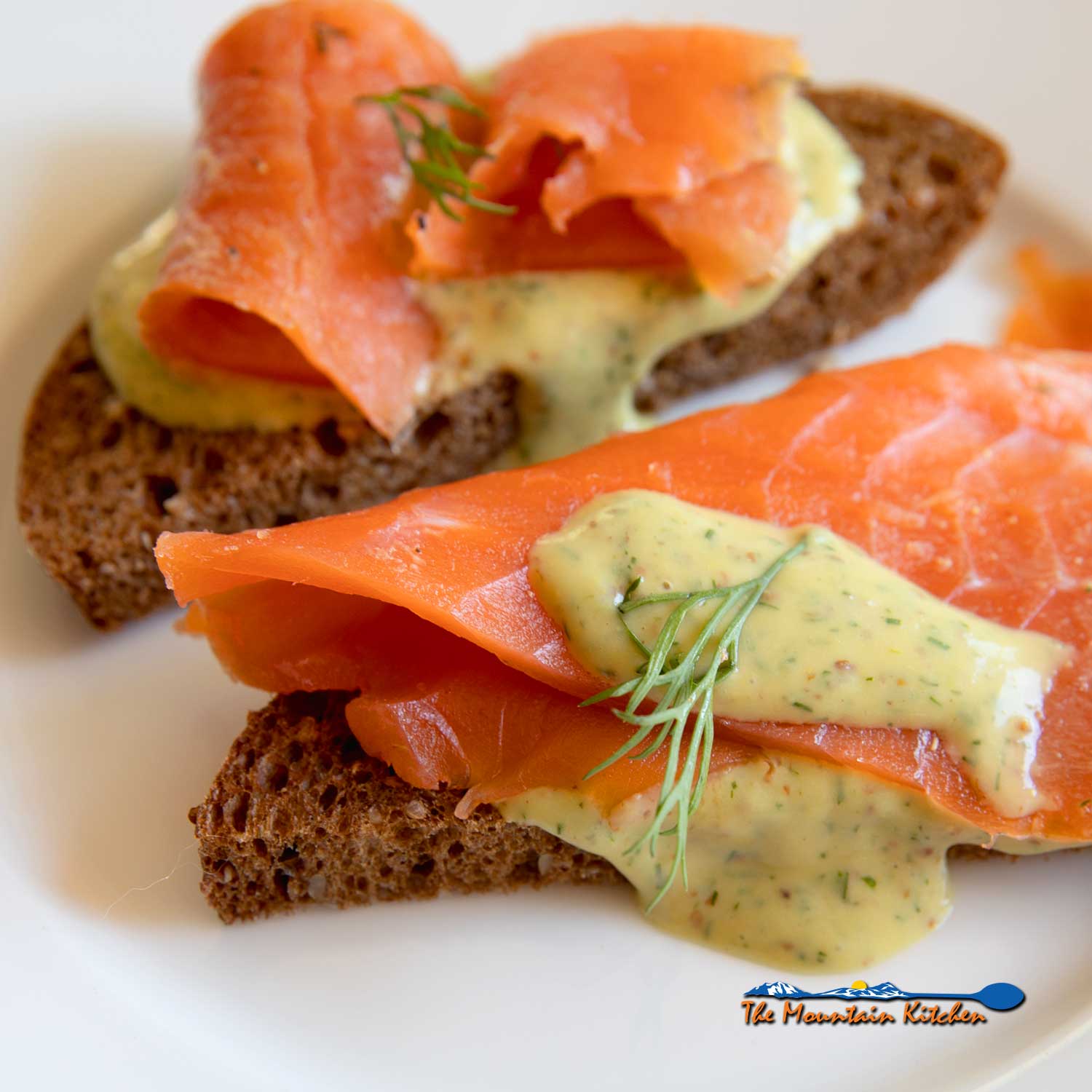
How To Serve Smoked Salmon
- As an appetizer, served on crackers with cream cheese and capers
- Leave off the honey and make it into a smoked salmon spread.
- Serve the salmon instead of crab cakes in this recipe for Crab Cakes Eggs Benedict.
- It’s delicious served on bagels. Check out this recipe for lox and bagels.
Making honey smoked salmon? We’d love your feedback. Leave us a comment and a star rating below. We value your opinion and appreciate your time.
See ya on the mountain!

Other Delicious Salmon Recipes:
- Deviled Salmon Cakes
- Salmon Spread
- Ina’s Salmon Tacos
- Salmon BLT Sandwiches
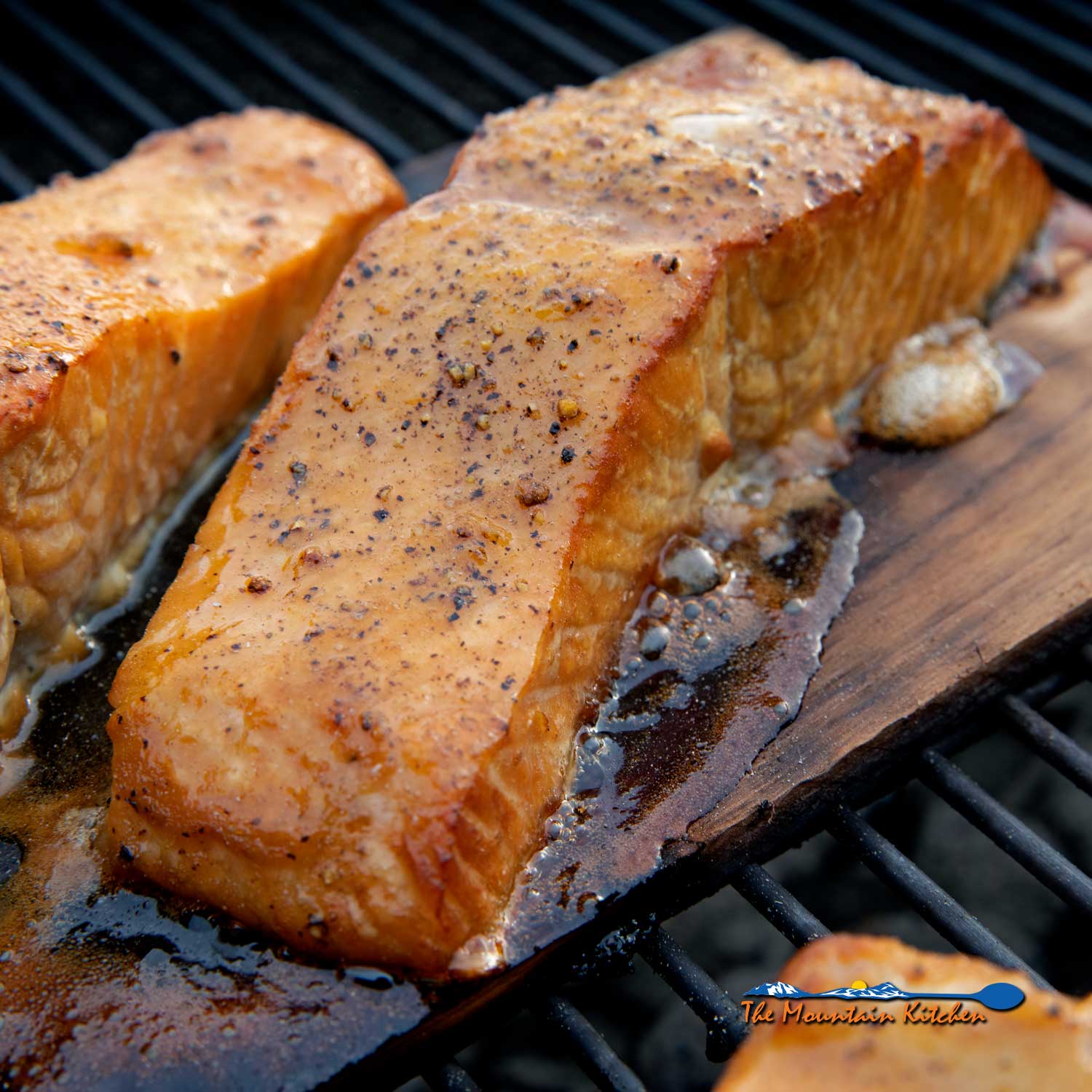
- Cedar Plank Smoked Salmon
- Bagels and Lox
Honey Smoked Salmon
Useful Equipment:
Ingredients
- 1 ½ to 2 pound fresh salmon
- ¼ to ½ cup honey locally sourced is always best!
- cherry wood chunks
Brine Solution:
- 2 ½ cups water
- ½ cup brown sugar
- 3 tablespoons kosher salt
Instructions
Step #1 Prepare The Salmon For Brine
- Start at the tail of the salmon, running your fingers down the center of the fillet, and work your way up towards the head of the fillet; making sure all of the pin bones have been removed. Remove any bones you feel or see with a clean pair of needle nose pliers or fish tweezers.
Step #2 Brine the Salmon
- Mix all the brine ingredients in a small bowl with a whisk until the salt and sugar have dissolved completely. Transfer the cleaned salmon filet inside a 2-gallon plastic bag, then pour in the brine solution, squeezing out as much air as possible. Place the bag onto a sheet pan or casserole dish. Situate the fillet inside the bag so it is completely submerged inside the brine solution. Place it inside the refrigerator to cure.
- If there is not enough brine to submerge the entire fillet, you can double the brine solution and make another batch.
- Curing times may vary according to the thickness of the fillet. Sockeye salmon fillets are usually pretty thin, so it has been our experience that the fillet needs 8 to 12 hours of curing time. A thick piece of salmon may need up to 24 to 36 hours to brine. Be careful not to over-brine the salmon or it will be way too salty to enjoy.
Step #3 Air Dry the Salmon – Forming the Pellicle
- This next step is completely effortless BUT one of the most important steps to smoking good salmon. The salmon needs to form a pellicle. This is a slightly tacky layer that has a thin dry sheen to it like the flesh has been brushed with lacquer. This layer gives the smoke something to stick to.
- Remove the salmon from the brine and carefully rinse with cool running water. Gently pat the fillet dry with paper towels, then lay it skin side down onto a platter or sheet pan long enough to lay completely flat. Leave the salmon uncovered and place it in the refrigerator for at least 4 hours or overnight.
- We typically dry our fillets in the refrigerator overnight for about 12 hours.
Step #4 Fire Up the Grill, But Watch The Temperature!
- The salmon is smoked using a hot smoking process, but before firing up the grill or smoker, it’s important to know that when smoking salmon or fish of any kind, it is important to maintain a low constant temperature. The goal smoking temperature is between 150 and 200 degrees.
- Light the charcoal chimney with about a dozen briquettes inside. It’s important to start with a small fire and work your way up if it’s not hot enough.
- When the coals are ready, set the grill for indirect heat, by pouring the hot coals from the chimney into a charcoal basket or pushing them to one side of the grill. Throw a chunk or handful of wood chips of the cherry wood onto the coals.
Step #5 Smoke The Salmon
- Place the grate on the grill. Preheat the grill to an ideal temperature of about 170 degrees. Add more charcoal to make the fire hotter, if needed. Having a hinged grate makes it easy to tend the fire and add wood.
- Use a paper towel to add oil to the hot grate, then lay the cured and dried salmon fillet skin side down on the cool side of the grate.
- Alternatively, you can use a perforated grilling tray that allows 360-degree smoke and heat penetration. This will ensure the salmon doesn’t stick. It’s also good to use if you smoke a salmon fillet without the skin.
- Cover with the lid and smoke the salmon. Keep the temperature low and slow. Adding too much heat at once will cause a white albumin “bleed” on the surface of the meat. Albumin is a liquid protein in raw fish. When the fish is exposed to heat, the albumin coagulates and starts to solidify. As the meat cooks, the albumin squeezes out onto the surface of the meat. It’s pretty nasty looking, but this weird slimy white substance on the surface of the salmon is perfectly normal. Along with forming the pellicle, monitoring the temperature of the grill will help minimize the collection of albumin. A little bit is normal, but If you get a lot the salmon is not ruined. You can also brush it off when tending to the coals.
- Smoke the salmon for about 1 to 1 ½ hours. Add more coals and wood as needed. Spot-check the temperature of the salmon with an instant-read thermometer. At this point the fillet should be around 120 degrees F. Close the lid and continue to smoke for the remaining time checking the fish every 30 minutes.
- Use a silicone grilling brush to baste the salmon with honey after about an hour or when the albumin stops and the fish has the color you're looking for from the smoke. At this point, there is no need to add more wood to the coals. Just maintain a steady low temperature.
- The salmon is done with the meat flakes and the internal temperature in the thickest part reaches 135 to 145 degrees F.
- Remove the smoked salmon from the grill and serve.




Thinh says
Hi Debbie & David. Smoked salmon is staple in British Columbia. The Coast Salish people here also use maple to smoke their salmon, especially in Vancouver Island since we have a lot of maple trees there. And you’re right, wild salmon is the best. One of my friends is a fisherman so he always gets me some. Thank you for another detailed recipe. -Thinh
Jennifer says
I absolutely love this recipe. We add maple syrup instead of honey and cut into little strips but it’s delicious!
The Mountain Kitchen says
Thank you so much for your comment, Jennifer. So glad you like this recipe!
Dave / Mesa, AZ. says
This is a great recipe for smoking salmon, the only change I have made to it is that instead of using water in the brine I use 1 cup of Crown Royal whiskey.
This smoked salmon is absolutely wonderful.
The Mountain Kitchen says
What a nice boozy twist, Dave. Thanks for the great review!
Alex says
Everytime I smoke salmon I use this recipe, the insightfulness and time put into adding the extra details of their experience was much appreciated this salmon flies off the table in minutes!
KEITH says
I have tried this recipe first then lost it and tried three other recipes after and this one is by far the best. My wife asked “can you make this salmon taste like the first one that you smoked”? Because it taste like what I bought from Sam’s Club. I’m glad I found this recipe.
Clark says
Cherry also works well!
Geoff says
When do put the honey on? Mountain Cooks
The Mountain Kitchen says
Hi Geoff, start basting the salmon during the last hour of your smoke, before it hits your target temp of 120 degrees F. Enjoy!