

Make an impressive appetizer with our easy salmon gravlax recipe. Learn the steps, ingredients, and tips for curing perfect gravlax at home every time.

Imagine this: tender slices of cured salmon, each bite infused with the fresh, aromatic taste of dill, a touch of salt, and just the right hint of sweetness. It’s like a melt-in-your-mouth experience that’s hard to resist. Gravlax, a classic Scandinavian delicacy, has graced Nordic tables for centuries.
There’s something truly special about gravlax—it’s both fancy and comforting. Whether you’re a die-hard foodie or simply want to impress your guests, gravlax is your ticket to elevating any meal. With its irresistible taste and elegant presentation, this cured salmon isn’t just food; it’s a celebration on a plate.

What is Gravlax?
Gravlax is a traditional Scandinavian dish where salmon is cured with a blend of sugar, salt, and dill. Unlike smoked salmon, which gets its flavor from being smoked, gravlax sits in the fridge for a few days to develop its rich, silky texture. It’s different from lox, which is only cured with salt; gravlax includes sugar and herbs for a perfect balance of sweetness and saltiness.
I’ve been eager to try this Ina Garten recipe for ages. Gravlax is fantastic on bagels (similar to lox and bagels) for brunch, crackers, or, my favorite, pumpernickel bread with a dill sauce for a delicious appetizer. It’s a great way to add a touch of elegance to your table, especially for special occasions like holidays.
Ready to impress your taste buds and your guests? Let’s get started!
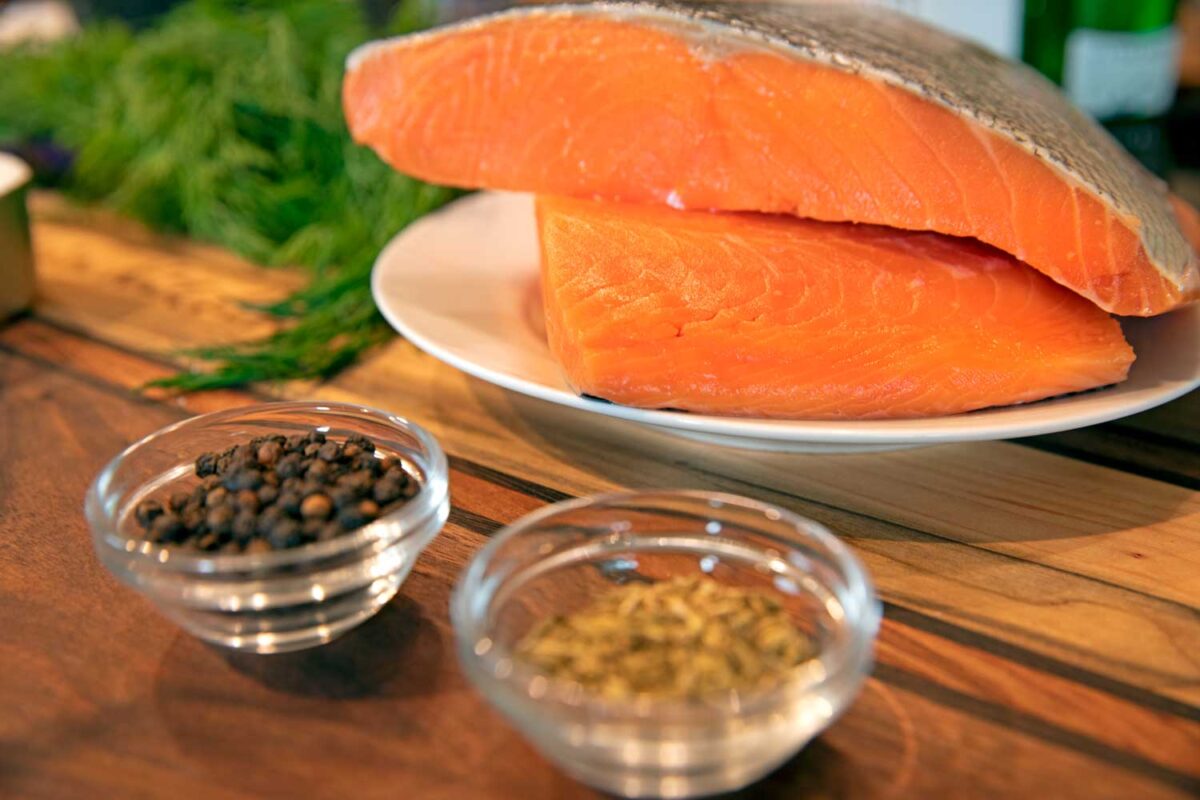
Selecting Salmon To Make Gravlax
I used wild-caught king salmon for this recipe because of its thick, meaty flesh, but it was not sashimi grade. David and I had no issues, but the disclaimer above is to keep you and your loved ones safe.
Other salmon varieties, such as sockeye, coho, or Atlantic salmon, are good choices, but ultimately, any high-quality salmon with a firm texture will work well for making gravlax.
Here’s what to look for:
- Freshness: Opt for wild-caught salmon, as it often has a superior flavor to farmed salmon. If you use farmed-raised salmon, make sure it is high quality.
- Cut: A center-cut fillet is ideal because it offers a uniform thickness, which ensures even curing. It also provides a beautiful presentation, especially if slicing the gravlax in front of your guests.
- Quality: Choose a fillet with vibrant color and firm texture. It should have a clean, ocean-fresh smell without a fishy odor.
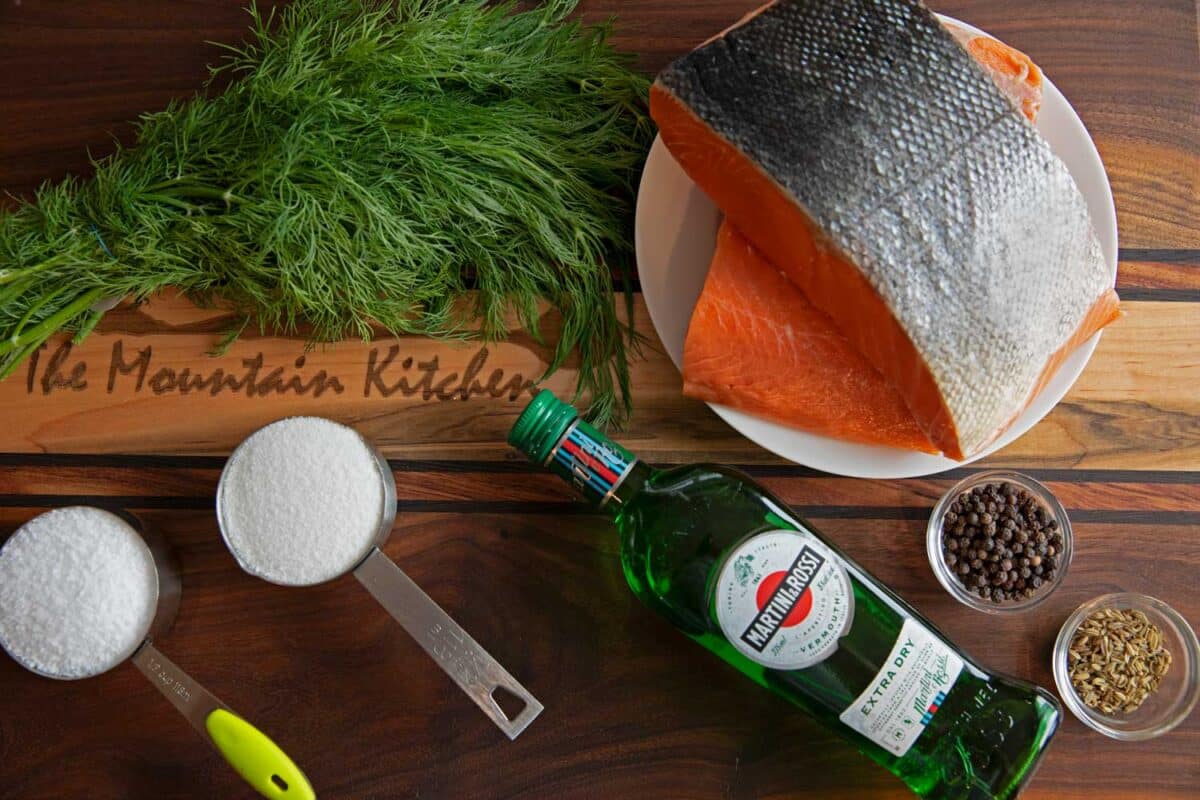
Gravlax Recipe Ingredients and Substitutions
Let us guide you through crafting the perfect gravlax! We’ll dive into the essential ingredients you’ll need and explore some substitutions to ensure you can create this delectable dish no matter what’s in your pantry.
For the Gravlax:
Salmon: For the best texture and flavor, choose fresh sashimi or sushi-grade, high-quality center-cut fillet that looks smooth and buttery.
Fresh dill: Use a generous handful for a vibrant, herbal flavor. You can also reserve a bit for garnish.
Kosher Salt: enhances the texture and preserves the salmon.
Substitution: Sea salt can be a good alternative if you don’t have kosher salt.
Sugar: granulated white sugar balances the saltiness with a hint of sweetness.
Substitution: Brown sugar can work well as a substitute.
Alcohol (optional): Vermouth adds complexity and a slight anise note to the cure. It also aids in preservation, but it is not necessary.
Substitution: If vermouth isn’t available, use Pernod, vodka, or a dry white wine.
Whole Peppercorns (juniper berries): crushed black peppercorns add a touch of heat and spice.
Substitution: ground black pepper.
Fennel Seeds: adds a sweet, aromatic flavor.
Substitution: fennel powder, star anise, or caraway seeds.
Optional Serving Suggestions
Bread: Thin, dark pumpernickel bread makes the perfect hearty base for the gravlax, adding a bit of earthiness to the bite. Bagels are well known to go along with salmon of any kind. (Learn more about lox and bagels.)
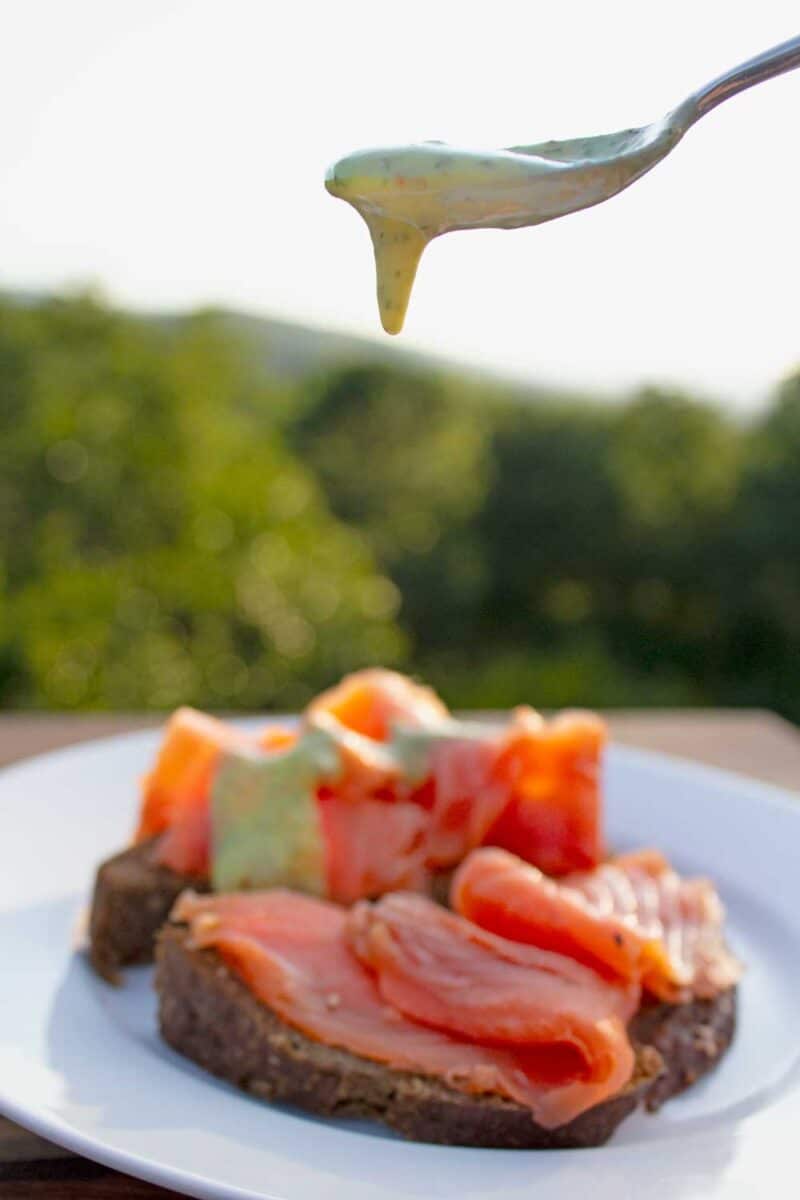
Gravlax Sauce: You absolutely have to try the mustard dill sauce with your salmon gravlax! This creamy, herb-packed sauce is ideal for your cured salmon, adding a delightful burst of flavor that’s hard to resist. It’s incredibly simple to make, and David and I agree—it pairs perfectly with gravlax.
Ingredients for Mustard Dill Gravlax Sauce
Mustard: Dijon mustard adds a tangy, slightly spicy flavor to the sauce’s base, while whole grain mustard contributes to its texture and sharpness.
Substitutions: use yellow mustard for a milder taste or spicy brown mustard for more heat and complexity.
Honey: provides a touch of sweetness that balances the mustard’s tanginess and the vinegar’s acidity.
Substitutions: Maple syrup or agave.
Vinegar: White wine vinegar’s acidity balances the sauce’s richness, enhances the flavors and thins it up.
Substitutions: Apple cider vinegar or lemon juice.
Olive Oil: Extra-virgin olive oil provides creaminess and a subtle fruity note, helping to meld the flavors.
Substitutions: Avocado oil or another neutral oil.
Fresh Dill: for a bright, herbaceous flavor that complements the salmon.
Substitutions: dried dill, tarragon, rosemary, or fennel.
Kosher Salt: enhances all the other flavors and adds the right amount of seasoning. Substitution: sea salt or table salt.
Step-by-Step Guide to Making Gravlax
Step 1: Prepare the Salmon
- Remove Pin Bones: Inspect the salmon fillets for any pin bones (thin bones). Use tweezers to remove them by pulling them out in the same direction in which they are embedded.
- Rinse: you should rinse the salmon in cold water and pat it dry with paper towels.
- Trim: If needed, trim away any thin edges or fat to get a uniform fillet. The thin edges and fat will not cure well.
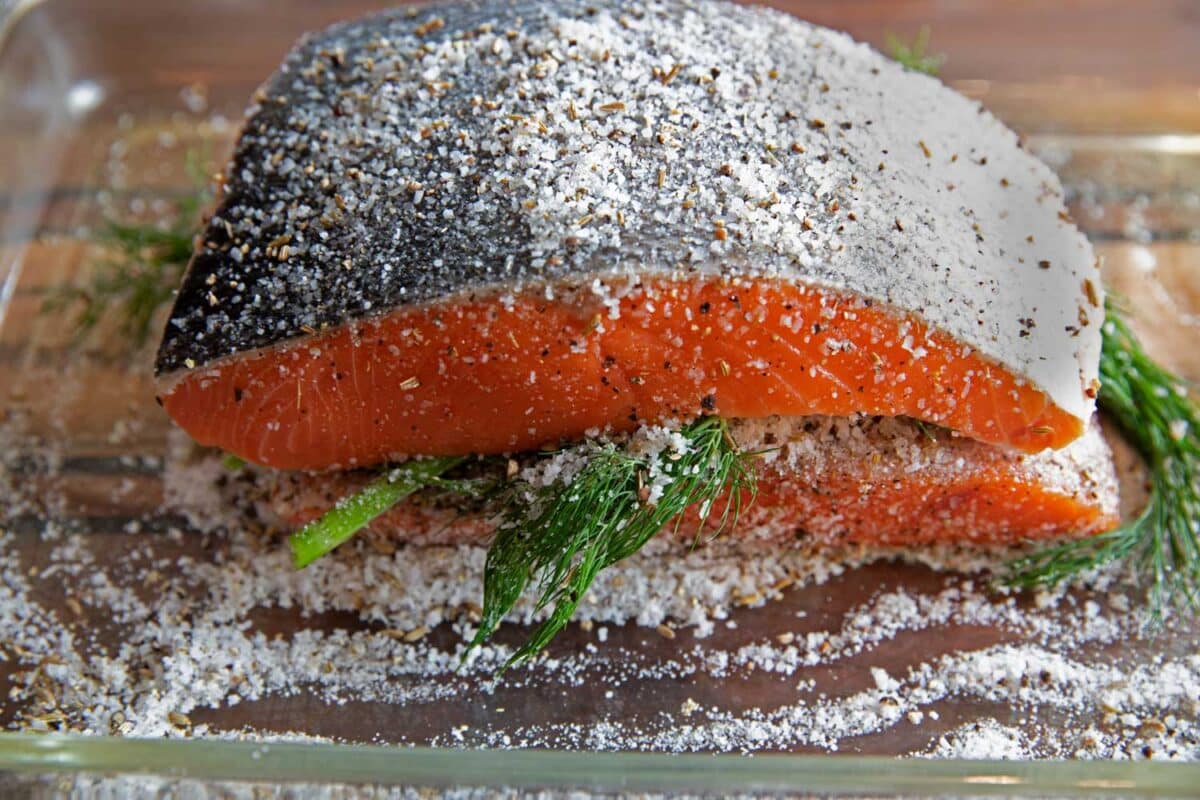
Step 2: Prepare the Curing Mixture
Mix the salt, sugar, peppercorns, and fennel seeds in a small bowl.
Step 3: Apply the Cure
- Place one piece of salmon in a deep baking dish, skin side down.
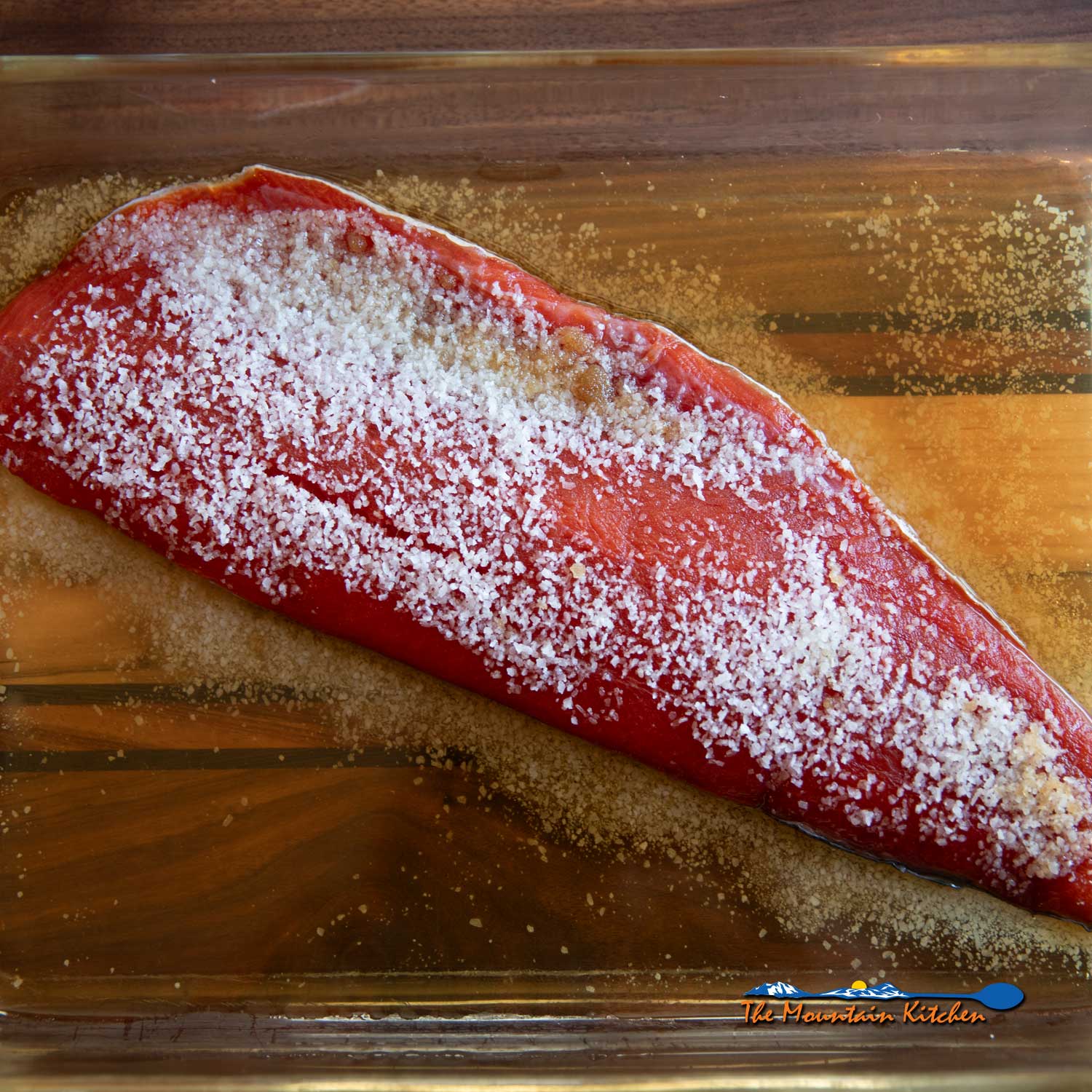
- Sprinkle the cure mixture evenly over the salmon.
- Drizzle Vermouth over the top of the salmon.
- Rinse the dill and shake off excess water. Spread it evenly over the salmon.
- Place the second piece of salmon on top, skin side up.
- Cover the dish with plastic wrap.
- Place a smaller dish on top of the wrapped salmon dish and weigh it down with heavy cans or something heavy.
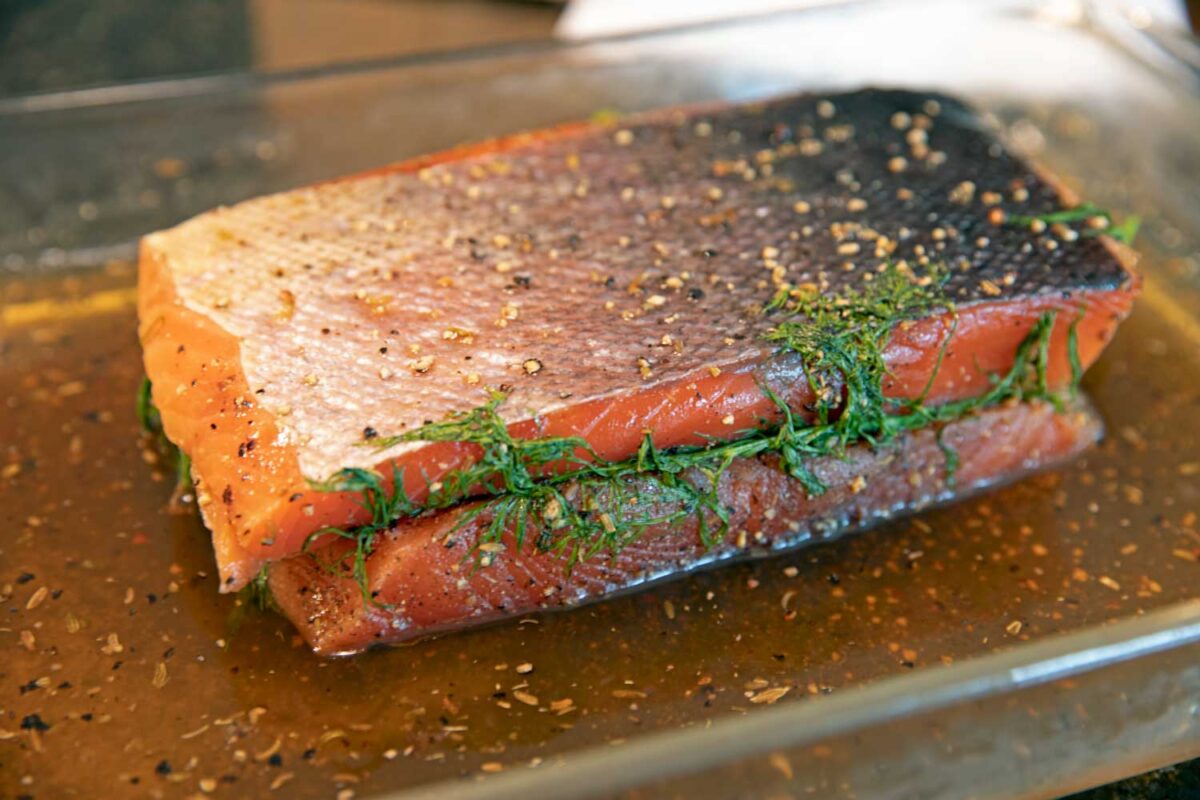
Step 4: Curing Time
Refrigerate the salmon for at least 24-48 hours (see notes), turning it over every 12 hours and basting it with any liquid that collects in the dish. The salmon fillets will shrink somewhat and have a dense feel and texture.
Step 5: Unwrap and Slice
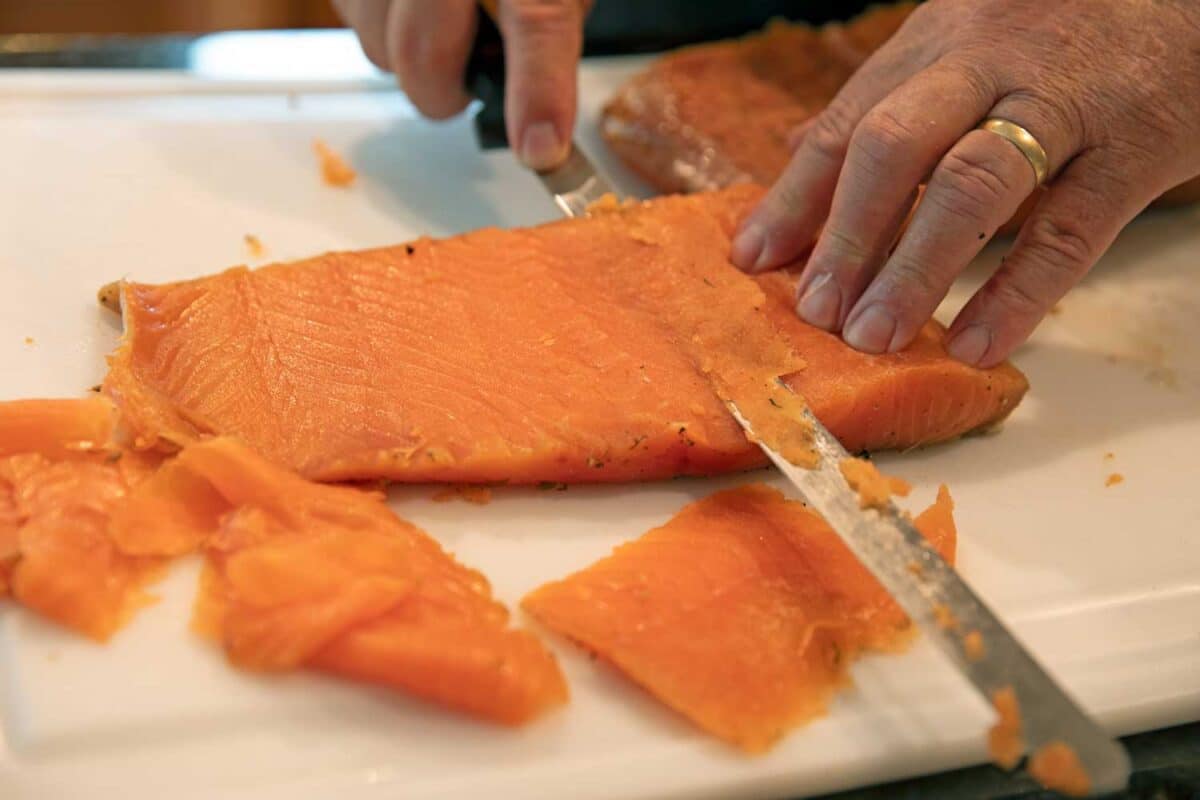
After the curing period, place the salmon fillets on a cutting board. With a knife, scrape off the excess dill and spices and discard. Thinly slice the gravlax with a sharp knife. I highly recommend using a salmon knife.
Optional Gravlax Sauce
- Whisk together Dijon mustard, honey, whole-grain mustard, ground mustard, and vinegar in a medium bowl.
- Slowly add the oil to the mustard mixture while whisking until well combined.
- Stir in the dill and salt.
How to Serve Salmon Gravlax
Gravlax is such a versatile treat! Here are our serving suggestions:
- For a classic brunch, serve it on a toasted bagel with cream cheese, sliced red onion, and capers.
- Arrange it on a charcuterie board with pickles and maybe even some hard-boiled eggs as a delightful appetizer.
- Pile it high on pumpernickel bread with a dollop of gravlax sauce as a great lunch snack.
- Add the gravlax to your favorite salad for extra protein.
Storage and Shelf Life
Understanding Gravlax’s shelf life and the best storage practices will ensure you savor every last bite while keeping it safe. Let’s dive into how to store gravlax so you can enjoy it at its best.
Storage Tips
- Refrigeration: keep gravlax fillets stored inside the fridge, wrapped tightly and individually in plastic wrap or an airtight container to prevent exposure to air and moisture.
- Avoid Cross-Contamination: Use clean utensils to keep food safe and free from germs when slicing or serving.
Shelf Life
- Freshness Duration: When stored properly, you can keep gravlax in the fridge for about a week.
- Freezing: I don’t recommend freezing gravlax since it can affect the texture. However, vacuum sealing is the best option if you want to extend its shelf life. If you don’t have a vacuum sealer, you can tightly wrap it in plastic wrap, aluminum foil, or a freezer-safe bag. It can be kept in the freezer for up to 2 months. When you’re ready to use it, just thaw it overnight in the refrigerator.
Recipe Tips
- Avoid using iodized salt to cure your salmon. Its additives can cause an unpleasant taste and discolor your fish fillet.
- Thinner fillets cure faster than thicker ones. Take that into account when curing. When using thinner fillets, you may want to try it within 24 hours.
- Prevent uneven curing by using salmon fillets that have been trimmed of excess fat and are the same shape and thickness.
- For a more intense dill flavor, lay it over the salmon before adding the cure mixture.
- Customize the flavors, substituting them with unique ingredients like citrus, vodka, fennel, or chili flakes.
- I highly recommend using a salmon knife to slice the salmon. Its thin blade makes slicing the salmon a breeze!
Gravlax Frequently Asked Questions
Look for sushi-grade fish, which indicates it’s been handled carefully and is safe for raw consumption. Don’t hesitate to ask your fishmonger about the source and handling practices. I think of it like eating raw oysters, sometimes you just take your chances sot that you don’t miss out on some good stuff!
If you want to be super safe, freeze the salmon for 24 hours, then defrost before starting the curing process. This will kill any parasites present. To Thaw, defrost the salmon in the refrigerator for 12-24 hours.
The best way to know is to taste it. Taste it after 24 hours to check the flavor and saltiness. Cure longer if the taste is too mild.
So, there you have it! Making gravlax at home is easier than you might think and opens the door to a world of delicious flavors. I hope you feel inspired to give it a shot! Once you’ve made your own batch, I’d love to see your creations—share your photos, ask any questions, or drop a comment. And if you’re hungry for more, don’t forget to subscribe for more recipes.
Enjoy this recipe!


Salmon Gravlax With Mustard Dill Gravlax Sauce
Useful Equipment:
Ingredients
- 3 pounds center-cut fresh salmon fillet
- 1 large bunch of fresh dill plus extra for garnish
- ½ cup kosher salt
- ½ cup sugar
- 2 tablespoons of Vermouth can use vodka or Pernod
- 2 tablespoons whole peppercorns crushed
- 1 tablespoon whole fennel seeds crushed
For Serving:
- dark pumpernickel bread
- Gravlax Sauce recipe follows
Mustard Dill Gravlax Sauce:
- 3 tablespoons Dijon mustard
- 1 tablespoon honey
- 1 teaspoon whole-grain mustard
- ½ teaspoon ground mustard
- 2 ½ tablespoons good white wine vinegar
- 3 tablespoons extra-virgin olive oil
- 2 tablespoons minced fresh dill
- Kosher salt to taste
Instructions
- Inspect the salmon fillets for any pin bones (thin bones). Use tweezers to remove them by pulling them out in the same direction in which they are embedded.
- Rinse the salmon in cold water and pat it dry with paper towels.
- Trim away any thin edges or fat to get a uniform fillet
- Mix the salt, sugar, peppercorns, and fennel seeds in a small bowl.
- Place one piece of salmon in a deep baking dish, skin side down.
- Sprinkle the cure mixture evenly over the salmon.
- Drizzle Vermouth over the top of the salmon.
- Rinse the dill and shake off excess water. Spread it evenly over the salmon.
- Place the second piece of salmon on top, skin side up.
- Cover the dish with plastic wrap.
- Place a smaller dish on top of the wrapped salmon dish and weigh it down with heavy cans or something heavy.
- Refrigerate the salmon for at least 24-48 hours (see notes), turning it over every 12 hours and basting it with any liquid that collects in the dish.
- After the curing period, place the salmon fillets on a cutting board. With a knife, scrape off the excess dill and spices and discard. Thinly slice the gravlax with a sharp knife. Serve immediately or refrigerate until needed.
Optional Mustard Dill Gravlax Sauce
- Mix Dijon mustard, honey, whole-grain mustard, ground mustard, and vinegar using an immersion blender. Alternatively, whisk together in a medium bowl.
- Slowly add the oil to the mustard mixture while bending or whisking until well combined.
- Stir in the dill and salt.
Notes
- Avoid using iodized salt to cure your salmon. Its additives can cause an unpleasant taste and discolor your fish fillet.
- Thinner fillets cure faster than thicker ones. Take that into account when curing. When using thinner fillets, you may want to try it within 24 hours.
- Prevent uneven curing by using salmon fillets trimmed with excess fat and the same shape and thickness.
- For a more intense dill flavor, lay it over the salmon before adding the cure mixture.
- Customize the flavors, substituting them with unique ingredients like citrus, vodka, fennel, or chili flakes.
- I highly recommend using a salmon knife to slice the salmon. Its thin blade makes slicing the salmon a breeze!




Leave a Reply